
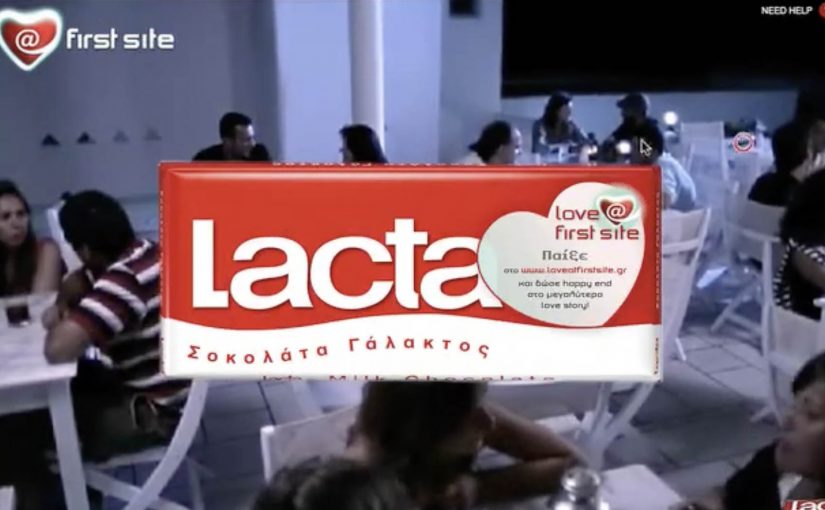
Last year Lacta Chocolates came up with a web based interactive love story called Love at first site.
The concept plays like a prequel to Lacta’s TV storytelling, but it moves the experience from “watching” to interactivity. Viewers influence how the romance unfolds on screen.
From spot to story world
The smartest move here is format, not flash. Instead of squeezing emotion into 30 seconds, the brand expands the narrative into a longer, web-native experience that rewards attention.
This is branded entertainment in the literal sense. The story is the product, and the chocolate brand is the reason it exists.
The mechanic: viewer choices, not passive viewing
The interactive layer is simple. The film presents moments where the viewer decides what happens next, and the story adapts accordingly.
In FMCG brands, lightweight interactivity can turn a familiar romantic story into a repeatable personal experience.
Why it lands: the audience earns the ending
Romance advertising often asks you to believe in a feeling. Interactivity does something more persuasive. It lets you participate in the feeling by making small decisions that shape the couple’s path.
Extractable takeaway: If your brand wants emotional recall, let the audience co-author a few key moments. Even limited choices can create a stronger sense of ownership than a perfectly produced linear film.
What the brand is really buying
This kind of execution buys time and attention, but it also buys intent. People who choose to play are signaling they want to stay with the story. That’s a different relationship than a forced impression in a TV break.
The real question is whether this marks the beginning of a new form of branded entertainment. Kudos to OgilvyOne Athens.
What to steal for your own interactive story
- Start with a narrative hook: if the story is weak, interactivity will not save it.
- Keep choices meaningful: fewer choices with clear consequences beat many shallow clicks.
- Make the first interaction fast: reduce friction so curiosity turns into participation.
- Design for replay: structure the story so a second run reveals something new.
- Measure beyond views: completion rate, replay rate, and branch distribution tell you if the story actually works.
A few fast answers before you act
What is “Love at First Site” in one sentence?
It is a web-based interactive love story where viewers make choices that influence how the film’s story unfolds.
Why does interactivity matter for branded entertainment?
Because it turns attention into participation. Even small decisions create a feeling of ownership that improves recall and word-of-mouth.
How do you keep interactive films from feeling gimmicky?
Make the story strong without interactivity, then use choices at emotionally important moments where outcomes feel clearly different.
What should you measure to judge success?
Completion rate, average time spent, replay rate, and how many people explore multiple paths. Those metrics indicate engagement, not just reach.
What is the main risk with this format?
Friction. If the first interaction is slow or confusing, people drop out before the story earns their attention.