
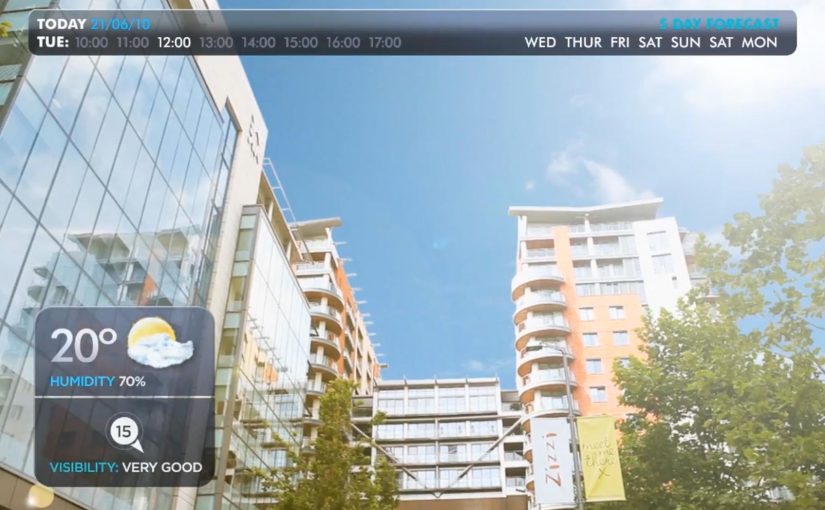
You point your phone at the world and it answers back. In Hidden Creative’s video, a mobile device scans what’s around you and returns live, on-the-spot information. The same AR layer lets you preview change before you commit to it, by virtually rearranging furniture or trying colours in a real space.
What this future looks like in practice
The value is not “wow.” It is utility. The device behaves like a real-time lens:
- Scan surroundings and get contextual information immediately.
- Overlay objects into physical space to plan renovations or layout changes.
- Configure colours virtually before making real-world changes.
Why AR still feels like a campaign tool
Augmented Reality is already active in brand campaigns around the world, mainly because it creates high engagement and talk value. Yet it still does not play an everyday role in most people’s lives.
The missing layer. A standard AR experience
Before daily-life AR becomes normal, platform owners and developers need to standardise the experience across their ecosystems. Apple, Google, and Microsoft/Nokia each move in their own direction, and the result is fragmentation.
One master app vs. an app store full of one-offs
Right now the app stores are cluttered with many Augmented Reality apps, each doing a slice of the job. One cross-platform “master app,” or at least a consistent base layer, is a plausible starting point for making AR feel like an always-available capability instead of a novelty download.
A few fast answers before you act
What does the Hidden Creative video demonstrate?
Using a phone or digital device to scan surroundings, pull live information, and overlay objects into real-life space for tasks like renovation planning.
Why is AR not yet an everyday behaviour?
Even with strong campaign usage, the ecosystem is still fragmented and the experience is not standardised across platforms.
What needs to happen at the platform level?
Apple, Google, and Microsoft/Nokia plus their developer ecosystems need to standardise how AR works on their platforms.
What problem do app stores create for AR adoption?
Too many single-purpose AR apps creates clutter and inconsistency, which makes AR feel like isolated experiments instead of a reliable capability.
What’s the simplest adoption lever suggested here?
A more consistent base layer. For example a “master app” concept that reduces fragmentation across platforms.