Turkcell was launching new smartphones bundled with mobile internet and wanted to build awareness among heavy internet users. So Turkcell’s agency, Rabarba from Istanbul, created a live Twitter competition designed to pull exactly those people in.
A Twitter game that literally unwraps the prize
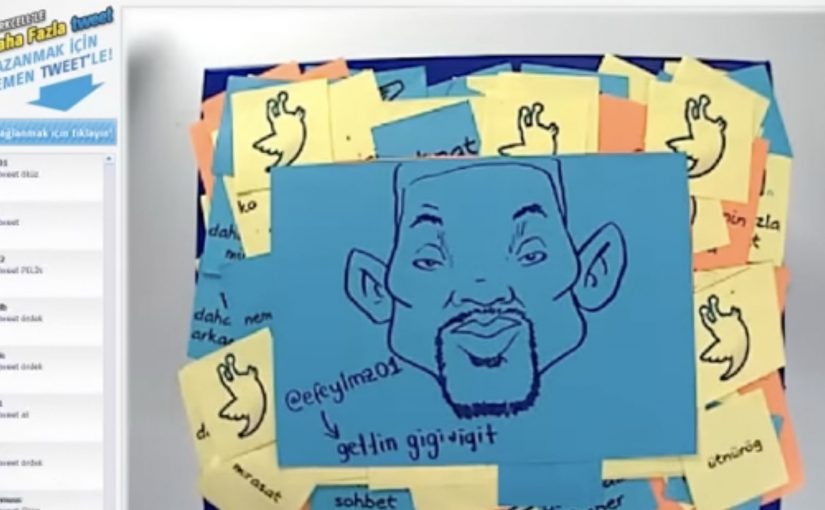
The smartphone was packed in gift boxes and covered with Post-it notes. Players had to tweet what was written on the Post-its to “unwrap” the boxes, using the hashtag #Turkcelltweet. Along the way, contestants joined quick games that won them free minutes and mobile data. The final challenge was to get a celebrity to retweet the message, which won the successful Twitter user a smartphone.
In mobile-first consumer markets, live social mechanics can turn a product launch into a participatory event that spreads through existing networks.
Why it lands
This works because it converts passive watching into a simple, fast action. Read. Tweet. Progress. It also creates a public scoreboard effect. Everyone can see the stream, feel the speed pressure, and understand why a specific player is moving closer to the prize.
Extractable takeaway: When you need attention from people who tune out advertising, design a live loop where participation creates visible progress and the reward feels plausibly “earned” in public. By “live loop” I mean a repeatable action-reward cycle that updates in real time.
What the brand is really buying
The real question is whether you are buying a one-off spike or a repeatable participation habit you can trigger again.
On the surface, it is a giveaway. Underneath, it is audience training. The campaign teaches people to watch Turkcell’s channel closely, to act quickly, and to associate the bundle with active internet culture rather than with standard telecom promotion.
If you cannot guarantee fair rules and real-time moderation, do not run a live social competition like this.
Steal this live unboxing loop
- Build a single clear verb. “Tweet this to unwrap” is easier than any multi-step entry mechanic.
- Make progress visible. The crowd should be able to understand what is happening in seconds.
- Use micro-rewards. Minutes and data keep non-winners engaged, not just the front-runner.
- Reserve one high-status finish. A celebrity retweet creates a final boss moment that feels bigger than “random draw”.
- Design for throughput. Live contests die if the pace slows or the rules feel inconsistent.
A few fast answers before you act
What is #Turkcelltweet in one sentence?
It is a live Twitter competition where people tweet Post-it clues to unwrap a boxed smartphone, win small rewards on the way, and compete for a phone as the final prize.
Why does “unwrapping in public” work as a mechanic?
Because it creates visible progress that spectators can follow, and it turns every participant action into content the network can see.
What role do the small prizes play?
They keep the wider crowd engaged. Even if you do not win the phone, you can still gain minutes or data and feel the game is worth playing.
What is the biggest risk with live social competitions?
Fairness and reliability. If timing, moderation, or rule enforcement looks inconsistent, sentiment can flip fast.
What should you measure beyond hashtag volume?
Unique participants, repeat participation, completion rates across stages, sentiment, and whether the campaign lifts bundle consideration and store inquiries in the launch window.