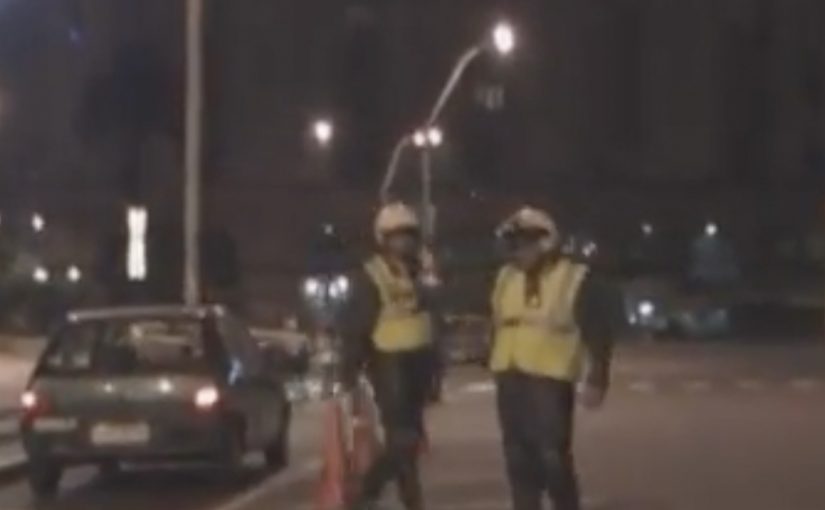
A car rolls through the city. A police stop follows. The officers lean in, looking for the usual “roadside donation” and the driver plays along, calmly offering a beer.
Then comes the punchline. The beer is positioned as 0% alcohol, so the “gotcha” is not that the driver outsmarts the law, it is that the product truth flips the entire situation into a clean reveal.
The prank is the plot, the product truth is the twist
This is staged like a short documentary. A mockumentary, meaning it borrows the signals of documentary realism to make a scripted idea feel “found” instead of “made.” The setting is described as a downtown South American city where traffic stops double as bribe fishing.
In consumer marketing, the fastest path to shareable attention is often a single product truth turned into a public situation people can retell.
How it works: build tension, then release it safely
The mechanism is simple and replicable:
- High-stakes setup: alcohol control and a police stop.
- Social friction: the uncomfortable “what will they do” moment.
- Unexpected compliance: the product is positioned as 0%, so the driver is not “escaping,” he is “within the rules.”
- Clean release: viewers get to laugh without carrying guilt, because the punchline is anchored in the product claim, not reckless behavior.
Why it spreads: it gives viewers a story, not a slogan
People do not forward “great taste” claims. They forward a scene they can summarize in one line. “These guys offer beer at a breath test, and it is fine because it is 0%.” That is the whole viral unit.
It also lands because the audience recognizes the broader cultural trope. Authority at the roadside. Informal negotiation. The awkwardness of power. Then the brand steps in with a disarming, simple resolution.
What the brand is really selling
The visible message is “0% alcohol.” The deeper intent is permission. It positions the beer as a choice that fits social moments where you want the ritual, not the alcohol.
That matters because “non-alcoholic” is not only a functional attribute. It is a situational benefit: it lets the product show up in contexts where a normal beer is a bad idea.
What to steal for your next viral
- Start from a product truth that can survive scrutiny, not a vague brand value.
- Choose a situation with instant stakes so the first five seconds do the work.
- Design a moral “safe landing” where the audience can enjoy the twist without endorsing harm.
- Make the retell obvious by ensuring the story fits in one sentence.
A few fast answers before you act
Is this encouraging drunk driving?
No. The joke is engineered to resolve on “0% alcohol,” so the brand can claim compliance rather than celebrate recklessness.
What is the core creative mechanic here?
It converts a product attribute into a plot device. The “0%” is not a line at the end, it is the hinge that changes what the scene means.
Why does the documentary style matter?
Mock-documentary cues create believability quickly. Viewers process it as “something that happened,” which increases watch-through and sharing.
What makes the idea portable to other categories?
The structure is generic: tension, social friction, twist, relief. Any brand with a defensible “safety” or “permission” truth can map onto that arc.
What is the biggest risk when copying this approach?
If the “safe landing” is weak, the audience reads it as promoting harmful behavior. The twist must clearly reframe the situation as responsible, not as a workaround.