
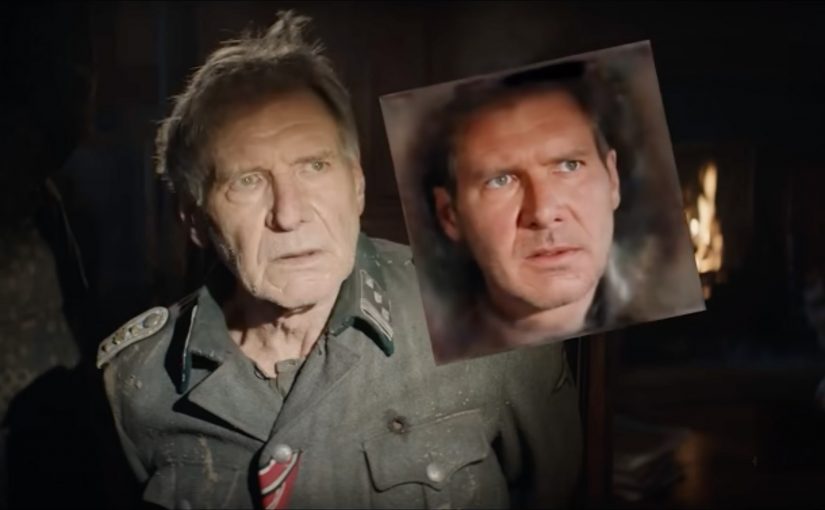
AI in Hollywood: Threat or Storytelling Upgrade?

AI is now part of everyday filmmaking. Some people see opportunity. Others see threat.

So, will AI destroy Hollywood and the film industry. Or will it change how we tell stories, who gets to tell them, and what “craft” even means.

AI is already in how films get made. Whether we admit it or not

The debate often sounds theoretical. Meanwhile, AI is already doing real work in how films get made. From early ideas to post-production: scripting support, concept design, scoring, editing assistance, voice work, and performance modification.

That matters for one simple reason. The question is no longer “Will AI arrive?”. The question is “What kind of AI use becomes normal, and under what rules?”.

If you look closely, the industry is already making that choice in small, easy-to-miss steps. The tools are frequently packaged as “features” inside software people already trust. Auto-transcription. Auto reframing for different screen formats. Tools that automatically cut out subjects from backgrounds. Tools that track motion in a shot. Noise reduction. Dialogue cleanup. Autotagging clips by faces or scenes. Call it machine learning, call it AI. The practical outcome is the same. Decisions that used to require time, specialists, or budget are getting compressed into buttons.

Which means the real question isn’t whether AI belongs in film. It’s how it gets used, and what standards come with it.

In modern media and brand storytelling, AI shifts the cost curve of production while raising the premium on taste, direction, and rights-safe workflows.

AI is a tool. What matters is how you use it

There’s a repeating pattern in creative industries.

A new tool arrives. People fear it will dilute artistry, eliminate jobs, and flood the market with mediocrity. Some jobs do change. Some workflows do get automated. Then the craft adapts, and the best creators use the tool to raise the ceiling, not lower the bar.

Sound did not kill cinema. Digital did not kill cinematography. Non-linear editing did not kill storytelling. CGI did not kill practical effects. What changed was access, speed, and the competitive baseline.

The sober takeaway is this. AI at its core is a tool. Like any tool, it amplifies intent. In the hands of someone without taste, it accelerates slop. In the hands of someone with taste, it accelerates iteration.

AI is leveling the playing field for filmmakers and creators

Here’s where the conversation gets practical.

AI lowers the cost of getting from idea to “something you can show.” It helps smaller teams and individual creators move faster. It also lets bigger studios compress timelines.

That’s the real shift. Capability is becoming less tied to budget, and more tied to taste, direction, and how well you use the tool.

Does AI help you be creative, or does it replace you?

Used well, AI helps you unlock options and enhance what you already made. It is not about creating a film from scratch. You still have to create. You still have to shoot. You still have to film. The difference is access. AI puts capabilities that used to require six-figure VFX budgets within reach, so more of your ideas can make it to the screen.

The line that matters is this: enhancement, not replacement.

The dark side. When “faster and cheaper” wins

The risk is not that AI exists. The risk is that business pressure pushes studios to use it as a shortcut.

When “cheap and fast” replaces craft, the damage shows up quickly: fewer human jobs, weaker trust, and more content that feels engineered instead of made. This is where AI stops being a creative tool and becomes a replacement strategy.

The pragmatic answer. It’s not AI or artists. It’s AI and artists

The realistic future is hybrid.

The best work will blend the organic and the digital. It will use AI to strengthen a filmmaker’s vision, not replace it. In the same way CGI can strengthen practical effects, and editing software can assemble footage but not invent the story, AI can support creation without owning authorship.

So the goal is not “pick a side.” The goal is to learn how to use the machine without losing the magic. Also to make sure the tech does not drown out the heart.

AI is here to stay. Your voice still matters

AI is not going away. Ignoring it will not make it disappear. Using it without understanding it is just as dangerous.

The creators who win are the ones who learn what it can do, what it cannot do, and where it belongs in the craft.

Because the thing that still differentiates film is not gear and not budget. It is being human.

AI can generate a scene. It cannot know why a moment hurts. It can imitate a joke. It cannot understand why you laughed. It can approximate a performance. It cannot live a life.

That’s why your voice still matters. Your perspective matters. Your humanity is the point.


A few fast answers before you act

Will AI destroy Hollywood?

It is more likely to change how work is produced and distributed than to “destroy” storytelling. The biggest shifts tend to be in speed, cost, and versioning. The hardest parts still sit in direction, taste, performance, and trust.

Where is AI already being used in film and TV workflows?

Common uses include ideation support, previs, VFX assistance, localization, trailer and promo variations, and increasingly automated tooling around editing and asset management. The impact is less “one big replacement” and more many smaller accelerations across the pipeline.

What is the real risk for creators?

The risk is not only job displacement. It is also the erosion of creative leverage if rights, compensation models, and crediting norms lag behind capability. Governance, contracts, and provenance become part of the creative stack.

What still differentiates great work if everyone has the same tools?

Clear point of view, human insight, strong craft choices, and the ability to direct a team. Tools compress execution time. They do not automatically create meaning.

What should studios, brands, and agencies do now?

Set explicit rules for data, rights, and provenance. Build repeatable workflows that protect brand and talent. Invest in directing capability and taste. Treat AI as production infrastructure, not as a substitute for creative leadership.
Viral Content: Clone Winning Ads in Minutes

Viral video creation just changed with Topview AI.

For years, short-form performance video lived in two modes. Manual production that is slow and expensive. Or template-based generators that are faster, but still force you into lots of manual re-work.

Now a third mode is emerging. AI Video Agents.

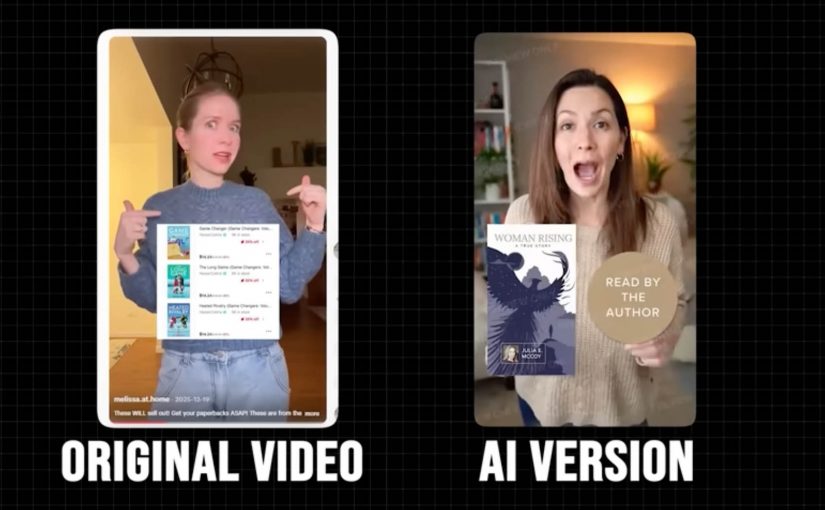
The shift is simple. Instead of editing frame-by-frame, you brief the outcome. Optionally provide a reference viral video. The agent then recreates the concept, pacing, and structure for your product in minutes. Your job becomes direction, constraints, and iteration. Not timelines.

Meet the AI Video Agent “three inputs” workflow

Topview’s core promise is “clone what works” for short-form marketing.

Upload your product image and/or URL so the system extracts what it needs. Share a reference viral video so it learns the shots and pacing. Get a complete multi-shot video that matches the reference style, rebuilt for your product.

That is the operational unlock. You stop asking a team to invent from scratch every time. You start generating variants of formats that already perform, then iterate based on outcomes.

In performance marketing organizations, tools that “clone” winning ads mainly shift the bottleneck from production to briefing quality, governance, and iteration discipline.

What “cloning winning ads” really means

This is not about copying someone’s assets. It is about cloning a repeatable pattern.

High-performing short-form ads tend to share the same backbone. A strong opening. A clear value moment. Proof. A simple call-to-action. The variable is the angle and execution. Not the structure.

AI video agents are optimized to reproduce that backbone at speed, then let you steer the angle. That is why they matter for performance teams. The advantage is iteration velocity. The risk is sameness if you do not bring differentiation in offer, proof, and brand voice.

What to evaluate beyond the AI Video Agent headline

I would not judge any platform by a single review video. I would judge it by whether it covers the tasks that constantly slow teams down.

From the “creative tools” surface, Topview positions a broader toolbox around the agent, including: AI Avatar and Product Avatar workflows (plus “Design my Avatar”). LipSync. Text-to-Image and AI Image Edit. Product Photography. Face Swap and character swap workflows. Image-to-Video and Text-to-Video. AI Video Edit.

This matters because real creative operations are never “one tool.” They are a chain. The more of that chain you can keep inside one workflow, the faster your test-and-learn loop becomes.

Topview alternatives. Choose by use case, not by hype.

If you are building a modern AI powered creative tech stack, ensure you match the AI tools to the job.

HeyGen

HeyGen positions itself around highly realistic avatars, voice cloning, and strong lip-syncing, plus broad language support and AI video translation. It also supports uploading brand elements to keep outputs consistent across projects. Compared to Topview’s short-form ad focus and beginner-friendly “quick publish” style workflow, HeyGen is often the stronger fit when avatar-led and multilingual presenter content is your primary format.

Synthesia

Synthesia is typically strongest for presenter-led videos, especially training, internal communications, and more “corporate-grade” marketing explainers. Compared to Topview’s short product ad focus, Synthesia is often the cleaner fit when a human-style presenter is the core format.

Fliki

Fliki stands out when your workflow starts from existing assets and needs scale. Blogs, slides, product inputs, and team updates converted into videos with avatars and voiceovers, plus a large set of voice and translation options. Use Fliki when you want breadth and flexibility in avatar and voiceover production. Otherwise, use Topview AI when your priority is easily creating short videos from links, images, or footage with minimal workflow friction.

The real question

My take is that “viral content” is no longer a production problem. It is becoming an iteration problem.

When agents can rebuild proven short-form patterns in minutes, the advantage shifts to teams who can run a disciplined creative system. Better briefs. Cleaner angles. Stronger proof. Faster learning loops. And brand guardrails that do not slow everything down.

Which viral video would you recreate first. And what would you change so it is unmistakably yours, not just a remix.


A few fast answers before you act

What does “clone winning ads” actually mean?

It usually means generating new variants that reuse the structure of high-performing creatives. The goal is to speed up iteration, not to copy a single ad one-to-one.

Is this ethical?

It depends on what is being “cloned.” Reusing your own learnings is normal. Copying another brand’s distinctive IP, characters, or protected assets crosses a line. Governance and review matter.

What will still differentiate brands if everyone can produce fast?

Strategy, customer insight, and taste. If production becomes cheap, the competitive edge moves to positioning clarity, creative direction, and the quality of testing and learning loops.

How should teams use this without flooding channels with slop?

Use strict briefs, clear brand guardrails, and a limited hypothesis set. Test fewer, better variants. Kill quickly. Scale only what proves incremental lift.

What is the biggest risk?

Over-optimizing for short-term clicks at the expense of brand meaning, trust, and distinctiveness. High-volume iteration can become noise if the work stops saying something specific.

Lovart AI: Photoshop, Now as Simple as Paint

The Lovart AI ‘designer for everyone’ moment just got real

For decades, creative software demanded expertise. Layers. Masks. Rendering. Color theory. Not because it was fun, but because the tools were built for specialists.

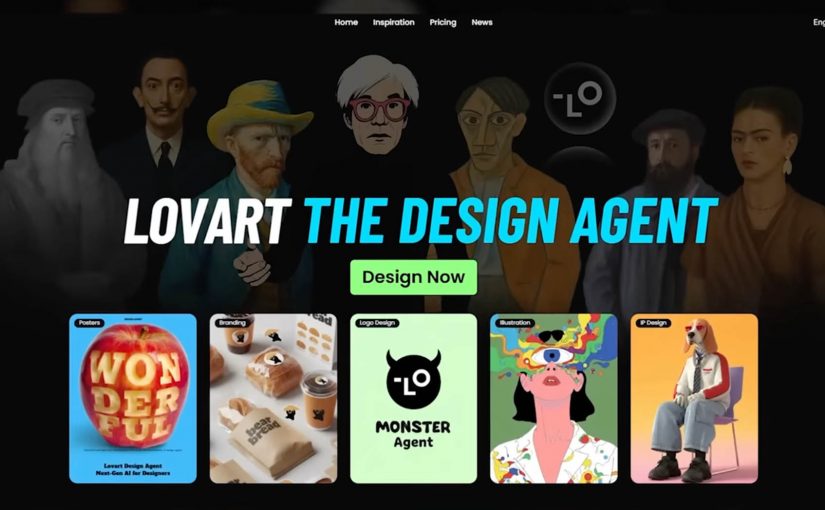
Lovart frames a different future. Instead of learning the tool, you describe the outcome, and an AI design agent orchestrates the work across assets and formats.

What Lovart is really selling. Creative output as an agent workflow

The shift is not “design got easier”. The shift is that the workflow collapses into intent. You type what you are trying to achieve, and the system produces a coordinated set of outputs.

In the positioning and demos around Lovart, the promise is that you can move from a prompt to a usable bundle of creative. Brand identity elements. Campaign assets. Even video outputs. Without tutorials, plugins, or the classic “maybe I will learn Photoshop someday” hurdle.

In enterprise brand teams, the main unlock from agentic design tools is faster option generation while governance and taste still decide what ships.

Why Photoshop starts to feel like Microsoft Paint

This is not a diss on Photoshop. It is a reframing of value.

When an agent can produce a coherent set of assets quickly, the advantage shifts away from operating complex software and toward higher-order thinking:

  • What is the offer.
  • What is the story.
  • What is the differentiation.
  • What should the system optimize for. Consistency, conversion, memorability, or speed.

If everyone can generate assets, the edge belongs to people who can direct the system with clarity and taste, not just execute.

The real constraint moves upstream. Taste, strategy, and governance

The future hinted at here is not “more content”. It is content creation that behaves like a pipeline.

That raises two practical questions that matter more than the wow factor:

  1. How do you keep quality high when output becomes abundant.
  2. How do you keep brand coherence when anyone can spin up campaigns in minutes.

This is where the craft does not disappear. It relocates. From hands-on production to creative direction, guardrails, and decision-making.

The takeaway. The future is here. Are you ready to direct it?

Lovart is a signal that creative tooling is becoming agentic. The barrier is no longer the interface. The barrier is how well you can articulate what “good” looks like, and how consistently you can repeat it across channels.

The future is not coming. It is already here. Are you ready?


A few fast answers before you act

What is Lovart in one sentence?

Lovart is a design-oriented agent experience that turns a brief into a guided workflow. It plans, generates, and iterates across assets, rather than handing you a blank canvas.

How is this different from using Photoshop plus AI tools?

The difference is orchestration. Instead of switching between tools and prompts, the workflow becomes “brief to deliverables” with the system managing steps, versions, and outputs.

Does this replace designers?

It can replace some production tasks and speed up concepting. It does not replace taste, direction, brand judgment, and the ability to decide what is worth making.

What should brand teams watch closely?

Brand safety, rights and provenance, and consistency. Faster creation increases the need for clear guardrails, review, and a shared definition of “good.”

What is the simplest way to test value?

Pick one repeatable asset type, run the same brief through the workflow, and compare speed, quality, and revision cycles against your current process.