
Philips Russia: The Art of Ironing

Philips Russia: The Art of Ironing

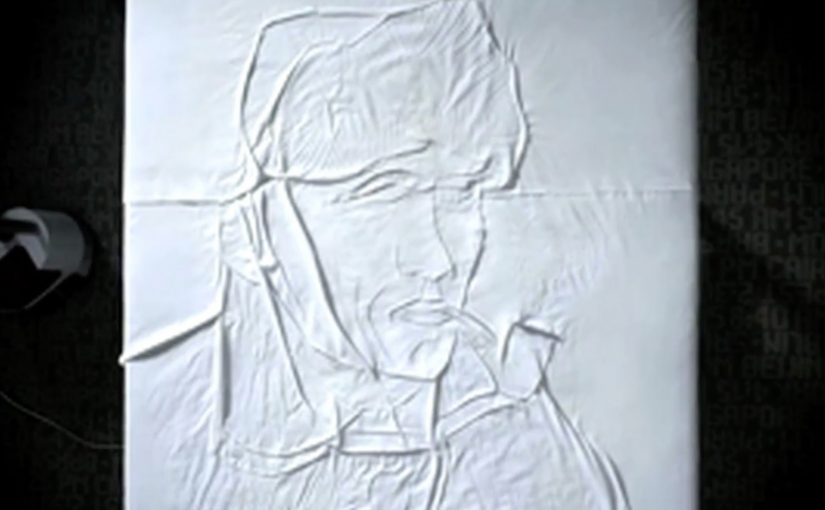
Earlier this year I had covered a couple of novel approaches to art. Joining that collection is this film from Philips Russia, where the performance of its irons and steamer products is demonstrated by recreating famous Dutch paintings on a plain piece of white cloth.

It is a simple setup with a surprising payoff. A sheet. A tool you already understand. Then, with pressure, heat, and steam, the fabric starts behaving like a canvas.

When fabric becomes a canvas

The craft trick is that wrinkles and flattened areas act like light and shadow. Steam relaxes fibres, pressure fixes the fold, and controlled temperature makes the result repeatable. In other words, the “brushstroke” is not pigment. It is texture, created and locked in by the iron.

In global consumer electronics and home appliance marketing, the hardest job is to make small performance differences feel tangible in seconds.

Why it lands

This works because it makes an invisible promise visible. Most iron claims are abstract. More steam. Better glide. Fewer wrinkles. Here, the demonstration turns those claims into a proof you can read from across the room. That is why the idea persuades so quickly: the same steam, pressure, and temperature control needed to shape fabric into a portrait also signals control over everyday wrinkles. If an iron can reliably “draw” with fabric, it can reliably handle a shirt collar.

Extractable takeaway: When your product benefit is hard to evaluate (speed, precision, consistency), design a demo where the benefit becomes a visible artefact. The artefact should be legible instantly and hard to fake without the real capability.

What Philips is really selling

The paintings are the hook, but the real message is controllability. Consistent steam output. Predictable temperature. Even pressure. The art is not the point. It is the credibility vehicle that lets viewers infer performance without needing specs.

The real question is how to make product control visible before a viewer has to trust the spec sheet.

The spot is credited to DDB Moscow, which fits the overall approach. Make the proof the story, not the claim.

What to steal for your next product demo

  • Pick a “hero capability” and exaggerate it safely. If precision matters, show precision at a level nobody expects in the category.
  • Use a familiar reference. Famous paintings function as a built-in quality benchmark. Viewers know what “good” looks like.
  • Make the proof readable without explanation. If the demo needs narration to work, it is probably not a demo yet.
  • Engineer for repeatability. The best demos look like magic, but behave like a process.

A few fast answers before you act

What is “The Art of Ironing”?

It is a Philips Russia film that demonstrates iron and steamer performance by recreating classic Dutch paintings using wrinkles and flattened texture on white cloth.

What product point does the demo prove?

Control and consistency. Steam output, temperature stability, and pressure control are implied by the ability to create repeatable, detailed fabric texture.

Who is credited for the campaign?

The campaign is credited to DDB Moscow.

Why use famous paintings instead of an original design?

Recognition compresses understanding. Viewers instantly know the reference, so they can judge the fidelity without being taught the criteria.

How can another brand use this approach without copying it?

Translate the principle, not the prop. Choose a culturally familiar benchmark in your category, then create a visible artefact that only your real capability can produce.

FriendsWithYou: Cloudy

FriendsWithYou: Cloudy

Miami based animation studio FriendsWithYou has produced “Cloudy”, a short film exploring the concept of clouds singing and performing their duties in a joyful manner while showing the viewer that everything in our world has a role and a purpose.

Sit back and enjoy this sweet visual soundscape that takes you through a personal journey into the sky. Here, “visual soundscape” means a piece where rhythm, tone, and imagery do the narrative work together.

A sky full of characters, not weather

“Cloudy” treats the atmosphere like a workplace musical. Clouds are not background texture. They are the cast, with jobs to do, rhythms to keep, and a mood that turns routine into celebration.

The mechanic: give nature a chorus

The film’s core device is straightforward. Personify the clouds, make the labor visible, and score it like a performance. Once the viewer accepts that premise, every movement becomes readable as intention rather than randomness.

In brand and studio storytelling, anthropomorphism lands when it is used to clarify a system rather than merely decorate a scene.

Why this lands as a “visual soundscape”

The piece is gentle, but it is not passive. It holds attention by pairing simple character purpose with musical momentum, so you feel guided through the sky rather than shown a series of pretty shots.

Extractable takeaway: If you want viewers to remember a message about meaning or purpose, do not explain it first. Stage it as a system of roles, then let the audience feel the order before you name it.

What it is really doing

Beyond the craft, the film is an attitude. It argues that work can look joyful, that duty can look like play, and that even the quiet background parts of a world can be the main event when you frame them that way.

The real question is whether purpose can be made felt before it is explained.

What to steal for your own short-form craft

  • Pick one premise and commit. Once clouds can sing, every scene should deepen that rule, not diversify into new ones.
  • Make “process” the plot. Showing how something gets done is often more watchable than inventing a separate story.
  • Let sound carry structure. A strong musical spine can turn a mood piece into a journey with forward motion.
  • Give the viewer one clean idea to take home. Purpose is easier to feel when every character has a job.

A few fast answers before you act

What is Cloudy?

“Cloudy” is a short animated film by FriendsWithYou that imagines clouds singing and joyfully doing their work, to suggest that everything has a role and a purpose.

What makes it a “visual soundscape”?

The experience is built as much on rhythm and audio mood as on imagery. The sound is not decoration. It is the structure that carries the viewer through the piece.

Why does anthropomorphizing clouds work here?

Because it makes an abstract system legible. Once clouds behave like characters with duties, the viewer can follow cause, effect, and intention without needing exposition.

What can brands learn from this kind of short?

When you want to communicate values like purpose, care, or optimism, show a world where roles are clear and the system feels coherent. That feeling transfers faster than a stated message.

What should creators copy first?

Start with the rule, not the ornament. Give the world one clear premise, then let character, sound, and motion keep proving it.

Rise of the Machines: Siri and Quadrotors

Rise of the Machines: Siri and Quadrotors

Here are two videos (fictional and real) that create the same feeling. A Skynet reality does not seem too far away.

Two clips, one unsettling takeaway

One is a short parody where a voice assistant turns from helpful to threatening. The other is a real lab demo where tiny quadrotors fly as a coordinated swarm. Put them next to each other and the “machines are getting clever” idea stops being a movie line and starts feeling like a trajectory.

Fiction, then engineering

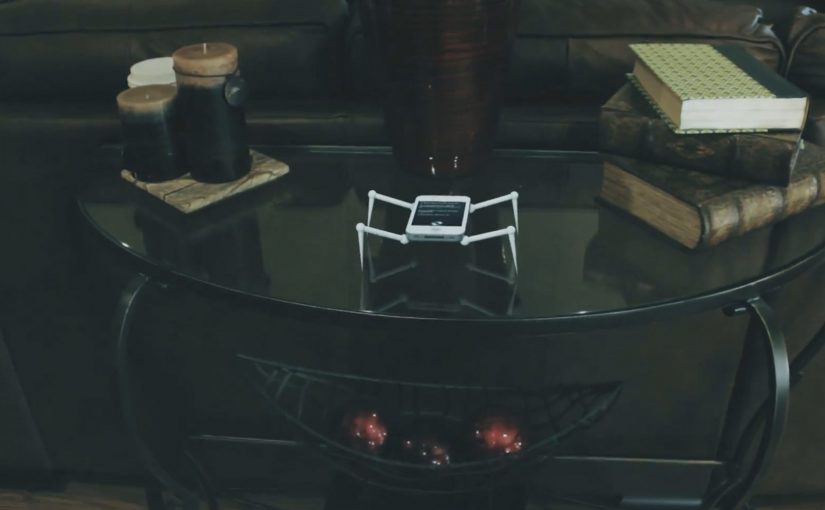
Psycho Siri

Andrew Films USA delivers a compact piece of sci-fi anxiety. Siri is framed as familiar, then reframed as unpredictable, with polished visual effects that make the escalation feel plausible.

A swarm of Nano Quadrotors

GRASP Lab at the University of Pennsylvania shows coordinated micro flight with a team of nano quadrotors, presented as experiments in swarm behavior and formation control. The choreography is the point. It looks like one organism, not many small machines.

Here, “swarm behavior” means several machines coordinating as one system rather than acting as isolated units.

In consumer technology and robotics, capabilities move from demo to everyday life faster than most people update their mental models.

The real question is not whether machines look intelligent, but whether people can understand, predict, and control what they do.

Why it lands: the same story from two directions

Parody works because it exaggerates a fear people already carry. When the “assistant” becomes the aggressor, the joke is that the interface you trust most is the one you cannot physically switch off in the moment.

Extractable takeaway: When technology feels “sudden”, it is often because interface adoption outpaces public understanding of the underlying capability. Brands and product teams win trust by making capabilities legible, bounded, and explainable before they become ambient.

The swarm demo lands for the opposite reason. It is not exaggerated. It is controlled, repeatable engineering that still feels uncanny because coordination at that scale used to belong to animation.

Smart systems should earn trust through visible boundaries and user control, not spectacle alone.

What to steal if you build products around “smart” systems

  • Show constraints, not just power: users relax when they understand what the system cannot do.
  • Design for graceful failure: surprise is fun in demos, but costly in daily use.
  • Make control obvious: clear opt-outs and visible states reduce anxiety.
  • Translate capability into plain language: the best trust-building copy explains behavior, not architecture.

A few fast answers before you act

What is the point of pairing these two videos?

They tell the same story from different angles. One is cultural fear through fiction. The other is real capability through engineering. Together they make the “Skynet” feeling emotionally credible.

What makes swarm robotics feel unsettling to non-experts?

Coordination. Many small machines behaving like one system reads as intelligence, even when it is pre-programmed control and sensing.

Is this actually “AI taking over”?

No. One clip is fiction. The other is a technical demonstration of coordinated flight. The useful takeaway is about perception, trust, and control, not doomsday prediction.

What should product teams do to reduce user anxiety around smart systems?

Make system boundaries explicit, provide obvious controls, and communicate how decisions are made and when humans can override them.

What is a practical business use of swarm behavior?

Tasks that benefit from coverage and redundancy, like inspection, mapping, search, and coordinated movement in constrained spaces. The key is safety, predictability, and clear operational limits.