
13th Street: Last Call Interactive Horror

13th Street: Last Call Interactive Horror

Last year Lacta Chocolates came up with a web-based interactive love story called Love at first site. Now Jung von Matt and Film Deluxe take the same “viewer participation” impulse into a darker genre with an interactive horror experience designed for cinemas. Here, viewer participation means the audience can influence what happens on screen instead of only reacting to it.

The movie is called Last Call by 13th Street, and it is billed as the first interactive horror movie in the world.

How the film turns a screening into a live conversation

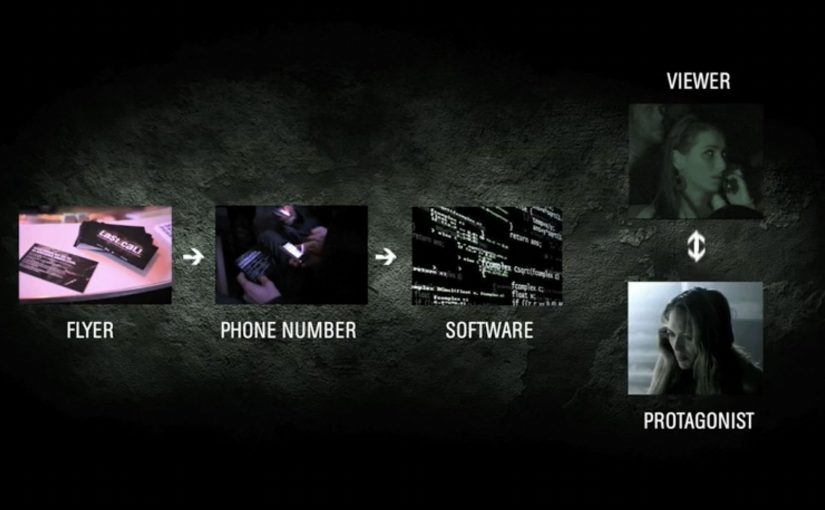
The core mechanic is simple and high-stakes. The audience can communicate with the protagonist through specially developed speech recognition that turns one participant’s answers, delivered via mobile phone, into on-screen instructions.

Instead of passively watching a character make bad decisions, one viewer gets pulled into the story and has to direct what happens next, under pressure, in front of a room full of people.

In European entertainment marketing, the strongest channel ideas are the ones that turn passive viewing into a shared physical experience.

Why it lands: it converts fear into responsibility

Horror is already interactive in your head. You are constantly thinking “don’t go in there” or “run”. Last Call makes that internal commentary explicit, then gives the viewer control at exactly the moment when tension is highest. That works because it turns private fear into public responsibility, which intensifies tension instead of interrupting it.

Extractable takeaway: If you want interactivity to feel meaningful, make the choice time-critical and socially visible. When a whole room watches one person decide, even simple branching choices feel heavier.

The intent: make a channel brand feel like an event

This is not interactivity for its own sake. It is a positioning play. The real question is whether the interaction makes 13th Street feel like the only place this kind of horror experience could happen.

The phone call is the hook, but the real product is the shared story people retell afterwards: “someone in our screening got the call”.

What to steal for your own interactive storytelling

  • Choose one decisive moment: interactivity works best when it happens at a peak, not throughout.
  • Keep the command vocabulary tight: yes or no, left or right, stay or flee. Clarity beats cleverness.
  • Make the interaction legible to spectators: the audience should understand what the caller chose without needing explanation.
  • Design for group emotion: the collective tension and reaction is part of the value.
  • Build the “retellable” sentence: “the character called an audience member” is stronger than any tagline.

A few fast answers before you act

What makes Last Call “interactive”?

A participant receives a mobile phone call and speaks choices that are translated via speech recognition into commands, which trigger different follow-up scenes.

Why use a phone call instead of a web interface?

A phone call feels personal and urgent, which matches horror. It also keeps the participant’s hands free and the interaction fast enough for a live screening.

Is this a real branching film or a gimmick?

It works like a branching structure with pre-produced scenes, selected based on a small set of recognized commands. The novelty is the live calling mechanic in a cinema context.

What is the biggest risk when copying this format?

Latency and ambiguity. If recognition is slow or choices are unclear, tension collapses. The interaction has to feel instantaneous and unmissable.

What is the transferable principle beyond horror?

Put the audience in a single, decisive role at a high-emotion peak. One clear decision, delivered fast, can create a stronger memory than many shallow interactions.
The Black Hole: Greed Meets Gravity

The Black Hole: Greed Meets Gravity

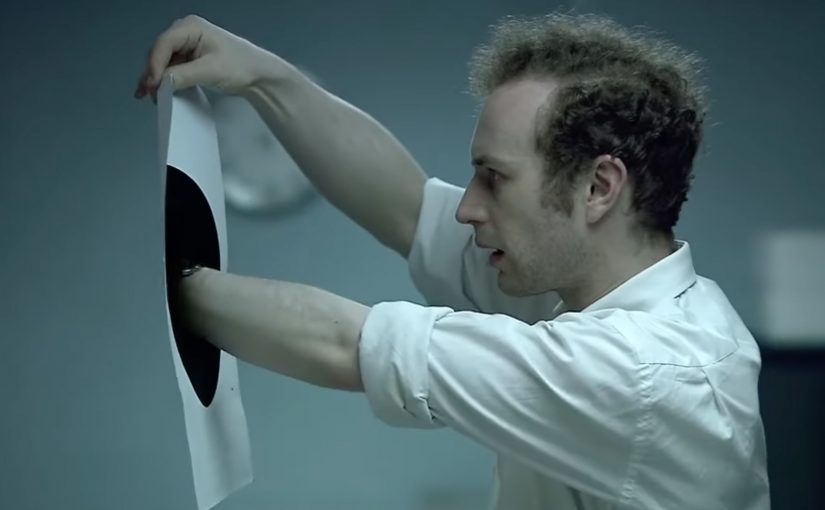
A photocopied black hole in a tired office

A sleep-deprived office worker accidentally discovers a black hole. And then greed gets the better of him.

The temptation ladder that drives the story

The mechanism is minimal and ruthless. An impossible object appears in a painfully ordinary environment, and the plot becomes a sequence of decisions. That escalation is a temptation ladder. Each rung is a slightly bolder choice that still feels justifiable. First curiosity. Then small opportunism. Then the one step too far, when he is unobserved and convinced he can get away with more.

In digital-first marketing teams, shorts like this are often used as reference for how to compress a human truth into under three minutes without losing clarity.

Why it lands: humour, surprise, and a very human loss of control

It works because the character is recognisable. The film does not need backstory. Sleep deprivation, dull repetition, and the sudden possibility of an easy win are enough. The humour comes from how quickly the “reasonable test” becomes a greedy plan. Because the escalation is choice-led, the ending feels inevitable rather than arbitrary. The real question is how fast a “harmless” shortcut turns into a choice you cannot undo. The office worker’s attempt to take the money leaves him imprisoned in the safe, which snaps the whole story shut with a clean, memorable payoff. For short-form work, this is a stronger reference than most brand films because it earns its payoff through decisions, not exposition.

Extractable takeaway: If you want a twist to travel, build it as a ladder of justifiable choices so the audience can feel themselves taking each step.

Craft choices that make the twist hit harder

The look supports the emotional state. Desaturated colour and a flat office environment underline the dull, repetitive job, then the discovery injects energy into both the performance and the pacing. Visual rhythm is handled through fast cutting and movement within the frame, and it intensifies when he enters the room with the safe.

Sound does a lot of work too. It helps sell the supernatural element while keeping everything grounded in familiar office items, which makes the concept feel closer and more unsettling.

Steal the escalation pattern for your own shorts

  • Start with a one-sentence premise. The audience should understand the setup immediately.
  • Escalate through choices, not explanation. Each decision should feel like the next “tempting” step.
  • Let craft mirror psychology. Colour, cutting, and sound can track the character’s shift from boredom to adrenaline.
  • Deliver an inevitable ending. A twist lands best when viewers can replay the steps and realise it was always heading there.

A few fast answers before you act

Who made “The Black Hole”?

The short film “The Black Hole” is directed by Philip Sansom and Olly Williams and features Napoleon Ryan as the office worker.

What is the core mechanism of the film?

The film puts an ordinary office setting next to an impossible “black hole” object, then escalates through a chain of increasingly greedy decisions.

Why does the short work so well?

The short works because the character is instantly recognisable, the premise is one sentence, and each choice feels like a believable next step until the inevitable consequence lands.

What makes this a useful reference for marketers and storytellers?

The film is a useful reference because it compresses a human truth into a tight arc with minimal setup, clear escalation, and a payoff that recontextualises every prior step.

What is the most transferable takeaway?

The most transferable takeaway is to start with one impossible object, escalate via choices rather than exposition, and land a twist that feels inevitable in hindsight.

Logorama: 2,500 Logos

Logorama: 2,500 Logos

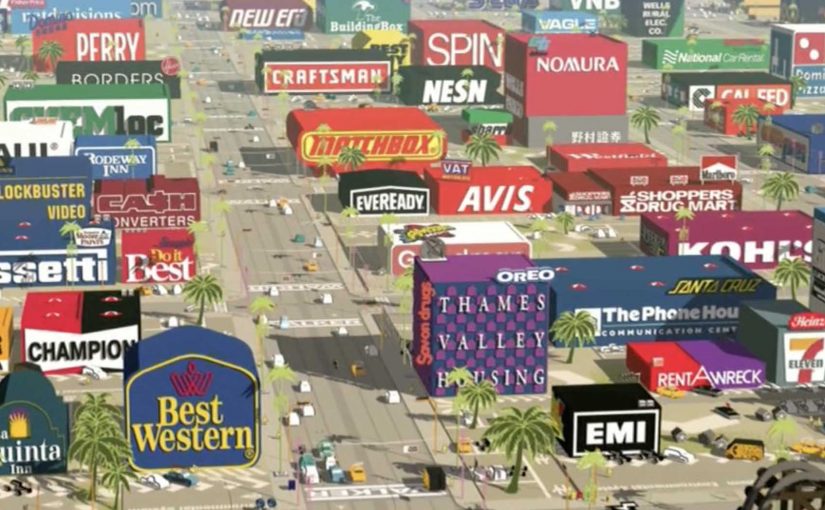
A seventeen-minute Hollywood-style tale where the city, the props, and even the characters are built from brand marks. The film is described as using more than 2,500 logos.

Logorama turns a familiar crime-thriller structure into something stranger. A world that looks like Los Angeles, but everything is signage. Every surface is a trademark. Every background detail is a corporate symbol you already know.

A thriller built out of trademarks

The mechanism is extreme constraint. Here, that means one hard rule: the filmmakers construct the entire environment out of existing brand identities, then animate it with blockbuster pacing, chase energy, and escalating chaos. That constraint works because instant logo recognition lets the film establish character, tone, and hierarchy without slowing down for explanation.

In brand-saturated consumer cultures, the fastest way to make people feel the weight of logos is to stop treating them as background and make them the physical world.

Why it lands, even if it feels wrong

The film works because it makes recognition do the work. You do not need exposition to understand who is powerful, who is ridiculous, and what kind of world you are in. Your brain fills in associations at speed, and the pace keeps you laughing before you have time to get comfortable. The satire lands not through speeches, but through accumulation. If everything is a logo, nothing is neutral.

Extractable takeaway: If your message is about cultural saturation, build a system where the audience cannot escape the stimulus, and let their own pattern-matching create the critique.

What the film is really demonstrating

Logorama is both craft flex and commentary. It shows how deeply brand codes have entered shared visual language, and it proves that you can tell a coherent, high-tempo story while replacing conventional production design with a library of corporate symbols.

This is not a logo stunt. It is a disciplined storytelling system that turns brand recognition into narrative force. The real question is how far a single visual rule can carry both entertainment and critique without collapsing into gimmick.

What to borrow from Logorama

  • Use constraint as a headline. One clear rule can make a piece feel instantly different.
  • Let recognition drive meaning. Familiar symbols carry narrative shortcuts, use them deliberately.
  • Keep the story engine simple. High concept needs a readable spine, chase, pursuit, escalation.
  • Make the critique experiential. People remember what they felt while watching, not what they were told.

A few fast answers before you act

What is Logorama?

An animated short that builds a Hollywood-style thriller world entirely out of brand logos and mascots, using recognition as both storytelling fuel and satire.

Why does the “all logos” rule matter?

It turns branding from decoration into environment. That shift makes consumer culture feel unavoidable, which is the point the film is pressing on.

How many logos are in the film?

The film is commonly described as featuring more than 2,500 logos.

What is the main creative risk of this approach?

If the narrative spine is weak, the piece becomes a spot-the-logo gimmick. The story has to keep moving, so the constraint serves meaning rather than replacing it.

What can marketers learn from it?

High constraint plus simple story structure can produce work that is both memorable and interpretable. The audience does the decoding, which increases engagement.