
100% Real Virtual Reality

A passerby in Tbilisi puts on a VR headset and starts touring Ireland. Irish countryside. The streets of Dublin. A traditional Irish bar. Then the headset comes off, and the “virtual” bar is suddenly real. A pop-up pub has been built around them in seconds, complete with actors and Irish stereotypes, and beer in hand. The reveal does not explain the slogan. It makes the slogan unavoidable.

The idea in one line

Use virtual reality as misdirection, then land the brand promise by turning the “virtual” experience into a physical surprise.

What happens in the stunt

Old Irish is a new craft beer entering Georgia. Leavingstone takes a line that could sound like every other beer claim, “100% real,” and makes it literal.

  1. Invite the public into VR
    People on the streets of Tbilisi are offered a VR “tour of Ireland,” including nature, Dublin streets, and a typical Irish bar.
  2. Build the punchline in real life
    While they are inside VR, a crew builds a pop-up Irish bar around them. The space is filled with actors performing how locals imagine Ireland.
  3. Reveal the brand promise as a lived moment
    The moment the headset comes off, the audience is already “in Ireland,” except it is physically there, and the product is part of the scene.

Why this works

Beer marketing often tries to borrow authenticity through language. This one manufactures it through experience.

The proof is theatrical, but the reaction is real

The campaign bets on ordinary people’s genuine surprise. That reaction becomes the content people want to share.

VR is not the product. VR is the setup

Virtual reality is used as a temporary attention lock so the physical transformation can happen without explanation. The innovation is the transition, not the headset.

The brand promise is delivered in one clean, repeatable beat

“100% real” is not argued. It is demonstrated when the environment jumps from virtual to physical.

Results the agency reports

Leavingstone states the video is posted with a modest placement budget, reaches more than 50% of internet users in Georgia, hits 1 million views in 72 hours, and is followed by first-month sales of 515,698 liters, described as 2x.

The deeper point

When a category leans heavily on claimed authenticity, the advantage goes to the brand that can turn authenticity into an event. This is not “VR marketing.” It is live communication disguised as emerging technology.


A few fast answers before you act

What is the core mechanic?

A VR tour of Ireland distracts participants while a real pop-up Irish bar is built around them, so the reveal converts “virtual” into physical.

Why use VR at all?

It creates a believable reason to pause someone in public, and it buys time to build the physical environment unnoticed.

What makes it shareable?

The surprise is immediate, visual, and human. Ordinary people’s reactions are the story engine.

What is the transferable pattern?

Use an emerging-tech interface as a controlled setup, then deliver the brand promise through a physical, social payoff people can experience together.

What is the biggest risk?

If the reveal does not map cleanly to the product truth, the stunt becomes spectacle with no belief gain.
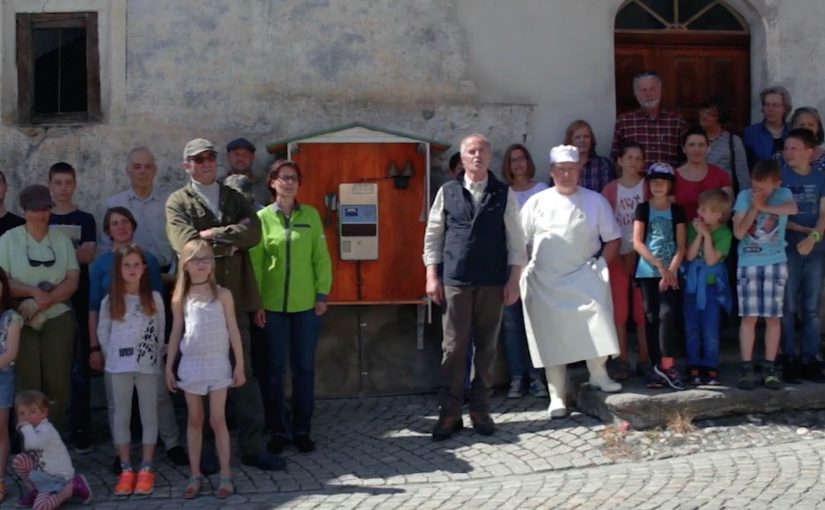
The Village Telephone

In the mountain village of Tschlin, it is so quiet that when the telephone in the village square rings, you can hear it from every corner of the village. So when that phone starts ringing, people move. The butcher. The innkeeper. The pastor. Whoever is closest. The whole premise is simple: if the phone rings and nobody makes it in time, the caller wins.

The idea in one line

Turn “quietest place in Switzerland” from a claim into a game people can test in real time.

What Graubünden Tourism and Jung von Matt set up

Graubünden Tourism and Jung von Matt/Limmat publish the village phone number online and invite anyone to call it between 10:00 and 20:00. If a resident answers, you get a conversation with a real person from Tschlin. If the call goes unanswered, you win prizes such as free stays, dinner, or merchandise.

To prove that nobody is sitting next to the phone “waiting,” the campaign also runs a live view of the village square, so participants can see what is happening and who is answering. The transparency is part of the promise.

How the mechanic creates tourism interest

It makes the destination benefit testable

Most tourism ads describe tranquility. This one lets you attempt to break it with a phone call.

It turns locals into the medium

No actors are needed. The villagers are the campaign, and that authenticity is visible in every answered call.

It creates a built-in story loop

Call. Ringing. Sprint. Answer. Or silence. Win. The narrative resets every time the phone rings, which is exactly why people keep trying.

The timeframe that makes it feel like an “event”

The action runs from Monday, June 6 to Saturday, June 11, 2016. It is short enough to create urgency, and long enough to become a talking point beyond Switzerland.

Signals that the stunt travels

Reported outcomes for the six-day activation include 30,000 attempted calls, 3,906 conversations, and 1.5 million video views, alongside significant media pickup.

The deeper point

This is a clean example of “proof marketing.” The campaign does not ask you to believe that Tschlin is quiet. It gives you a simple action to attempt, shows you the village while you do it, and lets the locals validate the claim with their own behavior.


A few fast answers before you act

What is the core mechanic?

Call the village telephone between 10:00 and 20:00. If a resident answers, you talk. If the call goes unanswered, you win prizes.

Why is the live feed important?

It proves the fairness of the promise. People can see that nobody is waiting next to the phone, and they can see who they are speaking with.

Who is behind the campaign?

Graubünden Tourism (Graubünden Ferien) with Jung von Matt/Limmat.

When does it run?

June 6 to June 11, 2016.

What is the transferable pattern?

If your promise is experiential (quiet, fast, safe, simple), build a public test that lets people attempt to disprove it. Then make the proof visible while they try.

The Great Escape

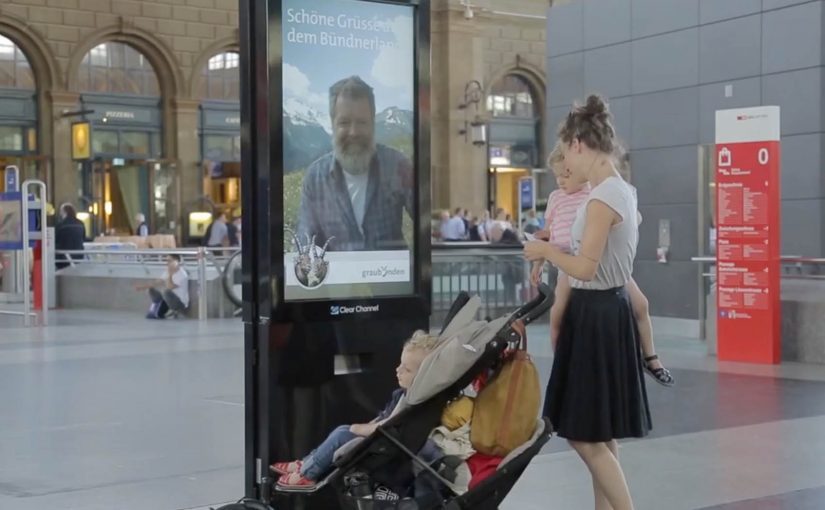
A stressed commuter walks through Zurich’s main train station, eyes forward, pace set to “late again.” Then a large interactive display stops them. On screen is a real Graubünden mountain man. He sees them. He speaks to them. He invites them to step out of the city and into the mountains. The offer is not “someday.” It is now. An all-expense-paid trip to Vrin, a mountain village in the Lumnezia Valley. The only catch is brutal and perfect. They have to drop everything and jump on the train leaving from the next platform.

The idea in one line

Bring the mountain to the most hectic place in Switzerland, then make escape a one-decision act.

The context you already build on

In 2011, Graubünden Tourism and Jung von Matt had created a clever stunt to publicize the remote mountain village of Obermutten on Facebook. There they targeted people closer to home, specifically stressed urban commuters in a Zurich train station.

What happens at Zurich station

Step 1. Replace “beautiful scenery” with a human invitation

Instead of showing landscapes, the campaign puts a real local face in front of commuters. He can see and talk to people as they walk past. It feels personal, not broadcast.

Step 2. Turn interaction into an offer with real stakes

Anyone who engages is offered an all-expense-paid trip to Vrin. The offer is framed as a cure for stress, delivered at the exact moment stress is visible.

Step 3. Make the brand promise non-negotiable with one constraint

The only catch is the mechanism. They have to drop everything and take the train that is about to leave from the next platform. That single constraint transforms the idea from a nice story into a real test of desire.

Why this works as live communication

It collapses the distance between promise and proof

Tourism often sells “escape” as a future plan. Here, escape is immediate, and the decision is binary. Stay, or go.

It uses technology to create intimacy, not spectacle

The interactive display is not the point. The point is that someone in the mountains is speaking to you directly in the middle of the city.

The constraint is the creative

The “next train” rule is what makes it unforgettable. It forces commitment. It also creates the story people retell because it is a moment with consequence.

The deeper point

If you want people to believe in a destination, do not just show it. Put a human being from that place in front of the audience, then convert emotion into action with a simple, immediate next step.


A few fast answers before you act

What is The Great Escape in one sentence?

An interactive display in Zurich station lets a real Graubünden mountain man speak to commuters and invite them on an immediate trip to Vrin.

What makes it different from standard digital out of home?

It is not a looped video. It is a live, human interaction that turns attention into a real decision.

What is the key mechanic that creates urgency?

The “next platform, next train” constraint. People have to go now, not later.

How does it connect to the earlier Obermutten work?

It builds on the same strategy. Make a remote mountain place culturally visible through an idea that people actively participate in.

What is the reusable pattern for brands?

If your promise is experiential, create a live proof moment, then add a constraint that forces a meaningful choice.