
The Kentucky Flying Object

KFC India turns a chicken box into a build-it-yourself tech toy. Select boxes for the newly announced Smoky Grilled Wings include the “Kentucky Flying Object,” also called “KFO,” a mini-drone you assemble yourself.

The limited-edition boxes are available in ten selected cities from January 25 to January 26.

If you receive one of the special boxes, you get your wings plus a fully functioning mini-drone, along with assembly instructions online at kfodrone.com.

The real question is whether your packaging can deliver a moment people want to prove, not just a message they can scan.

Why this is packaging-led “tech savvy” marketing

KFC is not adding a QR code or a one-off AR filter. It is putting the message inside the product experience. The packaging becomes the headline. The consumer gets something physical, surprising, and demonstrably “tech,” in the moment of consumption. Because the surprise is physical and immediate, it turns the claim into something people can demonstrate.

Extractable takeaway: “Tech savvy” marketing lands when the proof is inside the product experience, not bolted on as a scan, filter, or claim.

In quick-service restaurant marketing, packaging is often the only owned touchpoint guaranteed to be present at the moment of consumption.

This play is smart only if the object is safe, usable, and instantly explainable without a support ticket.

The behaviour it encourages

This is a meal that extends beyond eating.

  • Assemble.
  • Show someone.
  • Fly it.
  • Share the proof.

The drone is not just a giveaway. It is a social object that creates repeatable conversations, both offline and online. By “social object,” I mean a thing people naturally show, talk about, and pass around.

What to watch if you replicate this play

A high-novelty object inside a food pack raises immediate execution questions.

  • Safety and compliance. Especially around batteries, rotors, and usage guidance.
  • Availability clarity. Limited editions can frustrate if expectations are unclear.
  • Post-purchase support. Instructions, spare parts, and handling issues.

Make the pack the proof

  • Build the behaviour into the pack. If it cannot be assembled and shown in minutes, it will not travel.
  • Design for proof, not impressions. Give people something they can demonstrate, not just describe.
  • Pre-empt the three frictions. Safety guidance, availability clarity, and post-purchase support decide whether the stunt backfires.

A few fast answers before you act

What is the “Kentucky Flying Object”?

A limited-edition KFC India box concept where select Smoky Grilled Wings boxes include a DIY mini-drone.

When and where is it available?

In ten selected cities from January 25 to January 26.

What is the core marketing idea?

Turn packaging into the primary experience, then let the object create shareable proof that travels beyond the store.

Why is this stronger than adding a QR code or AR filter?

Because the “tech” proof is physical and immediate. It is experienced in-hand during consumption, then demonstrated, not just scanned or claimed.

What are the execution risks that decide whether it backfires?

Safety and compliance, availability clarity, and post-purchase support. If any of those fail, novelty turns into frustration.
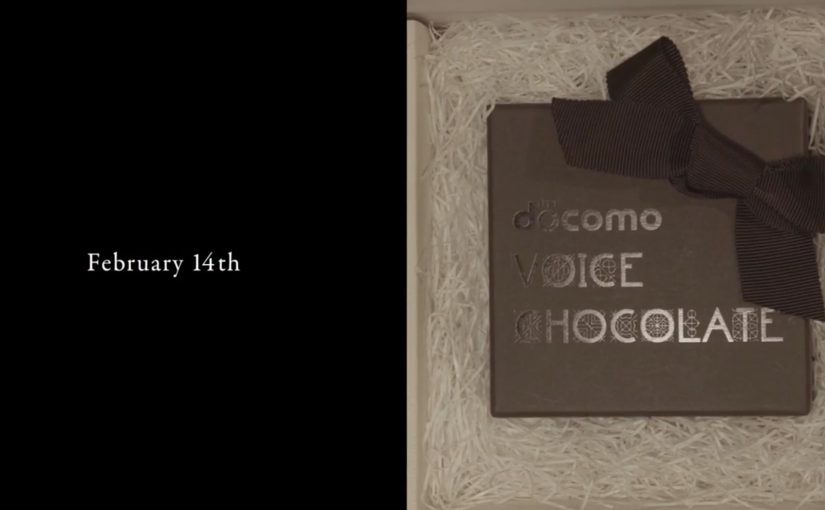
Voice Chocolate

On Valentine’s Day, women in Japan record a voice message on their smartphone. That voice is transformed into a unique chocolate pattern, and a premium patisserie, Mont St. Clair, delivers the custom chocolates to the men they love. The recipient then uses a special app that recognises the AR markers in the chocolate, and the voice message plays back from the smartphone. Here, “AR markers” means a scannable visual pattern the app recognises to trigger the audio playback.

The campaign comes from Docomo (Japan’s largest mobile phone company) working with agency Hakuhodo. The business context is straightforward. Voice communication traffic falls sharply over the last 15 years, largely due to messaging apps. Docomo uses the ritual of Valentine gifting to make voice feel emotional and “worth using” again.

The real question is how you make a declining behaviour feel emotionally valuable again, not just functional.

This kind of work beats a “make voice cool” content push, because it turns voice into something people already want to give, keep, and replay.

Why this works as mobile, packaging, and emotion in one system

This is not content about voice. It is voice turned into a physical artefact. The chocolate is both the gift and the interface. The phone becomes the capture tool. The app becomes the playback layer. In Japanese consumer telecom marketing, the emotional “why” is built in when the interface is also the gift.

Extractable takeaway: That combination matters because it closes the loop between human intent and digital capability. Make the message spoken, then tangible, then audible again at the moment of receiving.

The pattern to steal

If you want to revive a behaviour that is losing ground, the structure here is repeatable:

  • Pick the cultural moment. Find a culturally accepted moment where the behaviour already makes sense, in this case Valentine gifting.
  • Create a keepable token. Convert the behaviour into a physical token people want to give and keep, not a disposable digital asset.
  • Reveal at the right moment. Use an interaction layer (AR, scan, app) that reveals the emotional payload at the right moment, for the recipient.

A few fast answers before you act

What is “Voice Chocolate”?

A Valentine concept where a recorded voice message is transformed into a chocolate pattern, delivered as a gift, then played back via an app that recognises AR markers in the chocolate.

Who is behind it?

Docomo in partnership with Hakuhodo, with chocolates delivered with help from Mont St. Clair.

What problem is it addressing?

Falling voice communication usage driven by messaging apps, by making voice feel meaningful again through gifting.

What is the core experience design move?

Turn a voice message into a physical interface, then use a scan-to-reveal mechanic so the voice returns at the moment of receiving.

BMW Christmas Safety Card

To wish customers a new year of safe driving, BMW, together with ad agency AIR and electronics company Selectron, creates a Christmas card meant to be hung in the car.

A micro-sensor is built into the card to measure driving behaviour and react with a spoken message, “Ho! Ho! Hooo! Just like Santa!”, when the car is driven unsafely. The sensor measures G-forces and reacts when the car accelerates too much, or when it brakes or drives too quickly through bends. Here, “G-forces” are used as a proxy for sudden changes in speed and direction.

In performance-focused automotive communities, safety messaging lands best when it shows up inside the driving moment rather than after the fact.

A Christmas card that behaves like a safety co-driver

This is not a decorative greeting. The card acts like a lightweight in-car safety layer. It listens for aggressive driving signals, then interrupts with a playful warning that is hard to ignore. Because the feedback triggers during the manoeuvre, it is harder to dismiss than a post-drive message.

The real question is how you make safer behaviour feel like part of the performance identity, not a constraint imposed from outside.

Behaviour change beats awareness here. A small “nudge” is simply a timely prompt that makes the next decision easier, and this one does it without turning the experience into a lecture.

Why this fits the BMW M League audience

These limited-edition cards are sent to members of the BMW M League who recently buy their car and participate in the BMW Track Days. For that audience, performance driving is part of the identity. This card nudges safer habits without lecturing, because it speaks in a tone that feels seasonal and disarming.

Extractable takeaway: If your audience prizes performance, frame safety as a co-driver that protects the fun, and deliver the correction in their own tone at the moment it matters.

The pattern to steal

  • Measure the behaviour directly. Choose one behaviour you want to influence and measure it directly.
  • Put the intervention where it lives. Embed the intervention into a physical object people will actually place in the environment.
  • Correct in the moment. Trigger feedback at the exact moment of behaviour, not later in an email or app.
  • Make correction socially acceptable. Use a tone that makes the correction acceptable, so people do not reject it on instinct.

A few fast answers before you act

What is the BMW Christmas Safety Card?

A Christmas card designed to hang in a car, with a built-in micro-sensor that detects unsafe driving and plays a Santa-style voice warning.

What does the sensor measure?

G-forces. It reacts to strong acceleration, hard braking, and taking bends too quickly.

Who receives these cards?

Members of the BMW M League who recently buy their car and participate in the BMW Track Days.

What is the core idea?

Turn a seasonal greeting into an in-car behavioural nudge that activates in the moment.