
Voice Chocolate

Voice Chocolate

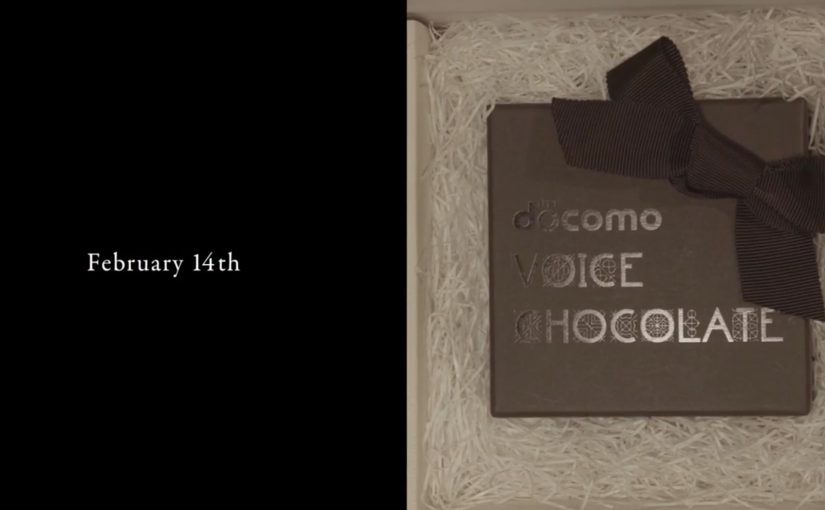
On Valentine’s Day, women in Japan record a voice message on their smartphone. That voice is transformed into a unique chocolate pattern, and a premium patisserie, Mont St. Clair, delivers the custom chocolates to the men they love. The recipient then uses a special app that recognises the AR markers in the chocolate, and the voice message plays back from the smartphone. Here, “AR markers” means a scannable visual pattern the app recognises to trigger the audio playback.

The campaign comes from Docomo (Japan’s largest mobile phone company) working with agency Hakuhodo. The business context is straightforward. Voice communication traffic falls sharply over the last 15 years, largely due to messaging apps. Docomo uses the ritual of Valentine gifting to make voice feel emotional and “worth using” again.

The real question is how you make a declining behaviour feel emotionally valuable again, not just functional.

This kind of work beats a “make voice cool” content push, because it turns voice into something people already want to give, keep, and replay.

Why this works as mobile, packaging, and emotion in one system

This is not content about voice. It is voice turned into a physical artefact. The chocolate is both the gift and the interface. The phone becomes the capture tool. The app becomes the playback layer. In Japanese consumer telecom marketing, the emotional “why” is built in when the interface is also the gift.

Extractable takeaway: That combination matters because it closes the loop between human intent and digital capability. Make the message spoken, then tangible, then audible again at the moment of receiving.

The pattern to steal

If you want to revive a behaviour that is losing ground, the structure here is repeatable:

  • Pick the cultural moment. Find a culturally accepted moment where the behaviour already makes sense, in this case Valentine gifting.
  • Create a keepable token. Convert the behaviour into a physical token people want to give and keep, not a disposable digital asset.
  • Reveal at the right moment. Use an interaction layer (AR, scan, app) that reveals the emotional payload at the right moment, for the recipient.

A few fast answers before you act

What is “Voice Chocolate”?

A Valentine concept where a recorded voice message is transformed into a chocolate pattern, delivered as a gift, then played back via an app that recognises AR markers in the chocolate.

Who is behind it?

Docomo in partnership with Hakuhodo, with chocolates delivered with help from Mont St. Clair.

What problem is it addressing?

Falling voice communication usage driven by messaging apps, by making voice feel meaningful again through gifting.

What is the core experience design move?

Turn a voice message into a physical interface, then use a scan-to-reveal mechanic so the voice returns at the moment of receiving.

WestJet Christmas Miracle: Spirit of Giving

WestJet Christmas Miracle: Spirit of Giving

A purple-clad virtual Santa appears on a screen and asks residents of Nuevo Renacer what they want for the holidays. The requests are simple, specific, and deeply practical.

WestJet follows up last year’s Christmas Miracle with “Spirit of Giving”, created with Canadian charity Live Different. Instead of surprising passengers at baggage claim, the airline takes the idea to a community near Puerto Plata in the Dominican Republic, then documents the moment those wishes are handed back at a Christmas party.

The earlier film was reported to go viral and pass 36 million YouTube views. This follow-up is described as pulling strong early attention too, with view counts climbing quickly in its first days online.

The mechanism: ask, commit, deliver

The creative device is a clean three-step loop. First, the “virtual Santa” invite makes wishes safe to share. Second, WestJet commits to fulfilment, not vouchers. Third, the reveal turns a list of needs into a communal celebration, with WestJet employees and Santa presenting items that were requested.

That loop works because specific requests and visible fulfilment turn generosity into proof, which makes the story credible on camera and in conversation.

In airline brands where differentiation is hard to sustain through functional claims alone, a repeatable giving platform can build distinctiveness through emotion, participation, and earned reach.

Why it lands

This works because the surprise is not random. It is personalised, visible, and delivered in public, which makes the generosity feel real rather than performative. The setting also matters. A whole community receives together, so the story becomes collective, not one tearful individual moment.

Extractable takeaway: If you want a feel-good campaign to travel, anchor it in specific asks from real people, then make fulfilment the hero action, so the audience can retell the story as a fact, not an ad.

What WestJet is really buying

At face value, it is seasonal warmth. Strategically, it is continuity. The real question is whether a holiday stunt can become a brand behavior people expect and remember. WestJet turns “Christmas Miracle” into a platform, not a one-off. The brand signal shifts from “we did a nice thing” to “this is what we do”, which is how recurring campaigns earn trust and expectation.

What to steal from WestJet’s giving platform

  • Keep the ask interface simple. A single question beats a complex participation mechanic.
  • Make fulfilment concrete. Items, not messages, so impact is legible on camera and in conversation.
  • Use employees as proof. When staff show up, it reads as culture, not just media spend.
  • Design a platform, not a stunt. Recurrence builds memory faster than novelty alone.

A few fast answers before you act

What is “Spirit of Giving”?

It is a WestJet holiday campaign made with Live Different in which residents of Nuevo Renacer share gift wishes with a virtual Santa, then receive those items at a community celebration.

How does it connect to the original Christmas Miracle?

It uses the same core promise, personalised giving captured on camera, but shifts the stage from passengers to a partner community, making the brand story about community impact rather than travel surprise.

What is the key creative mechanism?

A low-friction request moment, followed by a high-credibility delivery moment. The gap between the two is where anticipation and emotion build.

Why does the “virtual Santa” device matter?

It creates permission. People can state real needs without feeling awkward, and the audience immediately understands the format without explanation.

What is the biggest way campaigns like this fail?

When the giving looks staged or extractive. If participants feel like props, the emotional payoff turns into skepticism. Consent, dignity, and specificity are non-negotiable.