When “share” is built into the can
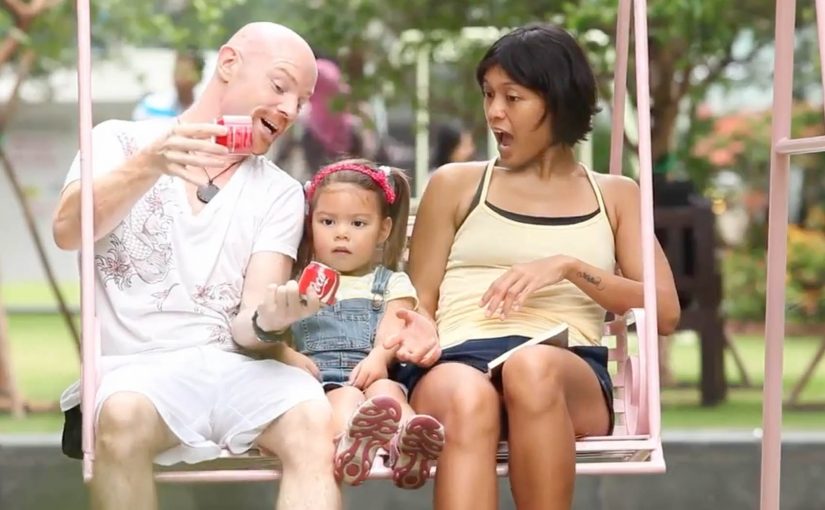
With summer coming up and an ice cold soda in your hand, people around you are bound to hope that you will share the soda with them. The normal way of doing so would be to sip from the same opening.
Now in an attempt to create another way of sharing happiness, Coca-Cola teamed up with Ogilvy in Singapore and France to create a shareable can of Coke that splits into two and creates two half pints. The results.
The packaging hack: one can becomes two
The can does not just contain the drink. It choreographs the moment. Split it. Hand one half over. The product becomes the gesture.
In global FMCG brands, packaging is often the fastest way to turn “share” from a line of copy into a behavior.
If the behavior matters, design it into the object. Because the can physically divides into two drinkable halves, the social negotiation disappears and the gesture becomes obvious.
Why it changes the social moment
The post nails the truth. People want a sip. This design turns that awkward micro-negotiation into a simple ritual that feels natural in the moment. Here, “ritual” means a tiny repeatable sequence anyone can copy. Split, hand one half over, drink.
Extractable takeaway: When the friction lives in a shared micro-moment, redesign the object so the desired behavior is the default, not a negotiation.
The job it solves
Create another way of sharing happiness in summer, without two people sipping from the same opening. Here, “sharing happiness” is not abstract. It is one can producing two separate openings, so two people can drink without swapping sips.
The real question is how to make sharing feel effortless and hygienic at the exact moment someone is holding the drink.
Steal the split-and-share ritual
- Encode the behavior: If the behavior matters, build it into the object, not only the message.
- Remove micro-friction: Design for the real scenario, then remove friction inside that moment.
- Make the ritual portable: Create a repeatable ritual. The best ones travel without explanation.
A few fast answers before you act
What is the “sharing can” concept?
A Coke can engineered to split into two drinkable halves, creating two half pints from one can.
Who was involved?
Coca-Cola partnered with Ogilvy. The post associates the work with Singapore and France.
What moment does it target?
The everyday situation where someone has a cold drink and others around them hope they will share it.
What is the core creative move?
Turning “sharing happiness” into a physical product feature rather than a line of copy.