

Max Zorn and Ilana Yahav: Tape and Sand Art

Max Zorn and Ilana Yahav: Tape and Sand Art

Here is a novel approach to two different kinds of art.

Tape Art by Max Zorn

Tape art is exactly what it sounds like: images built from cut and layered tape rather than paint. What makes this version so watchable is the reveal. The scene sharpens as light passes through the tape and the darker cuts define faces, shadows, and edges.

Sand Art by Ilana Yahav

Sand art in this form is live sand animation: a performer draws with sand on a lit surface while the camera captures the transformation in real time. The image keeps evolving. Characters become landscapes, then dissolve into the next beat of the story.

What both techniques have in common

Both styles use humble materials and a strong constraint to create drama. Tape relies on cutting, layering, and backlight. Sand relies on gesture, timing, and continuous change. In both cases, the process is not a behind-the-scenes detail. It is the point.

In brand and content environments where attention is earned through demonstration, process-first art formats, meaning the making is the narrative, work because the transformation is visible.

The real question is whether your content can make progress legible enough that people want to watch to the end.

Brands should design for the reveal, not just the final frame.

Why it lands

Both formats turn craft into suspense by letting the viewer track progress in real time and feel the constraint working.

Extractable takeaway: Highly shareable art formats make the transformation readable in motion. When the audience can follow the image changing step by step, the process becomes the hook and the result becomes the proof.

It turns craft into suspense. You are not waiting for a final reveal. You are watching the image assemble itself in front of you.

It is instantly legible. Even without context, the viewer can track progress: shapes become meaning, and meaning becomes a scene.

It makes constraint feel like a superpower. Limiting the toolset (tape or sand) increases appreciation, because the outcome feels “impossible” relative to the materials.

Borrowable moves

  • Design for a visible build. If the audience can’t track progress, you lose the “how did they do that?” effect.
  • Commit to one constraint. One material. One rule. The constraint is what gives the work its identity.
  • Use light as a storytelling tool. Backlight and contrast do more than look good. They guide attention and make detail emerge at the right time.
  • Let the medium define the pacing. These pieces work because the rhythm matches how the image is formed, not how an editor wants to cut it.

A few fast answers before you act

What is “tape art” in this context?

Artwork created by cutting and layering tape to form images. The look often depends on light, translucency, and negative space rather than brushstrokes.

What is “sand animation”?

A live performance where images are drawn with sand on a lit surface and continuously transformed, so the story emerges through motion rather than static frames.

Why do these formats work so well on video?

Because the making is the story. Viewers stay for the transformation, then share because the craft feels both simple and astonishing.

What makes the work feel “novel” even when the materials are basic?

The constraint is unusual and the reveal is staged. The audience watches ordinary materials produce an unexpectedly cinematic result.

How can a brand borrow this without copying it?

Borrow the structure: one clear constraint, a readable transformation, and a finish that feels earned by the process.

Mercedes-Benz Vans: Key to Viano

Mercedes-Benz Vans: Key to Viano

A commuter points a car key at a digital billboard and clicks the remote. The screen reacts. Suddenly, the advertising display stops behaving like outdoor media and starts behaving like interactive entertainment.

That is the core mechanic behind “Key to Viano”, an interactive outdoor event for Mercedes-Benz Vans created by Lukas Lindemann Rosinski on Wall AG’s digital out-of-home (DOOH) displays in Berlin’s U-Bahn station Friedrichstraße. Passers-by are invited to use their own remote car keys to control the content on the screens, turning a familiar everyday object into the controller.

In high-traffic urban DOOH environments, the quickest path to attention is to turn an existing habit into viewer control, with a payoff that feels immediate and public.

The experience works because the interaction is self-explanatory. Press the button you already know. Watch the screen respond. The line between ad and game collapses, and the crowd becomes part of the moment because everyone can see the “trigger” happen.

Why the car key is the perfect interface

No download. No new behaviour. No instruction manual. A car key is already a remote control in people’s hands, so the activation feels intuitive instead of “techy”. That simplicity is what makes the experience legible from a distance, and what makes bystanders stop and watch.

Extractable takeaway: If you want interaction in public space, pick an input people already carry and trust, then make the response visible to everyone around them.

What Mercedes-Benz Vans is really proving

The stunt is framed as entertainment, but it is also a product metaphor. “Key to Viano” implies access, convenience, and a premium feel. When the participant can “open” a digital experience with a key, the brand gets to borrow the emotional cues of unlocking a car, without talking about features.

The real question is whether your idea can be explained in one glance, without staff, signage, or a QR code.

Interactive DOOH should earn its place by being instantly legible, not by adding layers of “smart” complexity.

What to borrow from Key to Viano

  • Use a controller people already trust. Familiar inputs reduce friction and increase participation.
  • Make the interaction visible. If the crowd can see what caused the screen to change, attention multiplies.
  • Keep the loop fast. Trigger. Response. Reward. A slow loop loses commuters.
  • Let the location do the targeting. Stations deliver high volume and natural dwell time without extra explanation.

A few fast answers before you act

What is “Key to Viano”?

It is an interactive digital out-of-home activation where passers-by control advertising screens using their own remote car keys, under the Mercedes-Benz Vans “Key to Viano” concept.

Where did the activation run?

It ran on digital displays at Berlin’s U-Bahn station Friedrichstraße.

Why does using a car key work so well?

Because it is an input people already understand. It removes download friction and makes the interaction feel natural and premium.

What is the main benefit of interactive DOOH like this?

It converts passive exposure into participation. Participation creates longer attention, stronger memory, and visible social proof from the crowd watching.

What is the biggest risk with interactive screens in transit spaces?

Complexity. If the interaction is not instantly clear, people walk past. The mechanic must be obvious in seconds.

Corning: A Day Made of Glass 2

Corning: A Day Made of Glass 2

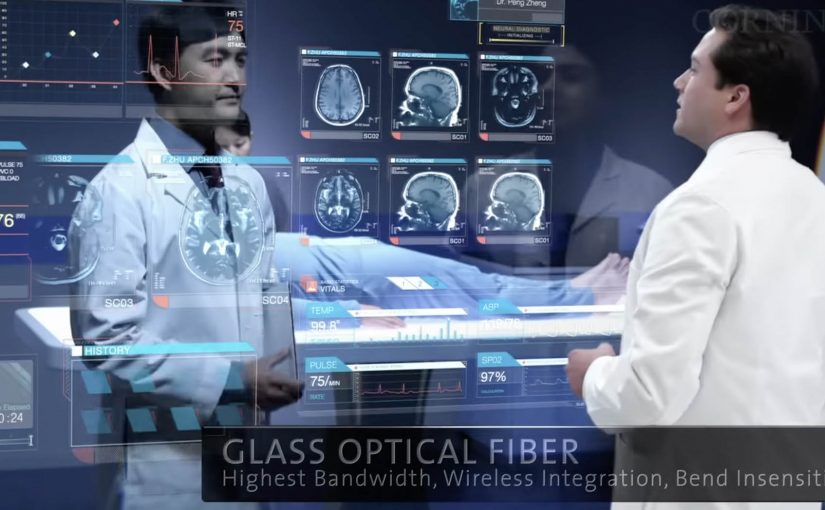
Corning is best known as a high-tech glass manufacturer. Their Gorilla Glass is used across a huge number of smartphones. In March last year they released “A day made of glass”. A futuristic look at glass technology.

Now they are back with an expanded vision for the future of glass technologies. This video continues the story of how highly engineered glass, with companion technologies, will help shape our world.

What’s new in the expanded vision

The core mechanic stays the same. Glass is no longer a cover. It becomes the interface. The expansion is about reach and density. More environments. More surfaces. More moments where information appears “in place” and responds directly to touch.

In consumer electronics, automotive interiors, and collaborative workplaces, the real shift is treating surfaces as shared touch-first interfaces rather than single-purpose screens.

The interaction pattern underneath the glass

Strip away the material science and you can see a product blueprint. Persistent identity across contexts. Content that follows the user. Direct manipulation as the default. And big surfaces that invite more than one person to participate at the same time.

In global enterprise and consumer-tech product teams, smart-surface visions only pay off when the interaction rules stay coherent across devices and contexts.

Why this vision sticks

It sells immediacy. You touch the thing you mean. You get feedback where your eyes already are. There is less “device ceremony”, meaning fewer unlocks, app switches, and mode changes, and more task flow. Because the interaction is direct and feedback stays in place, the experience feels faster and more trustworthy, which is why these concept films can persuade even before the enabling tech is fully mainstream. These concept films are worth using, but only if you translate them into interaction rules you can actually prototype. The real question is whether you can keep those rules coherent across surfaces once the demo glow fades.

Extractable takeaway: When you are designing a future-facing experience, define the interaction grammar first, meaning the repeatable set of gestures, feedback cues, and handoffs that make the experience feel consistent. If the same gestures, feedback, and handoffs work across two form factors, your concept has legs. If they don’t, the material is just a costume.

Steals from the smart-surface UX model

  • Prototype the handoffs early. Moving from phone to wall to table is where visions usually collapse. Test that seam before you polish anything else.
  • Design for two people, not one. Large surfaces create collaboration by default. Add rules for turn-taking, ownership, and conflict resolution.
  • Keep data anchored to the decision. The strongest moments are when information shows up exactly where action happens, not in a separate dashboard.
  • Make “glanceable” a first-class mode. If the surface is always there, the experience must work in 2-second looks, not only long sessions.

A few fast answers before you act

What is “A Day Made of Glass 2” actually demonstrating?

It demonstrates an interface direction. Glass surfaces behave like interactive displays, so information can appear in place and be manipulated directly by touch.

Is the value here the glass technology or the UX model?

The transferable value is the UX model. Direct manipulation, seamless handoffs, and multi-user surfaces. The materials enable it, but the interaction design makes it believable.

What is the biggest risk in “smart surfaces everywhere” thinking?

Interface overload. If every surface can talk, the environment becomes noisy. The discipline is deciding when to stay quiet and when to surface the one next action.

How do you scope a first prototype so it stays realistic?

Pick one job-to-be-done, two surfaces, and a single handoff. Then enforce a small set of interaction rules so you can observe friction before you add polish.

What is one practical next step after watching the video?

Write down the 6 to 10 interaction rules you believe the film is using. Then build a rough prototype that applies those rules in two contexts, such as phone plus kiosk, or tablet plus meeting room display.