
JavaZone: Java 4-ever Trailer Romance

JavaZone is a conference in Scandinavia where developers meet, listen to talks, and plug into the wider community. The fun part is that the people behind it also know how to market it like a movie.

The trailer below is for an imaginary film called Java 4-ever. It is a full-on romance setup, but the forbidden love is not a person. It is a programming language.

A conference trailer that behaves like entertainment

The mechanic is simple. Instead of explaining “why you should attend”, JavaZone ships a piece of content you would watch even if you did not care about the conference. That content then does the job of awareness and persuasion on its own. That works because entertainment lowers resistance, so the conference earns attention before it asks for registration.

In developer communities, the fastest way to build affinity is to show you understand the culture. Then use that understanding to earn attention before you ask for registration.

Why it lands

The craft is not in the jokes alone. It is in how accurately it borrows the language of dramatic trailers. Serious music, tense reveals, disapproving family energy, and the familiar “I cannot hide who I really am” arc. The parody works because it treats tech tribalism, the identity-level loyalty people attach to tools and languages, as real emotion, which is exactly how it feels inside communities.

Extractable takeaway: If your audience is allergic to hype, do not “market” at them. Entertain them with something culture-true, and let the entertainment carry the message.

What the Java 4-ever format achieves

The real question is whether your event marketing feels native to the community you want to gather, or like promotion imported from outside it.

A trailer is short, rewatchable, and instantly shareable. That makes it a high-leverage asset for an event. One video can act as a brand statement, a community signal, and a distribution engine, all without needing a media budget narrative.

For technical events, culture-literate entertainment is stronger than benefit-led promotion when the goal is to earn voluntary attention.

What to steal for your own event

  • Write for the in-jokes, but keep the story universal. People should get it even if they are not in the tribe.
  • Use a familiar format. Trailers, sitcom cold-opens, and “documentary” cuts carry their own viewing habits.
  • Make the asset stand alone. If the content only works after someone knows your event, it will not travel.
  • Let craft be the credibility. In technical audiences, quality signals respect more than claims do.

A few fast answers before you act

What is this video actually doing for JavaZone?

It acts as cultural marketing. A shareable parody signals “this is your kind of community”, and that signal can be stronger than a feature list of talks.

Why choose a movie-trailer format?

Because audiences already know how to watch a trailer. The format compresses story, emotion, and memorability into a minute-scale asset.

What is the key creative insight?

Technical preferences often behave like identity. Treating that identity seriously, through parody, is what makes it feel accurate and funny.

How do you measure success for content like this?

Shares, rewatches, and discussion inside the community. Then correlate spikes in attention with registration momentum and speaker or sponsor interest.

Does this only work for developer audiences?

No. The transferable move is not the coding joke. It is wrapping your message in a format the audience already likes to watch and share.
Share Happy Ice Cream Machine

You approach an ice cream machine that asks for a smile. Unilever’s Share Happy installation, developed by SapientNitro, uses facial recognition to reward that expression with free ice cream. The brand’s happiness message becomes something you do before receiving the product.

The idea. Turn a freebie into a moment of happiness

Most giveaways are built for speed. Receive the sample and move on. Share Happy adds a small interaction before the reward. Smile at the machine, let it recognise the expression, and receive an ice cream.

That makes the participant’s expression part of the experience. The product and the action point towards the same brand idea: a small moment of pleasure.

Why this mechanic works

The experience connects a clear action, a visible response and a tangible reward. Facial recognition gives the machine a way to respond to the participant, while the ice cream makes the payoff easy to understand.

The interaction also gives people something to demonstrate and retell. A machine that responds to your smile offers a clearer story than a routine sample handout.

Extractable takeaway: Tie a simple participant action to the brand idea, then make the response immediate and the reward relevant.

Buy interaction, not just sampling

In crowded retail and event environments, a giveaway can attract attention without creating a distinctive brand experience. Share Happy makes the moment of receiving the sample part of the idea.

The commercial question is what that interaction adds. Does it encourage participation, create an enjoyable encounter, or improve recall compared with ordinary sampling? The mechanism gives the brand something to test; those outcomes still need evidence.

A recognised smile is an interaction signal. Participant satisfaction and brand impact need their own measures.

Steal this from the smile trigger

  • Make the action obvious. People should quickly understand what the machine is asking them to do.
  • Connect the action to the brand idea. The smile and the ice cream reinforce the same happiness theme.
  • Keep the payoff immediate. A clear response helps people understand the connection between their action and the reward.
  • Measure the experience as well as the giveaway. Track successful interactions, failed attempts, dwell time and participant feedback alongside dispensing totals.

A few fast answers before you act

What is the Share Happy Ice Cream Machine?

It is Unilever’s smile-activated ice cream installation, developed by SapientNitro. It uses facial recognition to reward a smile with free ice cream.

What triggers the reward?

The machine recognises the participant’s smile and responds with the opportunity to receive an ice cream.

Why is this experiential marketing?

The participant performs the action that brings the brand idea to life. The smile, the machine’s response and the product reward form one encounter.

Where could this format work?

Retail spaces, festivals and events are suitable settings when people have time to participate and the interaction is easy to understand.

What should marketers measure?

Measure successful interactions, dispensing completion, failed recognition attempts, dwell time and participant feedback. Use separate research to assess brand recall or preference.

Pilot Pen: Handwritten Emails

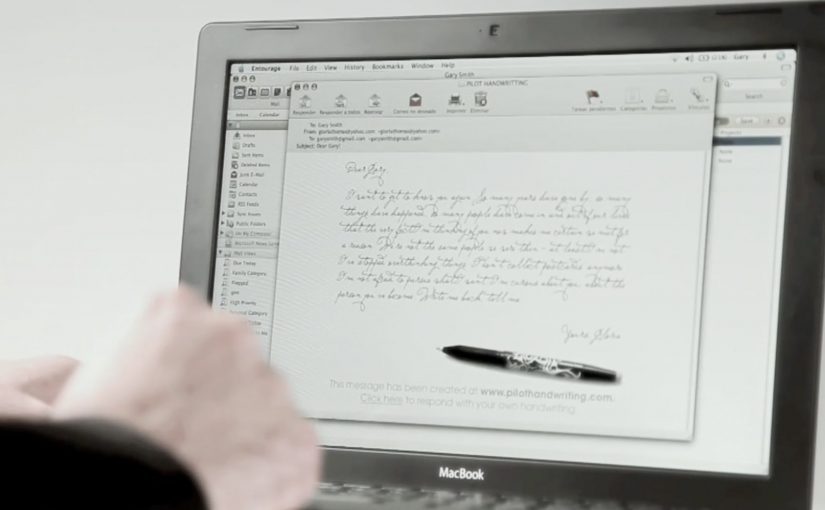
Pilot Pens Spain has made emails more personal by letting you handwrite your emails on the computer.

A pen brand that turns “your writing” into a usable tool

The mechanic is simple. You create a digital font from your own handwriting, then use that font to write emails that look like you wrote them by hand.

All you need to do is go to www.pilothandwriting.com and turn your handwriting into a digital font. After that you can start sending handwritten emails to your friends.

In everyday one-to-one communication, the feeling of personal effort often matters more than perfect typography.

Why it lands: it restores “human signal” without slowing you down

Email is fast but visually uniform. Handwriting is personal but slow. This concept bridges the gap by keeping the speed of email while reintroducing the quirks and warmth that make a message feel meant for one person. By “human signal,” this means the visible personal quirks that make a message feel authored by a specific person rather than produced by a system. It works because the digital font preserves those quirks while removing the time cost of writing by hand.

Extractable takeaway: If your brand owns a physical ritual, translate the ritual into a digital utility that keeps the emotional benefit. People do not want “more features”. They want the feeling the ritual used to create.

The business intent: make the brand present at the moment of meaning

The real question is whether a pen brand can make its core ritual useful inside digital behavior instead of just advertising around it.

This is a strong brand utility move because it turns product truth into something people can actually use. Pilot is useful when you have something worth saying, and the campaign makes the brand present at the exact moment that sentiment is expressed.

The work is commonly credited to Grey Barcelona for Pilot Pen in Spain.

How to apply this brand utility pattern

  • Turn a brand asset into a tool: if you own a distinctive behavior (writing, drawing, annotating), make it usable in digital life.
  • Keep the first win fast: the user should get a “wow, that’s me” moment within minutes.
  • Design for sharing by default: the output should be easy to send, post, or reuse without extra steps.
  • Respect authenticity: slight imperfections are a feature here. Over-smoothing kills the point.
  • Measure the right signal: repeats and reuse matter more than one-time visits.

A few fast answers before you act

What is Pilot Handwriting?

It is a web experience that converts your handwriting into a digital font, so you can write emails that look handwritten.

Why does “handwritten email” feel more personal?

Because handwriting carries individual variation. That visual uniqueness signals effort and intention in a way standard typed text does not.

Is this a gimmick or a useful tool?

It can be a real utility if it reduces friction and produces an output people reuse. The best test is whether users come back and keep writing with it.

What makes a brand utility campaign work?

A clear problem, a fast first payoff, and an output that naturally travels to other people, turning use into distribution.

What’s the biggest risk in copying this idea?

Onboarding friction. If setup is slow or error-prone, the personal magic disappears before the user gets a satisfying result.