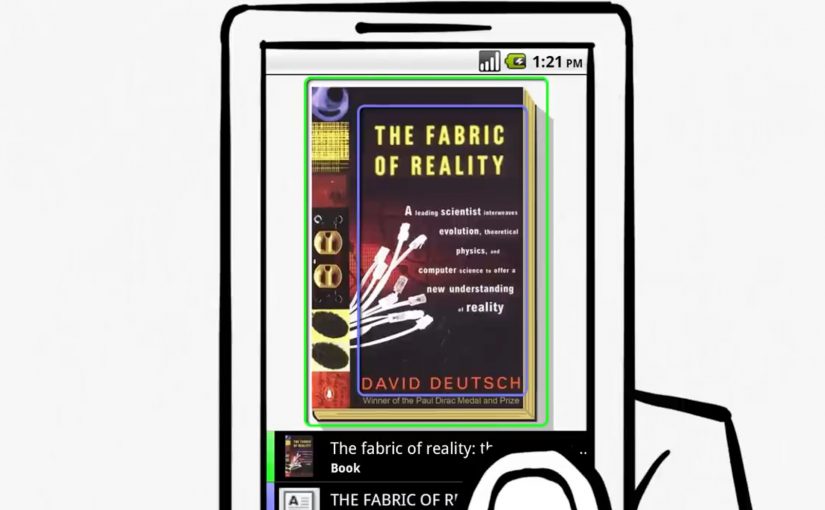
Google Goggles: Rise of Visual Search

Google Goggles: Rise of Visual Search

You take an Android phone, snap a photo, tap a button, and Google treats the image as your search query. It analyses both imagery and any readable text inside the photo, then returns results based on what it recognises.

This is visual search, meaning search where a captured image becomes the input instead of typed words. The point is not a clever camera trick. The point is that “point and shoot” can replace “type and search” in moments where you cannot name what you are looking at.

Before this, the iPhone already has an app that lets users run visual searches for price and store details by photographing CD covers and books. Google now pushes the same behaviour to a broader, more general-purpose level.

From typing to pointing

Google Goggles changes the input model. The photo becomes the query, and the system works across two parallel signals:

  • What the image contains, via visual recognition.
  • What the image says, via text recognition.

Because the system can extract both shape and text from the same frame, it removes the translation step between seeing something and turning it into keywords. That translation step is where most friction lives on a small mobile keyboard.

Why “internet-scale” recognition is the point

Google positions this as search at internet scale, not a small database lookup. The index described here includes 1 billion images, which signals the ambition to recognise the long tail of everyday objects, covers, signs, and printed surfaces.

In mobile, in-the-moment consumer and retail discovery, this matters because intent often starts with something you can see but cannot name.

Why it lands beyond “cool tech”

When the camera becomes a search interface, the web becomes more accessible in moments where typing is awkward or impossible. You can point, capture, and retrieve meaning in a single flow, using the environment as the starting point.

Extractable takeaway: The winning experiences are the ones that convert recognition into an immediate next step. Identify what I am looking at, then answer the implied question, such as “what is this?”, “where can I buy it?”, “what does it cost?”, “how do I use it?”.

When the camera becomes the keyboard, every physical surface becomes a potential search box. Brands that make their packaging, signage, and product imagery easy for humans and machines to read get discovered even when no one types their name.

The bet Google is making

This is a meaningful shift in input, but it will not replace typed search. It will win the moments where the user’s intent is anchored in the physical world and the fastest way to express that intent is to show the object.

What to steal if you build digital experiences

  • Design for machine-readable cues. High-contrast logos, consistent product shots, and legible typography increase the odds that recognition resolves to the right thing.
  • Assume zero-keyboard intent. Build journeys that start from what people see around them, not only from brand names and product model numbers.
  • Plan for ambiguity. Recognition will be probabilistic, so your assets should help disambiguate similar-looking items.
  • Treat demos as proof, not decoration. If your pitch is “this feels different,” show it working, as the original Goggles demo does.

A few fast answers before you act

What does Google Goggles do, in one sentence?

It lets you take a photo on an Android phone and uses the imagery and any readable text in that photo as your search query.

What is the comparison point mentioned here?

An iPhone app already enables visual searches for price and store details via photos of CD covers and books.

What signals does Goggles read from a photo?

It uses both visual recognition of what is in the image and text recognition of what is written in the image.

What is the scale of the image index described?

Google describes an index that includes 1 billion images.

What is included as supporting proof in the original post?

A demo video showing the visual search capability.
Opticana Eyewear’s $500 Campaign

Opticana Eyewear’s $500 Campaign

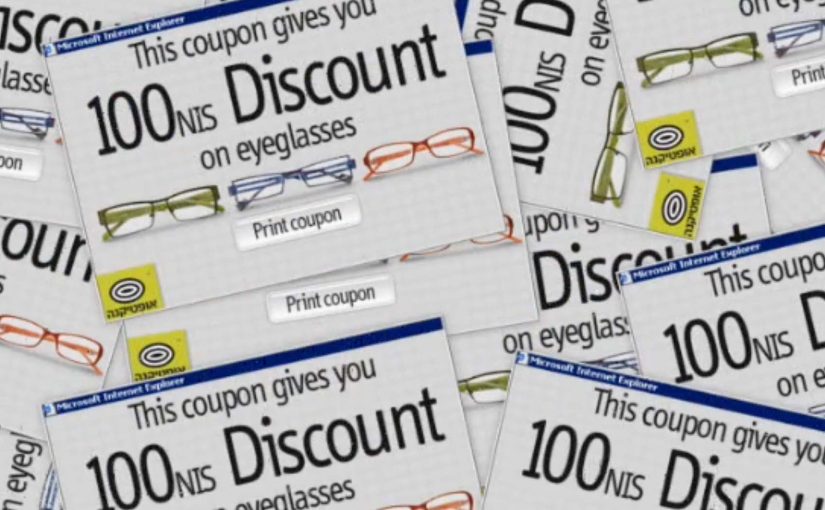
You see an online coupon that reads “100 NIS Discount on eyeglasses” with a single call-to-action. “Print coupon”. It is simple, direct, and designed to convert immediately.

The campaign in one line

Here is a $500 campaign done by Mccann Erickson Israel for Opticana Eyewear.

The real question is whether a plain offer with almost no production spend can still move people from browser to store.

This is a strong example of low-budget marketing because it spends almost nothing on explanation and everything on conversion clarity.

The business intent is straightforward: drive measurable store traffic and coupon redemption without wasting spend on awareness theatre.

Why the “print coupon” mechanic works

The offer is obvious, the action is frictionless, and the value is tangible. By “print coupon” mechanic, the ad uses a digital message to create a physical redemption trigger people can carry into the store.

That works because the printed coupon turns vague interest into a concrete next step and gives the store a simple way to connect attention to redemption.

In retail categories where the final decision still happens in store, digital work gets stronger when it creates a clear handoff into the physical purchase moment.

Why this lands when budgets are tight

When budget is constrained, clarity becomes the creative advantage. A single strong offer, a single next step, and a design that makes the benefit impossible to miss can outperform “bigger” ideas that ask too much of the audience.

Extractable takeaway: If you cannot outspend the category, remove friction so completely that the offer itself becomes the creative.

What to borrow for offer-led retail work

  • Lead with the benefit. Show the value before anything else.
  • Reduce the path to action. One next step is often stronger than multiple choices.
  • Design for redemption. Make it easy for people to carry intent from screen to store.

A few fast answers before you act

What is the core idea of this $500 Opticana campaign?

A printable discount coupon that is easy to understand and easy to act on.

Why does a printable coupon still matter in retail?

It bridges online intent to offline purchase. It gives the customer a reason to visit, and it gives the store a clear redemption trigger.

What makes a low-budget campaign feel smart instead of cheap?

One clear promise, one clear action, and a design that prioritises the benefit over decoration.

What should you measure on an offer like this?

Prints, redemptions, and incremental sales during the offer window. If possible, track coupon code usage to separate organic uplift from campaign-driven traffic.

What kind of brands suit this approach best?

Brands with a clear retail offer and a store-based purchase moment. It works best when the value exchange is immediate and easy to redeem.

Viagra: 10th Anniversary Film

Viagra: 10th Anniversary Film

Here’s a short film created to mark the tenth anniversary of Viagra. It treats the milestone as permission to be lighter, and to let the brand’s cultural familiarity do some of the work.

Rather than explaining features, the film leans into the celebratory occasion and a knowingly cheeky tone, the kind of “you know what we mean” approach that anniversary advertising often invites.

A milestone used as creative permission

The mechanic is straightforward. Pick a round-number anniversary. Publish a single, easily shareable film that frames longevity as relevance, and uses humor to make the brand feel present in everyday conversation again.

In mass-market healthcare brands, milestone campaigns are one of the few moments where a tightly regulated category can still feel culturally current without over-explaining the product.

Why it lands

It works because anniversaries come with built-in narrative structure. Celebration signals trust and staying power, and the wink of humor lowers resistance. People are more willing to share an “occasion” film than an “ad”, especially when the joke is easy to retell without needing context.

Extractable takeaway: If your category is hard to make interesting, use a milestone as the hook. Then build one clear comedic idea that communicates “we’ve been here a long time” without turning into a brochure.

What the brand is really buying

The real question is how to make a familiar, regulated brand feel culturally present again without turning the work into product explanation.

This is strong anniversary advertising because it uses the occasion to reopen conversation, not to overload the audience with explanation.

This kind of film is optimized for talk value, meaning it gives people a light, socially acceptable reason to mention the brand. It keeps the brand top-of-mind, reinforces legitimacy through age and familiarity, and avoids a heavy sales posture.

What to steal for your own “birthday” work

  • Make the occasion the headline. A milestone is a story people recognize instantly.
  • Write one joke, not ten. A single clean gag travels further than layered cleverness.
  • Keep the brand cue unmistakable. If people remember the joke but not the brand, you rented attention.
  • Respect category boundaries. In regulated spaces, humor still needs to be compliant and careful.

A few fast answers before you act

What is this piece of work in one line?

A short anniversary film that uses a tenth birthday milestone to refresh attention around the Viagra brand through humor and cultural familiarity.

Why do anniversary ads get shared more than product ads?

Because they feel like “news” or a cultural moment, not a sales message. The occasion gives people a socially comfortable reason to pass it along.

What is the main strategic benefit?

Top-of-mind reinforcement through a light, memorable artifact that signals longevity and relevance.

What is the most common failure mode?

Over-indexing on the gag. If the brand cue is weak, the audience remembers the joke and forgets who paid for it.

When is a milestone campaign the wrong idea?

It is the wrong idea when the anniversary is doing all the work and the creative thought is weak. The occasion can open the door, but it still needs one clear, memorable idea to carry the brand.