
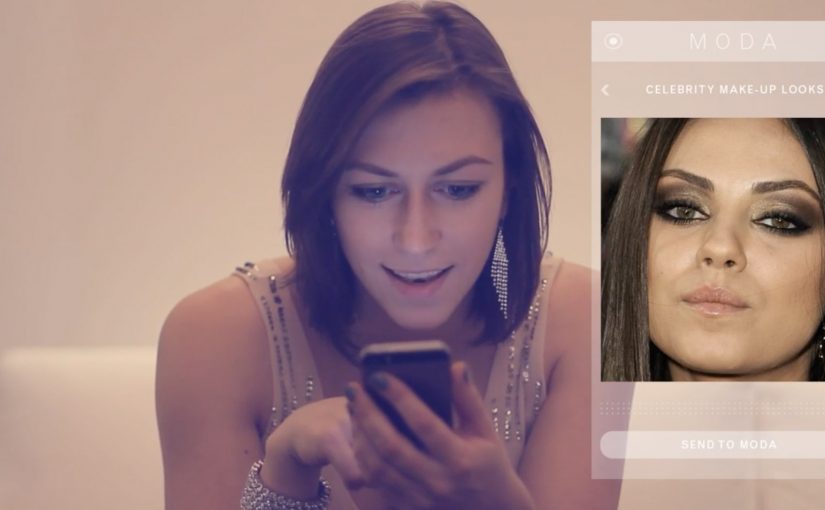
FOREO: MODA Digital Makeup Artist

Never got the hang of applying makeup with your own hands? MODA from FOREO is billed as a digital makeup artist that takes the “tutorial” culture online and turns it into an automated, 30-second application moment.

From a chosen look to a mapped face

The flow starts in an app: you select a style to emulate. That style can come from MODA’s image library, a celebrity photo, or a picture of a fashionable friend. MODA then scans facial features to align the look. In other words, it maps facial landmarks so placement follows the wearer’s features. MODA then adapts colors and shapes to suit the wearer’s skin tone and face shape.

How the device applies the look

Once the selection is set, the user places their face into the device and MODA “paints” the chosen look directly onto the face, described as using makeup ink that is FDA-approved. Here, “ink” refers to the makeup medium the device dispenses onto the skin. The proposition is speed and repeatability: copy a look, personalize it, apply it, done.

In consumer beauty tech, shifting makeup from manual skill to an automated service experience changes the value from “how well you apply” to “how fast you can experiment”.

Why this idea has an audience

Online videos teaching people to copy celebrity styles are already a mass behavior. MODA’s bet is that many people do not want more instruction. They want a shortcut. Because the device applies the look for you after scanning and personalization, “trying a look” can become as easy as choosing one. The real question is whether the applied result looks credible enough that people will trust it without extra tutorial time. This framing is compelling because it shifts beauty from a practiced skill to a repeatable service moment.

Extractable takeaway: When a category is stuck on “learn the skill,” the highest-leverage innovation is often a service layer that turns inspiration into a fast, repeatable outcome, not another tutorial.

What MODA teaches about beauty UX

  • Collapse inspiration to action. Let people pick a reference look and get to an applied result quickly.
  • Personalize by default. Use scanning and simple adjustments so the outcome fits the individual, not just the template.
  • Design for repeatability. Make it easy to re-run a look, tweak it, and compare outcomes without starting from scratch.

A few fast answers before you act

What is MODA in one line?

A device billed as a “digital makeup artist” that uses an app selection plus facial scanning to apply a chosen makeup look in about 30 seconds.

What makes this different from AR try-on?

AR try-on is an on-screen overlay that previews a look digitally. MODA’s promise is physical application on the face after scanning and customization.

How does a user choose a look?

Through an integrated smartphone app, choosing from a library or supplying a reference image such as a celebrity photo or a friend’s picture.

How does MODA personalize a look to your face?

It’s described as scanning facial features and then adapting the chosen reference look by adjusting placement, shapes, and color choices to better fit the wearer’s face shape and skin tone before applying it.

Who is MODA pitched for?

People who want to experiment with different looks quickly, especially those who do not enjoy the learning curve of manual application and tutorials.
Yahoo! JAPAN: Hands On Search

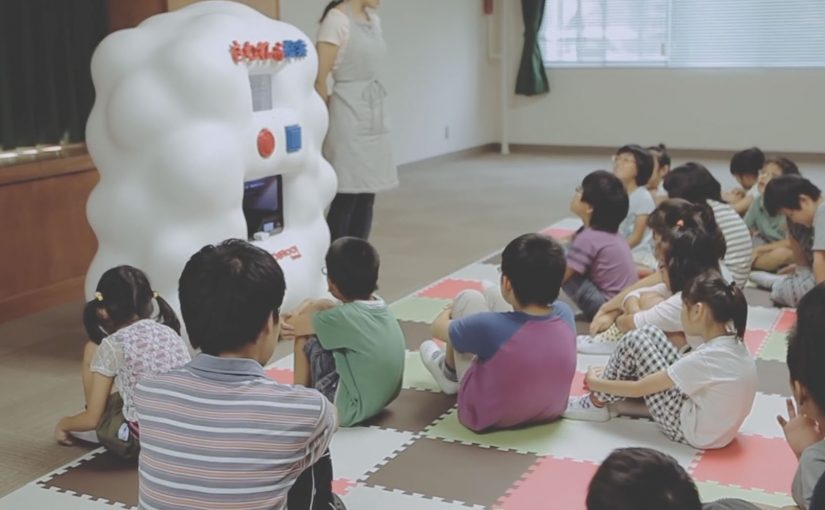
Yahoo! JAPAN introduces what it calls “Hands On Search”. A hands-on search experience that lets visually impaired children explore online concepts through touch, not screens.

A voice-activated kiosk is set up so children can speak what they want to “search” for. The system recognises the verbal request, pulls a corresponding 3D model, and prints a small physical object. For the first time, children can hold what they usually only hear described. From animals to landmarks and buildings.

Search becomes a physical output

The mechanism is voice input plus 3D printing output. Instead of returning text, images, or audio, the search result is manufactured into a tactile model the child can feel in their hands. Because the output is tactile, the child can verify shape and scale directly, which is why the interaction shifts from description to discovery.

In accessible technology design, the strongest innovation is often a translation layer that converts a dominant medium into the sense that an excluded audience can reliably use. That is the pattern worth copying. Change the output medium, not just the narration layer.

In accessible-learning contexts, the constraint is rarely intent but whether the output can be inspected without sight.

Why it lands

It reframes “search” as something more than browsing. It becomes discovery you can share in a classroom. The real question is whether your product can render its core value into the senses your excluded users actually rely on. The moment the object prints is also the moment learning becomes concrete. It is not an abstract promise about inclusion. It is a visible, touchable outcome.

Extractable takeaway: If your experience is inherently visual, do not just add narration. Add an equivalent output that preserves shape and scale in a form people can physically inspect, so learning moves from description to direct exploration.

Tactile-search patterns for product teams

  • Design for the missing sense, not the average user. Start with the constraint, then build the interface around it.
  • Make the interaction one-step. Voice request in. Physical result out. No menus, no setup rituals.
  • Curate the object library. Accessibility fails when content quality is inconsistent. The “catalogue” is part of the product.
  • Prototype in real learning environments. Schools and educators reveal whether the tool supports teaching, not just demos.

A few fast answers before you act

What is Hands On Search in one sentence?

It is a concept machine that turns spoken searches into small 3D-printed models, so visually impaired children can “touch” search results.

Why does 3D printing matter here?

Because it converts information into form. For someone who cannot see images, a physical model can communicate shape, proportion, and structure directly.

Is this a campaign or a product direction?

It plays like a campaign film, but the underlying idea is a product direction. Search as an output system that can render to different senses depending on user needs.

What is the biggest risk in copying this idea?

Building a beautiful prototype without a sustainable content pipeline. If the object library is thin, slow to expand, or low fidelity, usefulness drops quickly.

Where should you prototype first?

Prototype where learning happens. Schools and educators will quickly show whether the tool supports teaching, not just demos.

Coca-Cola Mini Me: 3D-Printed Mini Figurines

After Volkswagen, Coca-Cola is the next brand to tap the 3D printing trend.

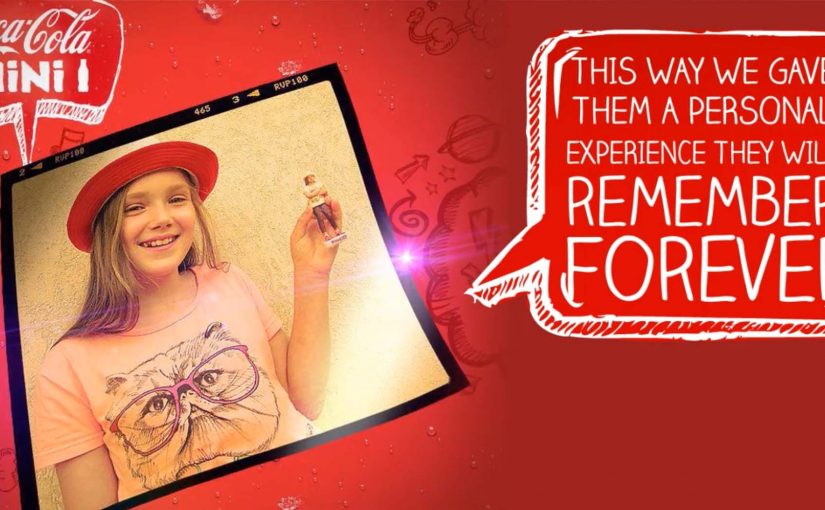
For the launch of its new mini bottles in Israel, Coca-Cola with their agency Gefem Team came up with a campaign that allowed anyone to create 3D mini figurines of themselves. To get one in real life, users had to work a bit.

So first users created the minis using a mobile app. Then they had to keep them happy by feeding it and taking care of its needs.

There was even a virtual supermarket within the app that you could visit to buy your groceries for your mini self.

Those who successfully participated were then invited to the 3D printing lab inside Coca-Cola’s factory in Israel, where they received the mini versions of themselves.

Why this is more than a 3D-printing stunt

The 3D print is the reward, not the whole experience. The real engine is the progression loop, meaning a sequence of small repeat actions that earn a bigger payoff. This is smart campaign design because it makes the physical output feel earned, not handed out. The real question is whether your campaign creates a loop people will return to before you ask them to share anything.

Extractable takeaway: Gate a physical prize behind repeat micro-actions and it stops feeling like a giveaway. It becomes a trophy with a simple story: “I earned this.”

  • Personal creation. You do not receive a generic giveaway. You create “you”.
  • Ongoing engagement. Feeding and caring builds repeated interactions over time.
  • Escalation to the physical world. The factory lab visit turns digital participation into a memorable moment.

The virtual care loop makes the prize feel earned

The app mechanic is intentionally effortful. You have to keep the mini happy. You have to manage its needs. Even the virtual supermarket reinforces routine and “ownership”.

That matters because it shifts the figurine from a freebie into a trophy. Something you earned by participating.

In consumer brands that run digital-to-physical activations, effortful repeat interaction is often what turns novelty into recall.

Why the factory lab invitation is a smart finale

Bringing people into a Coca-Cola factory adds legitimacy and drama. It also creates a content moment. A physical place, a “lab”, and a 3D print reveal that people can photograph and share.

  1. Access as a reward. The invitation itself feels exclusive.
  2. Proof of innovation. The brand demonstrates capability in a tangible way.
  3. Memory value. The experience becomes a story, not just a product launch.

What to take from this if you build digital-to-physical campaigns

  1. Make the reward personal. Personal outputs are more meaningful and more shareable.
  2. Use a progression loop. Repeated small actions can outperform a single big interaction.
  3. Finish with a real-world moment. Physical experiences create stronger recall than purely digital stunts.
  4. Let the brand environment play a role. A factory lab gives credibility and theatre without feeling fake.

A few fast answers before you act

What is Coca-Cola “Mini Me”?

It is a campaign in Israel where users created a virtual mini-self in a mobile app, cared for it over time, and then received a 3D-printed figurine version after qualifying.

How did users qualify to get a real figurine?

They created the mini using the app and kept it happy by feeding it and taking care of its needs, including buying items in a virtual supermarket.

Where did the 3D printing happen?

Qualified participants were invited to a 3D printing lab inside Coca-Cola’s factory in Israel, where they received their mini figurines.

Why include a virtual care mechanic?

It creates repeat engagement and makes the physical reward feel earned rather than given away.

What is the transferable lesson for campaign design?

If you combine personal creation with a progression loop and a physical payoff, you can turn a product launch into a longer-lasting experience.