
Europcar: Crush Hour

Europcar: Crush Hour

A crushed-car prank with a very public punchline

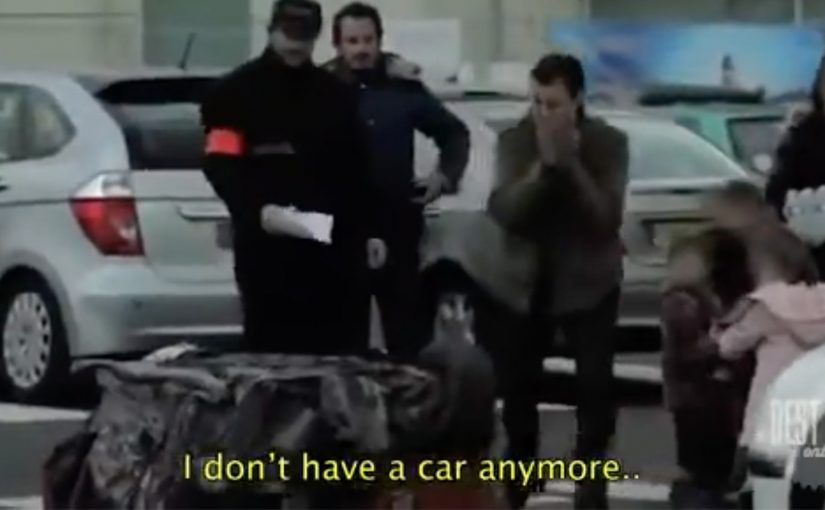
Ogilvy Paris was entrusted to drive acquisition for Europcar’s Auto Liberte, a service that aims to have you rent cars instead of buying them. So, they devised a wicked prank in which they towed away unsuspecting people’s cars, while replacing them with crushed cube cars, and a number to call for help.

The phone number given was of a local radio station that was broadcasting live to everyone in Paris.

The mechanism: make “car ownership pain” impossible to ignore

The stunt works because it hijacks a real ownership fear. Your car is gone. Then it escalates the feeling by replacing it with a cube that looks final, and a phone number that turns the private panic into a public moment. Here, “car ownership pain” means the sudden anxiety, time loss, and hassle that can come with owning and managing a car in a city.

Instead of resolving the situation quietly, the call routes into live radio, so the story instantly becomes shareable content and social proof.

In urban mobility markets, moving people from ownership to access depends on reframing convenience, cost, and hassle in a way that feels personal and immediate.

Why it lands: it turns a product claim into lived experience

Auto Liberté is an alternative to owning a car. The prank makes “owning a car is a headache” feel visceral in seconds, without needing a brochure explanation. It also flips the usual persuasion order. Emotion first. Rationalization second. Once the audience feels the pain, the rental alternative feels like relief.

Extractable takeaway: Make the old habit’s hidden costs felt in seconds, then let the alternative arrive as immediate relief.

The business intent behind the spectacle

This is acquisition marketing dressed as entertainment. The goal is to create talk value at street level, then convert that attention into brand consideration for a service that competes with a deeply ingrained habit.

The real question is whether you can make the old habit feel costly enough that the alternative feels like relief.

Prank marketing like this is worth doing only when the reveal is safe and the resolution is fast.

By integrating radio, the campaign extends the moment beyond the people on the sidewalk to a city-scale audience, while keeping the message anchored to everyday reality.

Four moves for ownership-to-access campaigns

  • Attack the habit, not the competitor. The target here is ownership friction, not another rental brand.
  • Build a simple reveal. Missing car. Crushed cube. One number to call. Instant comprehension.
  • Make the amplification native. Live radio turns reactions into content without needing a separate distribution plan.
  • Design the story to travel in one sentence. “They crushed my car and put me live on radio” spreads fast.

A few fast answers before you act

What is Europcar’s “Crush Hour” campaign?

It is a street prank created for Auto Liberté where parked cars were towed away and replaced with crushed cube cars, pushing owners to call a number for help.

How does the prank actually work, step by step?

Remove the real car. Replace it with a visually shocking “final” object. Add a single instruction. Call the number. Then route the call into a live broadcast so the reaction becomes the content.

Why use a crushed cube car instead of a simple “your car was towed” sign?

Because it escalates emotion instantly. It makes the loss feel irreversible and personal, so the audience experiences “ownership pain” before they ever hear the service pitch.

How does the live radio element change the impact?

It turns a private moment into a public story. The call becomes instant broadcast content, which amplifies reach and makes the message feel socially real, not just advertised.

What is the campaign trying to persuade people to do?

It positions Auto Liberté as an alternative to car ownership, using a high-drama metaphor to make ownership feel stressful and renting feel like relief.

What should brands be careful about with prank marketing?

Intensity and consent. If the “moment of truth” feels unsafe, humiliating, or too punitive, the brand can lose trust even if the stunt earns attention.
Volkswagen: Instant Christmas Recycler

Volkswagen: Instant Christmas Recycler

A Christmas recycler that turns responsibility into a reward

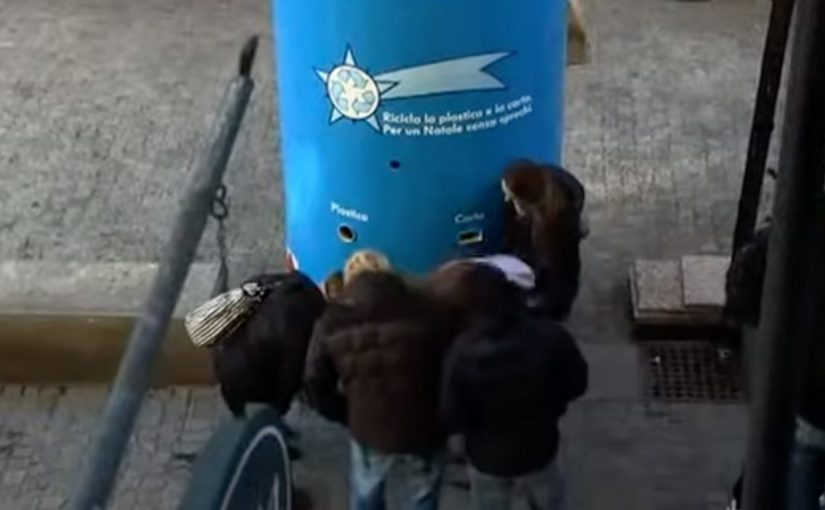
Volkswagen in Italy wanted to convince people to be more responsible towards the environment. So with the help of ad agency Now Available they created an engaging ambient ad called the “Instant Christmas Recycler”.

How the Instant Christmas Recycler works as an ambient activation

The idea is simple: put a recycling station where people are already moving, then make the “right” action feel immediately worthwhile. Here, “ambient activation” means a branded installation in a public setting that invites an on-the-spot action. As described in campaign write-ups, each time someone disposed of rubbish correctly, the machine responded with an instant Christmas-themed reward. That instant feedback is the mechanism. Because the response is immediate, it reinforces the behavior while the motivation is still present.

In retail-adjacent public environments, ambient installations can make sustainability tangible by turning small actions into visible, immediate consequences.

Why it lands: it replaces guilt with a small win

Environmental messaging often asks for sacrifice. This flips the emotional contract. It rewards the behavior on the spot, so the action feels like a game you want to complete rather than a lecture you want to avoid.

Extractable takeaway: If you can turn a “should” into an immediate, visible win, the behavior starts to feel self-propelled instead of imposed.

The Christmas framing matters too. It gives the act of recycling a seasonal “ritual” feel, which makes participation socially acceptable and easy to repeat.

The business intent behind the charm

This is brand reputation building with a behavioral nudge attached. The real question is whether you can design the loop so the sustainable choice feels rewarding in the moment. Reward-based nudges only hold when the payoff is inseparable from the action. Volkswagen gets to show up as a constructive actor in everyday life, while testing a simple truth: if you want people to change behavior, reduce friction and make the payoff immediate.

What to steal for your next sustainability activation

  • Reward the action, not the intention. People follow loops they can feel instantly.
  • Place it where behavior already happens. Footfall beats persuasion.
  • Make the feedback public. Visible participation normalizes the act for bystanders.
  • Keep the rules obvious. One action. One response. No instructions needed.

A few fast answers before you act

What is the “Instant Christmas Recycler”?

It is an ambient activation for Volkswagen in Italy that uses a branded recycling station to encourage responsible disposal by giving immediate feedback and reward.

What is the key mechanism that makes it work?

Instant reinforcement. When someone recycles correctly, the installation responds immediately, making the right behavior feel easy and worth repeating.

Why use an ambient installation for an environmental message?

Because it reaches people in the moment of action. It turns sustainability from a slogan into a behavior you can perform right now.

What should a brand be careful about with reward-based nudges?

If the reward is unclear, delayed, or inconsistent, the loop collapses. The response has to feel reliable and directly tied to the action.

How do you scale an idea like this beyond one location?

Standardize the behavior loop and vary the context. Same simple action and response, different placements and seasonal skins that fit local routines.

Supreme Security: Job Offer in Luggage Scanner

Supreme Security: Job Offer in Luggage Scanner

Supreme Security is an international company offering security services ranging from personal security to dog squad assignments, as well as access and baggage checks. To deliver that, it continually needs specially trained personnel, but only a small pool of specialists fits this narrow job profile in Switzerland, and many of them work in border patrol or airport police.

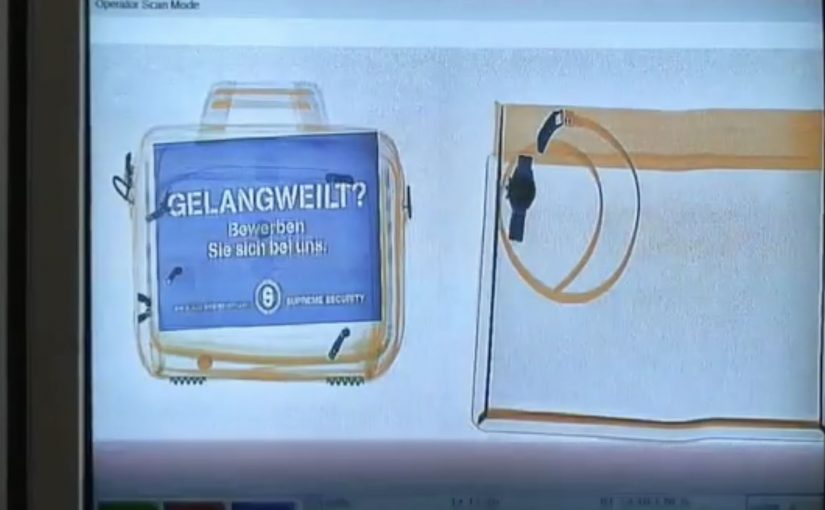
So the company equips its own employees with machined metal bars and sends them on business trips with those bars packed in their hand luggage. When the bags go through security, the X-ray image reveals a clear recruitment message to the people operating the scanner.

The X-ray reveal: a job ad delivered inside the checkpoint

The execution is almost stubbornly physical. No QR codes. No landing pages in the moment. Just a piece of metal engineered so its silhouette becomes readable text on a baggage scanner screen.

That design choice matters because it matches the audience’s reality. These candidates spend their day looking at X-ray images. The campaign puts the job offer exactly where their attention already lives.

In specialist recruitment markets, placing your job offer inside the candidate’s daily workflow can outperform broad awareness media.

Why it lands: it respects expertise and filters for it

This is not a mass recruitment message pretending to be clever. It is a targeted signal aimed at a professional who will immediately understand what they are seeing, and why it was made for them. The real question is whether your recruitment message shows up inside the exact workflow that signals real fit. This is smart recruitment because the medium itself does part of the qualification work.

Extractable takeaway: The fastest way to reach scarce talent is to design a “high-signal artifact”, meaning a message carrier whose form already screens for relevance, so only the right audience will notice and appreciate it. If the medium itself acts like a competency filter, you get fewer leads, but better ones.

The low-budget constraint is part of the story too. The campaign is described as being produced for under 5,000 Swiss francs and as recruiting eight highly qualified employees in two months. That makes the idea feel replicable, not reserved for brands with giant hiring spends.

What to steal for your next hard-to-hire role

  • Recruit inside the work context: deliver the message where the target audience already concentrates.
  • Make the medium do the targeting: if only the right people “get it”, you reduce noise.
  • Keep the message legible in one glance: no one at work wants to decode your campaign.
  • Design for retellability: the story should travel as “did you see this” even without a link.
  • Use constraints as credibility: low-production realism can read as confidence, not lack of polish.

A few fast answers before you act

What is the core idea here?

A job offer is embedded into a metal object so it becomes readable when scanned by an airport X-ray system, reaching security professionals while they work.

Why is this better than a normal recruitment ad for this audience?

Because it targets scarce specialists in their professional environment and feels like an insider message rather than generic hiring noise.

What makes it “experience-based”?

The candidate does not just see a message. They experience the reveal in a real workflow moment, which makes it memorable and easy to retell.

What’s the biggest risk if you copy this approach?

Operational and reputational risk. If the artifact disrupts operations, causes safety concerns, or feels deceptive, the idea backfires. The execution must be safe, respectful, and clearly non-threatening.

How do you measure success beyond hires?

Track qualified inbound leads, interview-to-offer ratio, time-to-hire for the target profile, and earned mentions within the professional community you are trying to reach.