
Touch the Sound: 3D printed radio history

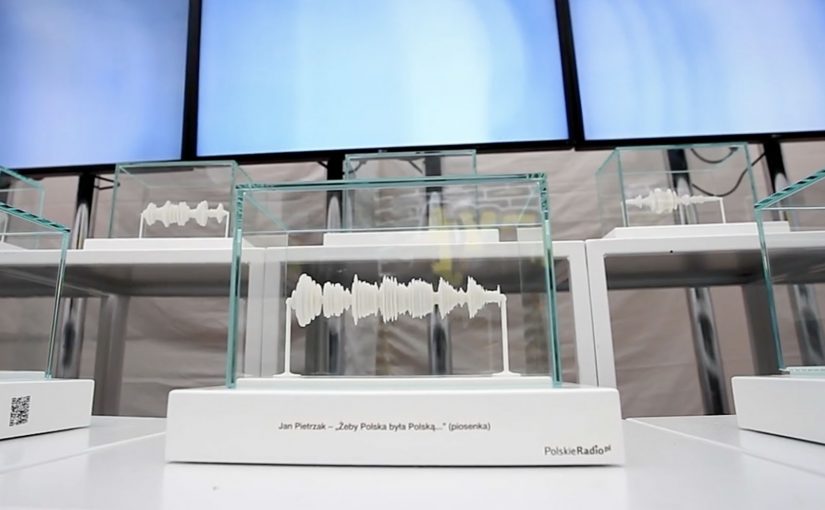
PolskieRadio.pl is described as a news portal with the largest radio recordings database in Poland. To promote it at Science Picnic in Warsaw, Hypermedia Isobar creates a special event built around one simple idea: make sound physically touchable.

Using 3D printing technology, they print out some of the most famous historical radio recordings, turning audio into tangible objects that visitors can hold and explore as “important sounds” of the 20th century.

In European public media and culture marketing, giving people a hands-on way to experience an intangible archive can outperform any “come visit our site” message.

How “sound you can touch” is staged

The experience works because it is instantly legible on a crowded show floor. You see unusual 3D printed forms, you learn they represent famous recordings, and you understand the invitation without needing a demo or instruction manual.

Instead of asking people to browse a deep archive, the activation turns the archive into a physical exhibit. That shift changes the audience mindset from “searching content” to “discovering artifacts”.

Why this fits Science Picnic

Science Picnic is positioned as a hands-on, experiment-first environment. A 3D printed sound object belongs there because it feels like a real scientific trick: invisible data becomes a thing you can touch, compare, and talk about with strangers.

What to steal from this approach

  • Materialize the invisible. If your product is digital, give people a physical handle on the idea.
  • Start with curiosity, then explain. A strange object earns attention before any copy does.
  • Turn an archive into a highlight reel. People engage faster when you curate “the famous 10” rather than expose “the full 10,000”.
  • Design for conversation. Installations that provoke “what is that?” get shared on the spot.

Last year tourists visiting the La Rambla neighborhood in Barcelona also experienced 3D printing technology. But at that time they were able to pose and create their very own three-dimensional statues.


A few fast answers before you act

What is “Touch the Sound” for PolskieRadio.pl?

It is a live event concept where famous historical radio recordings are turned into 3D printed objects, so visitors can literally touch “sounds” as physical artifacts.

Why use 3D printing for a radio archive?

Because it converts an intangible asset into a tangible experience. People understand the idea instantly and remember it because it feels like a scientific reveal.

Why does this kind of activation work at a science fair?

Science fairs reward hands-on discovery. A physical “sound object” matches the environment, so visitors treat it like an exhibit rather than an ad.

What is the key strategic benefit for the brand?

It reframes a large digital archive as cultural heritage worth exploring, and it creates a memorable story people can retell in one sentence.

What is the most transferable lesson?

If your brand owns data, recordings, or digital history, curate the best pieces and give people a tactile, participatory way to encounter them.
Waternet Queen’s Day Challenge: Pee Race

Turning a messy problem into a canal-side race

Queen’s Day in Amsterdam brings huge crowds and heavy celebrations. It also brings a very practical problem for Waternet, the city’s water supplier: too many people treat the canals like a public toilet.

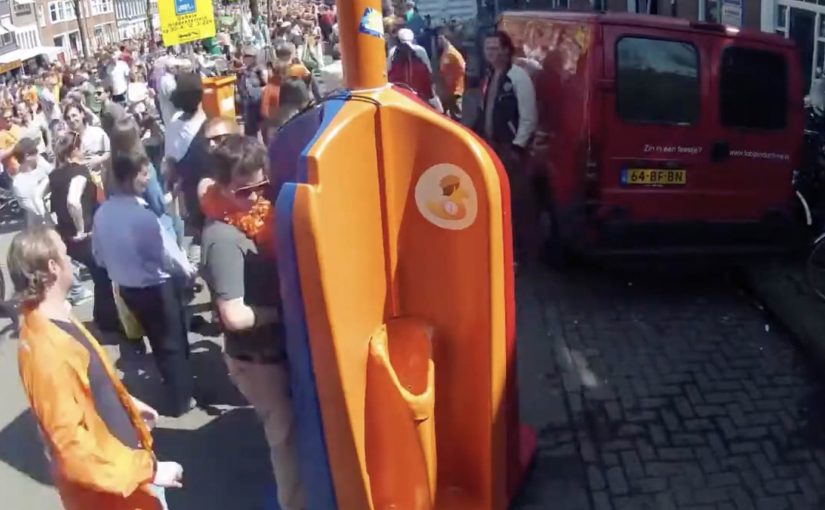
Instead of posting warnings, Waternet worked with Achtung! and installed several brightly colored urinals at different points along the canal. Each unit had four stalls and connected to a digital screen that turned peeing into a live race, with a simple incentive that makes people want to participate.

In crowded city-center celebrations, playful public interactivity often changes behavior faster than moralizing signage.

The mechanics that make it work

This is a strong example of ambient behavior-change design. Here “ambient” means the intervention lives in the environment, right where the decision happens, not in a banner ad or a TV spot.

It works because the feedback is immediate, the experience is social by default, and the “right” behavior feels more fun than the “wrong” behavior. That combination reduces friction and replaces shame with competition.

How to apply the pattern elsewhere

  • Move the message to the moment. Put the interaction where the behavior happens, not weeks earlier in a campaign feed.
  • Make the desired action the easiest action. People choose the path that feels obvious and frictionless in public.
  • Use visible progress. A shared screen and a simple scoreboard create instant social proof.
  • Reward participation, not perfection. Even a small, symbolic payoff can tip the choice at scale.

A few fast answers before you act

What is the Waternet Queen’s Day Challenge?

It is a Queen’s Day activation in Amsterdam where Waternet installs canal-side urinals and turns their use into a multiplayer race on a connected screen, discouraging people from urinating into the canals.

How does the “pee race” work?

Four stalls connect to a shared screen. Participants use the urinal and the screen visualizes a race, making the act feel like a public, competitive mini-game rather than a private necessity.

Why does this kind of gamification change public behavior?

It replaces a negative instruction (“don’t do this”) with a positive, easy alternative that gives immediate feedback and a social payoff, which is especially effective in crowded, high-energy settings.

What makes an ambient activation succeed in public space?

Clear purpose, low friction, instant comprehension, and feedback people can see without explanation. If it needs a guide, it usually fails on the street.

How can brands use this pattern without relying on shock value?

Keep the mechanism. Swap the provocation. Put the interaction at the point of decision, make progress visible, and attach a small reward to the behavior you want to encourage.

Lynx: Invisible Ad with polarized glasses

Last month, McDonald’s in Canada created a billboard that could only be seen in the night with car headlights.

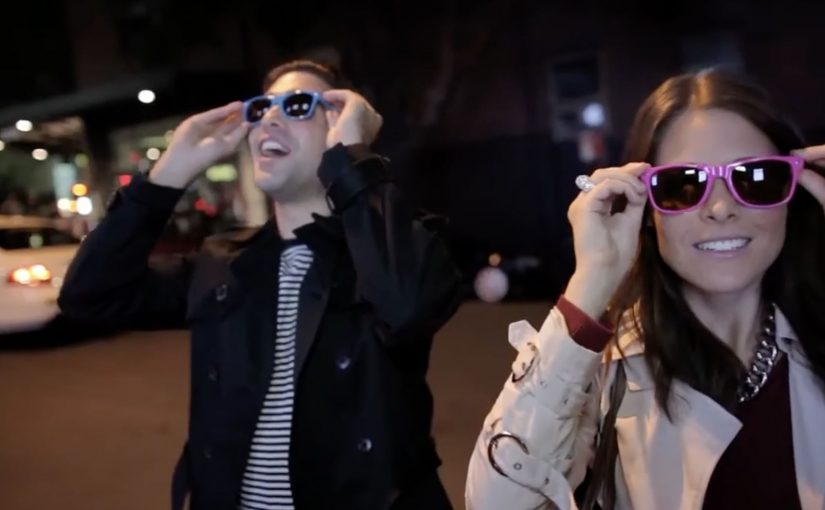
Now Lynx, for its “Unleash the chaos” campaign in Australia, replaces the windows of a house in Sydney with special LCD screens. Sexy hostesses stationed outside hand out polarized sunglasses to passersby, and the glasses suddenly unveil the chaos going on inside the house.

In consumer marketing, “invisible” media works best when the reveal is a reward that feels discovered, not delivered.

What makes this an “invisible ad”

An invisible ad is a message that is intentionally hidden in plain sight, then revealed only when the audience meets a condition. Here, the condition is wearing polarized lenses, which gate what the screens are able to show.

The result is a street-level experience that looks ordinary to everyone, but becomes explicit and chaotic for the people who opt in by putting on the glasses.

The mechanism: selective visibility creates instant intrigue

The setup is simple and bold. Take an everyday terrace house. Swap its windows for LCD panels. Hand out sunglasses that make the content readable. Suddenly the street becomes a live demo, with the audience in control of whether they see it.

Coverage of the activation describes it as part of the Lynx Anarchy launch, produced as a filmed stunt to capture reactions and extend reach beyond the street.

Why it lands: it feels like a secret you earned

Outdoor advertising usually broadcasts. This flips the script. The street stays “clean” until you choose to participate, and that choice makes the reveal feel more personal, more exclusive, and more share-worthy.

It also borrows a familiar human impulse. If someone hands you “special glasses”, you want to know what you’re missing without them.

What the brand is buying with this kind of stunt

  • Permissioned attention. People self-select into the experience rather than being interrupted.
  • A built-in talk trigger. The format is easy to explain and retell, even without showing the content.
  • Proof of product personality. The medium embodies the message. Chaos is not only said, it is staged.

What to steal for your next “hidden in plain sight” idea

  • Make the reveal binary. Either you see nothing, or you see everything. Half-reveals feel like malfunctions.
  • Let the audience choose. The opt-in moment (taking the glasses) is what creates commitment.
  • Design for spectators too. Even people who do not opt in should understand that something is happening, and feel curious.
  • Film reactions as a second asset. The live moment is local. The reaction video travels.

A few fast answers before you act

What is a brand “invisible ad”?

It is an ad designed to look blank or ordinary until a specific condition reveals it, such as headlights at night or special glasses in daylight.

What is Lynx doing in the Invisible Ad stunt?

Lynx replaces a house’s windows with screens and hands out polarized sunglasses that reveal hidden content, turning an ordinary street view into a private, chaotic reveal.

Why use polarized sunglasses as the trigger?

Because it creates an opt-in moment. People decide to participate, and that choice makes the reveal feel earned and more memorable.

What is the strategic benefit of hiding the message?

Hiding the message creates curiosity, controls who sees the explicit content, and makes the experience feel like a secret worth sharing.

How do you scale a one-street activation?

By designing it to be filmed, then distributing the reaction footage as the wider campaign asset.