
Radio Geister: When the Crash Site Talks Back

When you drive past a crash site, the warning follows you

One of the most chilling awareness ideas in recent memory does not start on a screen. It starts at the roadside.

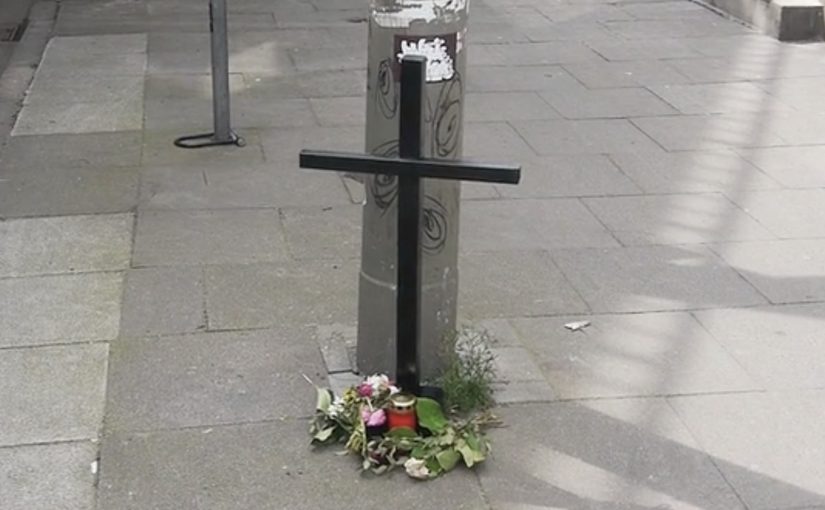
For “Radio Geister” (Radio Ghosts), small radio stations in the shape of wooden death crosses are placed around Hamburg at sites where alcohol-related car accidents had happened. As young drivers approach, these mini transmitters interrupt the signal of popular radio stations. In place of music, the driver hears a radio spot voiced from the perspective of someone who died in a drunk-driving crash.

The mechanic: audio interruption tied to the exact location

The project combines two moves. First, it uses physical markers that already mean something in the real world. The roadside cross. Second, it turns radio into a proximity medium by briefly overriding a station’s signal at the moment a driver is physically passing the place where something irreversible happened.

The radio spots themselves are written as first-person accounts from fatal accident victims, which makes the interruption feel less like an ad and more like a presence.

In European road-safety communication, the fastest way to break through denial is to connect a real place, a real habit, and a real consequence into one unavoidable moment.

Why it lands

This is a stronger road-safety intervention than a conventional awareness spot because it weaponizes context. The message does not arrive while someone is “in awareness mode.” It arrives while they are driving, listening to the stations they actually use, in a location that proves the stakes. The interruption is also proportionate. It is brief, but it is intrusive enough to create a jolt, which is exactly what complacency needs.

Extractable takeaway: If you need to change risky behavior, deliver the warning inside the behavior, not around it. Tie it to a specific place and a familiar channel, and the mind cannot file it away as generic advice.

What the campaign is trying to change

The framing used in campaign write-ups is stark. “One out of eleven deaths caused by car accidents has to do with drinking and driving.” Whether or not you accept the exact ratio, the creative intent is clear. Replace abstract statistics with a felt experience that young drivers will remember the next time they consider driving after drinking.

The real question is not whether young drivers know the rule, but whether the warning can reach them inside the exact driving moment when denial still feels safer than restraint.

What road-safety campaigns can steal from this

  • Use the environment as proof. A crash site is a more credible media placement than any billboard.
  • Interrupt the comfort loop. If the risky habit is paired with entertainment, break the entertainment briefly.
  • Write from a human perspective. First-person voice makes consequences feel immediate, not theoretical.
  • Keep it simple, keep it sharp. One moment of shock can beat a long lecture.

A few fast answers before you act

What is “Radio Geister” (Radio Ghosts)?

It is a road-safety awareness project that places cross-shaped mini transmitters at crash sites to interrupt popular radio stations with warnings voiced from the perspective of drunk-driving victims.

What is the core mechanic?

Location-triggered audio interruption. As drivers pass the crash site, their radio station is briefly overridden by the campaign message.

Why use radio for this instead of posters or video?

Because radio is already in the car, already on, and already trusted as a companion. The message arrives in the exact medium the driver is using in the moment that matters.

Why is the crash-site placement so important?

The location turns the warning into evidence. It signals that this happened here, to someone real, not in a hypothetical scenario.

What is the transferable lesson for behavior-change campaigns?

Do not ask people to imagine consequences later. Insert consequences into the live context where the decision is being made.
Strongbow Gold: StartCap Bottle Top

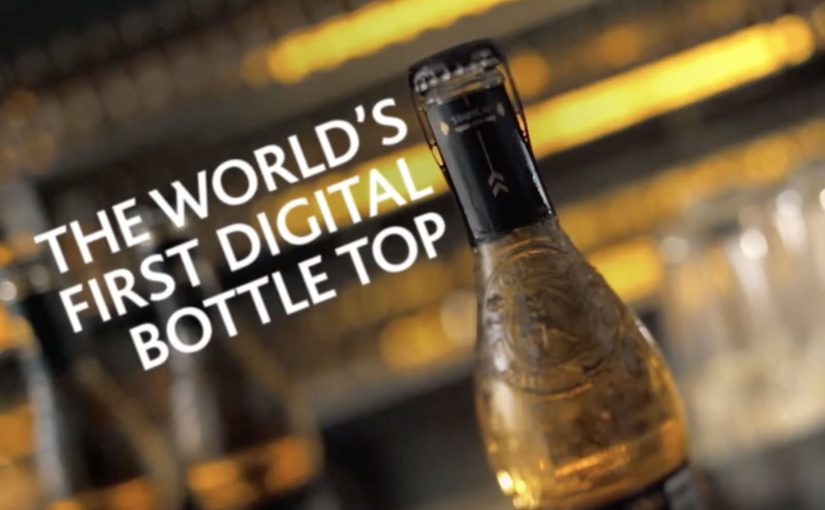
Strongbow Gold is testing what is being billed as the world’s first digitally enabled bottle top. Trigger it, and the bottle top activates a surprise designed to make the night feel more refreshing, more unexpected and more exciting.

For its first public appearance, the Strongbow Gold team rigged an entire bar in central Budapest with RFID readers, antennas and wires. Then during the night, StartCap triggered a string of memorable activations.

A bottle that behaves like a remote control

The core mechanism is packaging as a trigger. An RFID element in the cap signals nearby readers when the bottle is opened, and that signal kicks off a pre-set sequence in the environment, lights, music, props, anything the system is wired to control.

In European FMCG brand launches, connected packaging is a direct way to turn a product claim into a lived experience because the consumer action, opening the bottle, becomes the start button for the story.

Why this lands in a bar context

Bars already run on anticipation. People are there for the next moment. StartCap simply makes that “next moment” programmable, and ties it to the brand in a way that feels earned rather than announced. Because the trigger is the same action guests already perform, the surprise reads as part of the night, not a branded interruption.

Extractable takeaway: In any shared venue, tie a visible “room moment” to a natural product action and the crowd will supply the reaction and conversation without extra prompts.

What the brand is really proving

This is less about a new cap and more about a new role for the brand. Strongbow Gold positions itself as the catalyst for a better night out, not just a drink choice. Connected packaging is only worth doing when the payoff is unmistakable in the room. The technology is the proof device that makes that positioning tangible.

The real question is whether you can choreograph a repeatable “room moment” without making the tech the headline.

Connected-packaging stealables for your next idea

Connected packaging here means the package contains an identifier or sensor that can trigger a response in a nearby system, turning a normal use action into an experience cue.

  • Make the trigger unavoidable. Opening, pouring, unwrapping. The action must be natural.
  • Design for surprise, not complexity. One clean signal, one clear payoff, then scale the choreography.
  • Use the environment as media. If the space reacts, you earn attention without buying more screens.
  • Keep it safe and reliable. In live venues, failure is public. Redundancy matters.

A few fast answers before you act

What is StartCap in one sentence?

A digitally connected bottle top that uses RFID to trigger events in the surrounding environment when the bottle is opened.

Why is packaging-triggered tech so effective?

Because it links the brand to a physical action the consumer already performs. The experience starts at the product, not at an ad.

What is the biggest risk with “connected bar” activations?

Operational fragility. If sensors misread, activations lag, or the venue is too noisy to notice outcomes, the magic disappears.

Does this need a smartphone app to work?

Not necessarily. This model can be environment-driven. The venue infrastructure can detect the trigger and run the experience without asking the guest to install anything.

What should be measured to judge success?

Participation rate, repeat triggers per guest, dwell and sentiment in the venue, plus any post-event lift in brand consideration and trial.

Touch the Sound: 3D printed radio history

PolskieRadio.pl is described as a news portal with the largest radio recordings database in Poland. To promote it at Science Picnic in Warsaw, Hypermedia Isobar creates a special event built around one simple idea: make sound physically touchable.

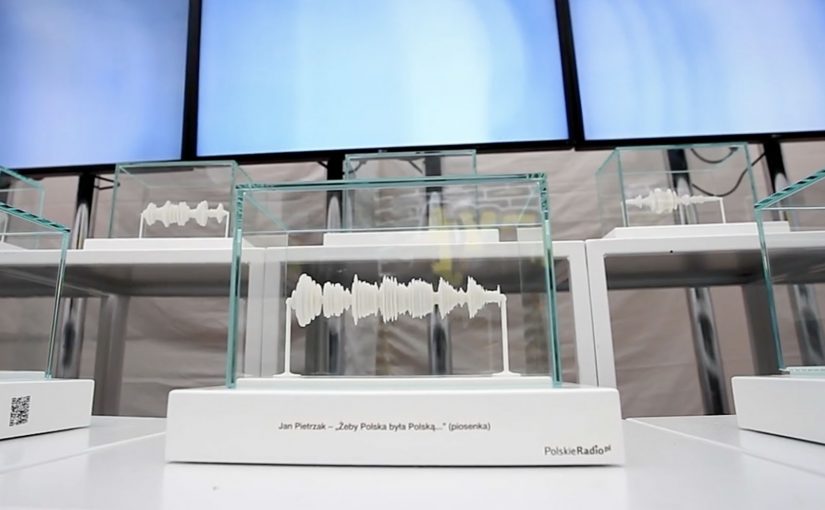
Using 3D printing technology, they print out some of the most famous historical radio recordings, turning audio into tangible objects that visitors can hold and explore as “important sounds” of the 20th century.

How “sound you can touch” is staged

The experience works because it is instantly legible on a crowded show floor. You see unusual 3D printed forms, you learn they represent famous recordings, and you understand the invitation without needing a demo or instruction manual.

Instead of asking people to browse a deep archive, the activation turns the archive into a physical exhibit. That shift changes the audience mindset from “searching content” to “discovering artifacts”.

The real question is whether your archive can become something people discover in the room before they ever search it online.

In European public media and culture marketing, giving people a hands-on way to experience an intangible archive can outperform any “come visit our site” message.

Why this fits Science Picnic

Science Picnic is positioned as a hands-on, experiment-first environment. A 3D printed sound object belongs there because it feels like a real scientific trick: invisible data becomes a thing you can touch, compare, and talk about with strangers.

Extractable takeaway: When your asset is intangible, design the first touchpoint as a hands-on reveal that people can explain to each other in a sentence.

How to make an archive feel physical

  • Materialize the invisible. If your product is digital, give people a physical handle on the idea.
  • Start with curiosity, then explain. A strange object earns attention before any copy does.
  • Turn an archive into a highlight reel. People engage faster when you curate “the famous 10” rather than expose “the full 10,000”.
  • Design for conversation. Installations that provoke “what is that?” get shared on the spot.

Last year tourists visiting the La Rambla neighborhood in Barcelona also experienced 3D printing technology. But at that time they were able to pose and create their very own three-dimensional statues.


A few fast answers before you act

What is “Touch the Sound” for PolskieRadio.pl?

It is a live event concept where famous historical radio recordings are turned into 3D printed objects, so visitors can literally touch “sounds” as physical artifacts.

Why use 3D printing for a radio archive?

Because it converts an intangible asset into a tangible experience. People understand the idea instantly and remember it because it feels like a scientific reveal.

Why does this kind of activation work at a science fair?

Science fairs reward hands-on discovery. A physical “sound object” matches the environment, so visitors treat it like an exhibit rather than an ad.

What is the key strategic benefit for the brand?

It reframes a large digital archive as cultural heritage worth exploring, and it creates a memorable story people can retell in one sentence.

What is the most transferable lesson?

If your brand owns data, recordings, or digital history, curate the best pieces and give people a tactile, participatory way to encounter them.