
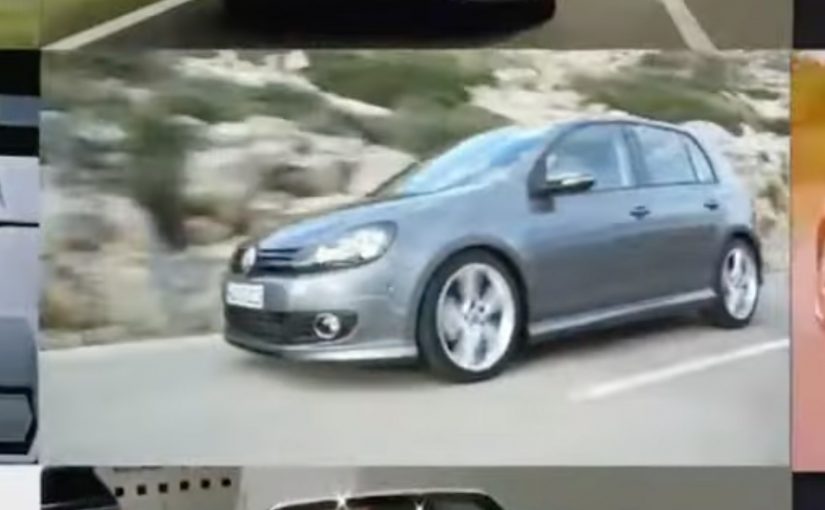
Volkswagen: The Fun Theory

I am sure some of you may have already heard of the “The Fun Theory” campaign by Volkswagen that just recently won the Cannes 2010 Cyber Grand Prix for a digitally led integrated campaign. Here, “digitally led” means the digital layer does the heavy lifting for discovery, sharing, and participation, not just for amplification.

For those who have not heard of the campaign, The Fun Theory was all about generating interest in Volkswagen’s Blue Motion technologies that deliver the same great car performance with reduced environmental impact, and to do this, they found an insight around how “fun” could change human behavior for the better, and this formed The Fun Theory, a campaign that spawned over 700 user generated Fun Theory initiatives along with a number of big viral hits that generated over 20 million YouTube views, with one rushing past 12 million views alone!

What makes this digitally led (without overcomplicating it)

This is one of those campaigns where the “digital” part is not a layer added at the end. It is the distribution engine. It is how the idea travels, how participation scales, and how a single insight turns into hundreds of initiatives people want to copy, remix, and share. The real question is whether your idea can travel without you pushing it. A campaign is not digitally led unless the channels are the mechanic that makes it repeatable.

Extractable takeaway: If you want integrated work to scale, design the participation loop and the sharing loop into the idea itself. Otherwise “digital” stays a bolt-on and the campaign stays one-off.

The strategic insight that carries the whole idea

The Fun Theory is built on a simple behavioral observation. If you make the better choice fun, more people will do it. That is the core. Everything else is execution.

  • One clear behavior frame. “Fun changes behavior for the better.”
  • A product story that benefits. Blue Motion technologies. Same performance, reduced impact.
  • A scalable content model. Big hits create attention, then user generated initiatives extend the lifespan.

In large brand organizations, integrated work scales when the behavior mechanic and the distribution loop are designed together.

What to take from this if you are building integrated work

  1. Lead with a human mechanism, not a message. People share mechanisms they can repeat.
  2. Let distribution be part of the design. If it does not travel, it does not scale.
  3. Create a format others can copy. The strongest campaigns spawn “versions.”
  4. Keep the brand role credible. The idea must connect back to a real product promise.

A few fast answers before you act

What is Volkswagen’s “The Fun Theory” in one sentence?

It is a digitally led integrated campaign built on the idea that making the better choice fun can change human behavior for the better, while building interest in Volkswagen’s Blue Motion technologies.

Why did this campaign matter beyond a single viral video?

Because it scaled into participation. It spawned hundreds of user generated initiatives, not just one-off attention.

What is the link to Blue Motion technologies?

The campaign positioned Blue Motion as delivering the same great car performance with reduced environmental impact, then used “fun” as the behavioral hook to earn attention and sharing.

What is the transferable lesson for digital and brand leaders?

If you can pair a simple behavioral mechanism with a credible product story, digital channels can turn one idea into a repeatable format that communities propagate for you.

How do you know when a “digitally led” idea is strong enough?

If people can describe it quickly, repeat it without you, and share it with minimal friction, it is built to scale.

Go Vote: Or You Let Others Decide

An integrated experience-based campaign was created by DDB Budapest on behalf of the Hungarian Democracy to support the 2010 Hungarian elections.

Instead of relying only on posters and TV spots, the idea is built around lived moments that make one point unavoidable: if you do not vote, you still get an outcome. You just did not choose it.

When “apathy” becomes something you can feel

The line “go vote, or you let others decide for you” is easy to agree with in theory, and easy to ignore in practice. The creative move here is to stop arguing and start staging: put people into situations where “someone else decides” is no longer an abstract civic warning, but an immediate, personal experience.

The mechanic: make the consequence tangible

The campaign uses real-world experiences as the delivery system. The experience is the message: you lose control when you opt out. That emotional truth lands faster than any rational explanation of why voting matters.

In public-interest communication, experience-led campaigns often work best when they translate a distant consequence into a simple, physical moment.

Why it lands: it reframes voting as self-protection

Many turnout messages talk about duty. This approach talks about ownership. The real question is not whether people agree that voting matters, but whether the campaign makes the cost of opting out feel personal enough to trigger action. The stronger strategy is to make non-participation feel immediate, not just irresponsible. It positions voting less as a moral obligation, and more as the minimum action required to keep your right to choose.

Extractable takeaway: If you need mass behavior change, do not just explain the benefit. Stage a short, memorable moment that lets people experience the cost of inaction. When the cost feels personal, the call-to-action becomes easier to act on.

The intent: turnout through a stronger trigger than guilt

The business of any election participation push is motivation. This work is a reminder that motivation does not need to be inspirational. It can be visceral. A compact experience can achieve what a long message cannot: it creates a story people retell, and that story carries the prompt forward.

What to steal for your own participation campaign

  • Start with a single, sharp sentence: one idea, no debate, no footnotes.
  • Translate the idea into an experience: let people feel the message before you ask them to act.
  • Keep it non-partisan by design: focus on participation, not outcomes or parties.
  • Make it retellable: if someone can describe it in one line, it will travel further.
  • Reduce the distance to action: the closer the experience sits to the voting moment, the stronger the conversion.

A few fast answers before you act

What kind of campaign is this?

It is a get-out-the-vote public awareness campaign that uses real-world experiences to dramatize the idea that non-participation still produces outcomes.

Why use experiences instead of just ads?

Because experiences create emotion, memory, and conversation quickly. They can make an abstract civic point feel immediate and personal.

How do you keep a turnout campaign non-partisan?

Keep the message focused on participation, avoid references to parties or policies, and design the experience around the universal right to choose.

What should you measure for effectiveness?

Reach and recall are basics. More useful are participation rates in the experience, social sharing, earned media pickup, and any localized uplift signals available near the activation footprint.

When can this approach backfire?

If the experience feels humiliating, unsafe, or coercive, it can trigger resentment. The best versions create urgency without disrespecting the audience.

A Non Smoking Generation: Ugly Models

A teenage girl applies to a glamorous new modelling agency called “U-Models”. She fills in her age, height, and other details, uploads a photo, and waits for the call-back.

Then the twist lands. “U-Models” is revealed as “Ugly Models”, and the campaign’s message is blunt: smoking doesn’t just damage you in the long run. It shows up on your face, sooner than you think.

A fake model search that weaponises the application form

The execution is built like a real talent hunt. Recruitment happens online, and the “application” is the product. Applicants are asked for basics like age and an uploaded photo. Smoking status is part of the form, too.

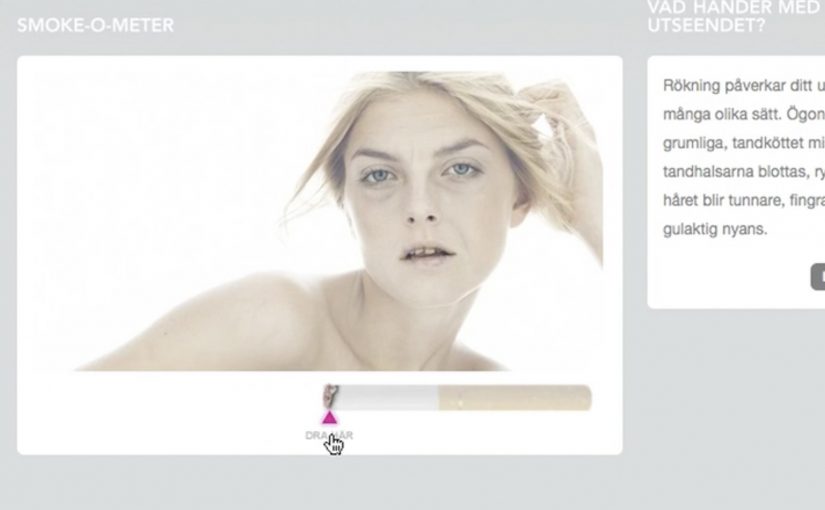
After the sign-ups, the campaign responds at scale. Applicants are told they are “too cute” for this agency because it is looking for “ugly models”. They are then shown a retouched version of their own photo that visualises how they might look after years of smoking.

How it turns a health warning into personal evidence

Most anti-smoking messages rely on abstract futures: disease, risk, statistics. This one drags the consequence into a mirror. It converts “smoking is harmful” into “this is what it can do to you”, using the viewer’s own face as proof, and using the modelling world as the attention hook.

In Scandinavian youth health communication, campaigns often have to compete with fashion and celebrity culture for attention.

The real question is how you make a long-term health risk feel socially immediate to a teenager.

Why it lands with the target group

The psychological move is simple: it swaps distant health outcomes for immediate social stakes. For teenagers, “identity now” usually beats “health later”. The campaign borrows the exact mechanics young audiences already understand. Casting calls, celebrity endorsement, online applications. Then it flips those mechanics into an uncomfortable reveal that is hard to unsee. That works because a personalised image collapses an abstract warning into an immediate identity threat.

Extractable takeaway: If your audience discounts long-term risk, translate the consequence into a near-term identity signal, and make the “proof” feel personally addressed rather than generally broadcast.

The intent, and the ethical edge you can’t ignore

This is a deliberately provocative form of social marketing. It uses deception, and it leans on appearance anxiety to get attention. That friction is part of the spread. People talk about it because it feels shocking, and because it breaks the usual public-service tone.

The pattern is effective, but it should only be used where the public-good case is strong and the safeguards are explicit. If you borrow the pattern, borrow it with care. The line between “wake-up call” and “harmful shaming” is thin, especially when the audience is young. The execution works because it is sharp, but it also raises real questions about consent, data handling, and emotional impact.

What to steal for your next behavior-change idea

  • Use a familiar cultural container. Here it is modelling and celebrity culture. Pick a container your audience already pays attention to.
  • Make the interaction do the persuasion. The form, the upload, and the response are the message. Not the headline.
  • Deliver a personalised “receipt”. The retouched photo turns a general warning into concrete evidence.
  • Design the reveal as the share trigger. The moment of “wait, this isn’t what I thought” is the social fuel.

A few fast answers before you act

What is “Ugly Models” in this context?

It is an anti-smoking campaign framed as a modelling recruitment drive called “U-Models”, later revealed as “Ugly Models”, designed to warn teenagers about the visible impact smoking can have on appearance.

How does the campaign mechanism work?

Teenagers apply online to a supposed model agency and upload a photo. The campaign then responds with a reveal message and a retouched version of the applicant’s own photo that visualises the effects of smoking over time.

Why is the personalised photo so powerful?

Because it turns a general warning into something that feels directly attached to the viewer’s own identity. The consequence stops being abstract and starts feeling immediate, visible, and personal.

Why focus on appearance instead of health consequences?

The idea is that long-term health warnings are often ignored by teenagers, while near-term identity and appearance cues are harder to dismiss. The campaign makes the risk feel immediate and personal.

What’s the main risk in copying this approach?

The tactic uses deception and can slide into shaming. If the audience is young, you need extra care around consent, safeguarding, and avoiding harm while still delivering a clear public-good message.