
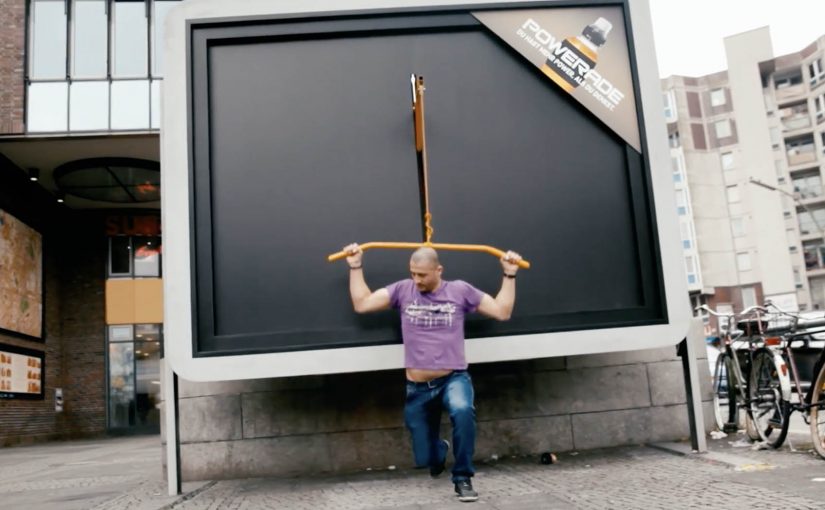
Powerade: Workout Billboards in Berlin

A billboard does not just tell you to train. It invites you to climb it, lift it, or punch it, right there on the street, then hands you a Powerade when you are done.

Powerade, with the help of Ogilvy & Mather, set up several workout billboards in Berlin that, apart from advertising the product, also doubled up as workout equipment to emphasize the brand’s attitude, “You have more power than you think”. Here, “workout billboards” means the billboard structure is built to be used as simple exercise equipment.

People practicing their rock climbing, weight lifting, and boxing skills on the unique billboards were also rewarded with some free Powerade to help replenish their electrolytes.

Why this works as outdoor advertising

The mechanism is a clean value exchange. The brand offers an activity that creates immediate proof of effort. The participant gets a short challenge and a visible outcome. The product then shows up as the natural next step, not as an interruption. Because effort comes first, the product feels like a reward rather than an ad.

Extractable takeaway: When outdoor media gives people a small, safe task to complete, the brand message lands as earned proof, not as a claim.

In sports and performance brands competing for attention in dense urban spaces, turning an ad surface into a usable experience is a direct way to earn participation instead of only impressions.

What Powerade is really buying

This is not mainly about reach. It is about association. The ad makes the brand feel like a training partner, not a poster. It also turns physical engagement into a public spectacle, which draws more people in and makes the moment more memorable than a standard billboard.

The real question is whether your activation gives people something they can do in public, not just something they can look at.

Steal-worthy moves for participatory OOH

  • Make the product a logical reward. The drink lands because effort comes first.
  • Design for participation, not just viewing. If people can do something, they will stop and watch others do it too.
  • Keep the idea explainable in one line. “Billboard that is also a workout” travels fast.
  • Let the environment do the distribution. Public performance creates its own audience.

A few fast answers before you act

What is a “workout billboard” in this campaign?

A billboard installation that doubles as real workout equipment, so people can climb, lift, or punch as part of the brand experience.

Why does turning a billboard into equipment change behavior?

It shifts the role from passive viewing to active participation, which increases time spent, memorability, and the likelihood people talk about it.

What is the main value exchange for the audience?

A quick public challenge plus a tangible reward. Free Powerade after effort makes the product feel earned and relevant.

What is the biggest execution risk?

If it looks unsafe, complicated, or embarrassing, people will not try it. The interaction has to feel obvious and low-risk at first glance.

What is the simplest way to apply this idea without building hardware?

Create a participatory moment that produces visible effort and a clear reward, even if the “equipment” is replaced by a simpler challenge format.
Plan: The Erasable Billboard for Girls’ Education

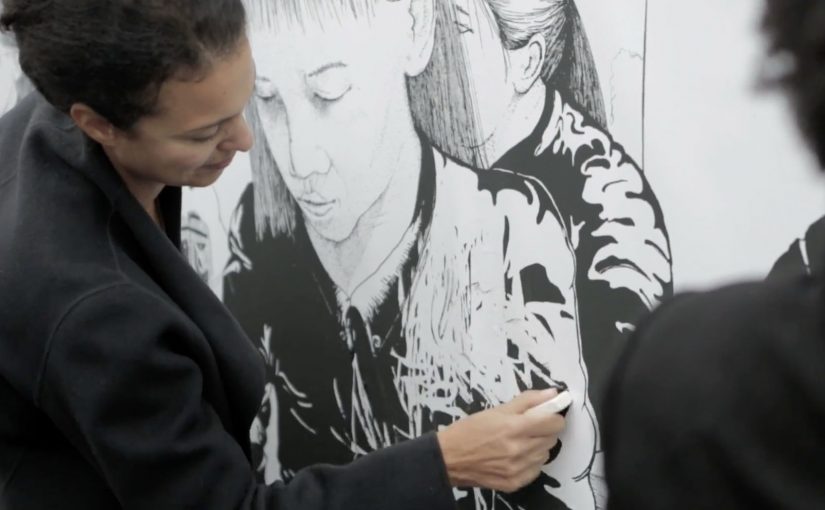
A large illustrated billboard appears in a busy city square. People donate, receive a simple eraser, and start rubbing away the artwork. As the top layer disappears, a second illustration is revealed underneath, shifting the story from girls working to girls going to school.

Plan has reported that tens of millions of girls worldwide are pushed into work instead of education, while in many less privileged countries boys are more likely to get access to schooling. To spark action, Plan and CLM BBDO created an erasable billboard with an illustration designed to be removed to reveal another illustration underneath. The billboard ran in central locations in Paris and Berlin. Passers-by were invited to donate in exchange for an eraser, then use it to change what the billboard showed.

Why the “erasable” mechanic is so strong

The mechanism does two jobs at once. It raises money, and it makes the issue understandable without explanation. The before-and-after is literal. Work disappears. School appears. The donor is not only informed. The donor performs the change. Cause-led campaigns should treat participation as the message, not a bonus layer.

Extractable takeaway: When the donor completes the transformation with their hands, the message becomes a memory and the donation feels consequential.

Definition-tightening: the eraser is not a gimmick. It is the interface, meaning the simple physical tool that gives the donor viewer control over the story. Because the act of erasing creates ownership, it makes someone more likely to donate, talk about it, and remember it.

In social-impact fundraising, participatory outdoor media can turn a small donation into a visible act of change that people feel in their hands.

The real question is whether your donation ask feels like participation or just passive sympathy.

What Plan is really buying

This is a public proof of participation. Instead of asking people to “care” in private, it makes caring visible, social, and shared. Every person who erases becomes a live endorsement that the issue matters enough to stop and act.

Steal this pattern: make giving tactile

  • Make the transformation physical. A tangible before-and-after beats a poster full of statistics.
  • Use the donation as the trigger. The action should only unlock after contribution, not before it.
  • Let participation create the content. The billboard changes because people change it.
  • Design for bystanders. Watching others erase is part of the persuasion.

A few fast answers before you act

What is the “Erasable Billboard” idea?

An illustrated billboard designed to be physically erased. Donors receive an eraser and reveal a second image underneath, shifting the story from girls working to girls going to school.

Why exchange a donation for an eraser?

Because it turns giving into an action. The eraser is a simple reward, but more importantly it is the tool that lets the donor create the transformation themselves.

What makes this more effective than a standard charity billboard?

It is participatory and observable. The public sees the billboard changing in real time, which builds social proof and makes the issue easier to grasp.

What is the main emotional lever?

Viewer control. The donor does not only learn about the problem. The donor performs a symbolic solution in front of others.

What is the biggest execution risk?

If the transformation is not instantly readable, people will not engage. The before-and-after needs to be obvious from a distance and satisfying up close.

smart fortwo: parKING

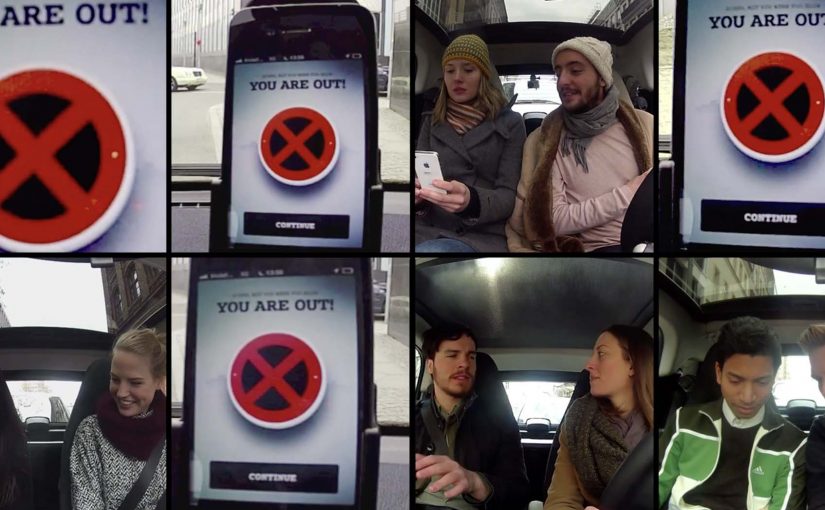
Parking in the city is rarely fun, so BBDO Germany turns a regular test drive for the smart fortwo into an interactive parking game inspired by musical chairs.

An iPhone app plays music and directs teams around central Berlin. When the music stops, teams have to find a parking spot immediately. The last team to park and verify their location with a photo upload is eliminated. The competition runs out of the smart Center Berlin, where eight teams battle to become Berlin’s first “parKING”. In this activation, “parKING” names the elimination-style parking race where the last team to park when the music stops is out.

How the game works as a test drive

The mechanism is simple. A timed audio cue creates urgency. GPS-style direction turns the city into the board. Photo proof keeps it honest. Underneath the playfulness, every round forces the product truth the brand wants to dramatize. In a dense city, a small car that can slip into tight spots changes the outcome. Because the win condition is parking fast in tight spots, the fortwo’s city-fit advantage shows up as a competitive edge.

In urban European mobility marketing, turning a functional advantage into a public game is a reliable way to make a test drive feel like entertainment rather than evaluation.

The real question is whether the rules make the product truth decide the winner, without narration.

For city-mobility brands, this rule-first approach beats a standard test drive because it turns a claim into observable proof.

Why it lands

It converts a daily friction into a competitive moment, then makes the proof visible. People do not need to be told that parking is painful. They already feel it. The activation reframes that pain as a challenge where speed, composure, and the vehicle’s city fit are the deciding factors.

Extractable takeaway: If your product benefit only matters in a real context, stage a rule-based experience that forces the context to happen. Then let the rules make the benefit obvious without narration or feature lists.

Steal the parKING activation pattern

  • Build the experience around one constraint. Here it is time pressure when the music stops. One constraint keeps the story legible.
  • Use verification that audiences trust. Photo proof is simple and public. It prevents the “this is fake” reaction.
  • Turn the environment into the media. The streets of Berlin are not a backdrop. They are the gameplay.
  • Make the rules do the branding. When the win condition is aligned with the product truth, the brand message arrives naturally.

A few fast answers before you act

What is parKING in one sentence?

It is a city-wide parking game that turns a smart fortwo test drive into musical chairs, guided by an iPhone app and enforced with photo verification.

Why does a game work better than a normal test drive here?

Because it creates stakes and a clear outcome. A standard test drive is private and subjective. A game produces winners, losers, and shareable proof.

What makes this feel “made for Berlin” instead of generic?

The rules depend on dense city parking reality. The city’s constraints are the point, so the activation feels native to the environment.

What is the main risk when brands copy this pattern?

Misaligned rules. If the game’s win condition does not directly demonstrate the product truth, you end up with a fun event that does not build the intended belief.

What is the minimum viable version of this mechanic?

A single timed cue, simple navigation to keep teams moving, and one proof step such as a photo upload. Strip everything else.