
Absolut: Unique Access via WhatsApp

In October, Klik (a chocolate snack) was billed here as the first brand to use WhatsApp to increase brand engagement amongst its teen audience.

Now a month later, ABSOLUT Vodka in Argentina uses WhatsApp as well, this time to invite people to an exclusive launch party. To build awareness and engagement in Buenos Aires, Absolut creates “Sven the doorman”. Interested people have to contact Sven via WhatsApp and convince him to grant access. Since he is not easy to convince, people get creative fast.

Sven is the mechanic

The mechanism is conversational gating. Conversational gating means access is unlocked only through a back-and-forth chat, not a form or link. A single contact on WhatsApp becomes a bouncer, and the brand turns the usual “enter to win” pattern into a negotiation. You are not filling a form. You are performing for a personality, in the channel where you already talk to friends.

In mobile-first urban markets, messaging apps like WhatsApp are a natural place for brands to run direct, high-attention interactions without building a separate destination.

Why this format spreads

It packages exclusivity into a simple game loop. The real question is whether you want people to feel like they earned access, or like they completed a funnel step. Ask. Get rejected. Try again. Escalate creativity. That loop is inherently shareable because it produces artifacts people can screenshot, forward, and remix. This format is a better bet when you want depth of participation and talk value, not maximum reach. Reported campaign write-ups describe hundreds of participants and a flood of user-made messages, which is exactly what you want when the goal is buzz rather than reach alone.

Extractable takeaway: If you want engagement that feels earned, design a human-scale gate with a clear personality and a strict rule. Then let people “pay” with creativity, not clicks.

What to steal for your own messaging plays

  • Make scarcity real. The smaller the prize pool, the more believable the doorman becomes.
  • Turn the brand into a character. Sven is not a hotline. He is a role people can play against.
  • Reward effort, not volume. You want fewer, better attempts, not spammy persistence.
  • Design the rejection lines. The “no” is half the entertainment. Script it so it invites a better next try.
  • Build for screenshots. Assume the conversation will leave WhatsApp. Make it legible outside the app.

A few fast answers before you act

What is the core idea behind “Sven the doorman”?

A brand persona acts as a gatekeeper on WhatsApp. People must persuade him to unlock access to an exclusive event, which converts invitations into a creative challenge.

Why use WhatsApp instead of a landing page?

Because it removes friction. The interaction starts inside an everyday messaging habit, and the conversational format makes participation feel personal rather than transactional.

What makes this approach risky?

It can backfire if the “doorman” feels unfair, creepy, or inconsistent. The rules must be clear, and the tone must fit the audience.

What is the simplest version a brand can run today?

Use one WhatsApp contact, one character, and one strict rule to unlock a limited reward. Keep the conversation short, and make the “no” entertaining enough that people want to try again.

How do you keep the “doorman” from becoming spammy or exhausting?

Set a tight interaction window, cap repeated attempts, and use rejection lines that steer people toward better next tries instead of inviting endless back-and-forth.
Eterna Cadencia: The Book That Cannot Wait

Last month I wrote about Austria Solar’s annual report, whose pages became visible only when exposed to sunlight.

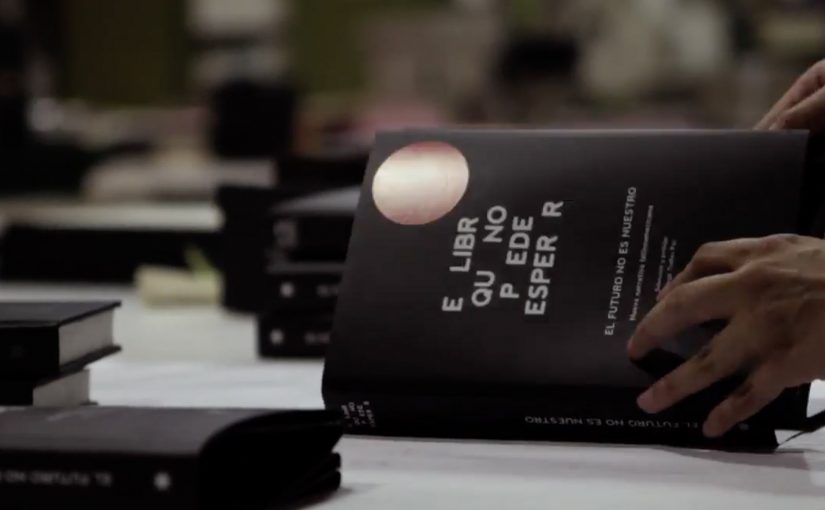
Now Buenos Aires based bookshop and publisher Eterna Cadencia has released “El libro que no puede esperar”, “The book that cannot wait”. It is an anthology of new fiction printed in ink that disappears after two months of opening the book.

The mechanic: ink that fades once you open the seal

How is that possible. Here, the mechanic is a built-in physical rule: the books are described as being silk-screened using a special ink, then sealed in air-tight packaging. Once opened, the printed material reacts with the atmosphere and starts to fade. The result is that, after roughly two months, the text vanishes.

In global publishing markets where e-books change reading habits, physical formats regain attention when they add a constraint that digital cannot replicate.

Why it lands: urgency turns reading into an action, not an intention

The idea does not compete with e-readers on convenience. It competes on psychology. A normal book is patient. This one is not. It creates a deadline, and deadlines change behavior. Because the fading is irreversible, the deadline feels real rather than promotional.

Extractable takeaway: If you want people to stop postponing a behavior, make the cost of waiting tangible and irreversible. Scarcity works best when it is built into the product, not added as a marketing slogan.

What it is really doing for new authors

The real question is whether a physical constraint can turn passive interest into immediate reading.

This is smart publishing design, not a gimmick for its own sake.

At face value, this is a publishing gimmick. Underneath, it is an argument for momentum. New fiction struggles when it sits unread on a shelf, because “I’ll get to it” often becomes “never”. A time-limited book reframes the purchase as a commitment to read now, which is exactly what emerging authors need.

The project is also widely described as being developed with DraftFCB, which helps explain why the execution feels like an idea engineered for cultural pickup, not just for bookstore shelves.

What to steal if you are marketing anything physical

  • Build the message into the object: the product itself should carry the story, even without a campaign.
  • Make the constraint legible: people should understand the rule in one sentence.
  • Turn delay into loss: urgency works when waiting has a real consequence.
  • Use packaging as a trigger: opening the seal is a clear “start” moment, and that matters for behavior.
  • Design for retellability: “a book that disappears if you do not read it” spreads on its own.

A few fast answers before you act

What is “The Book That Cannot Wait”?

It is a print book sealed in packaging where the text is printed with ink that starts fading once the seal is opened, so the content disappears after around two months.

Why would a publisher want ink that disappears?

To create urgency. The mechanic nudges readers to start and finish the book quickly, which can help emerging authors get read instead of getting postponed.

Is this a product innovation or a marketing campaign?

It is both. The object is the media. The disappearing ink turns the product into the message, which then earns coverage and conversation.

What is the biggest risk of copying this idea?

Trust. If people feel tricked or if the fade behavior is inconsistent, the stunt becomes resentment. The rules need to be clearly communicated and reliably delivered.

Where else does “built-in urgency” work?

It can work in limited editions, time-bound access, perishability, or experiences that change after first use. It is strongest when the constraint feels meaningful, not arbitrary.

Coca-Cola: Cheer-O-Meter

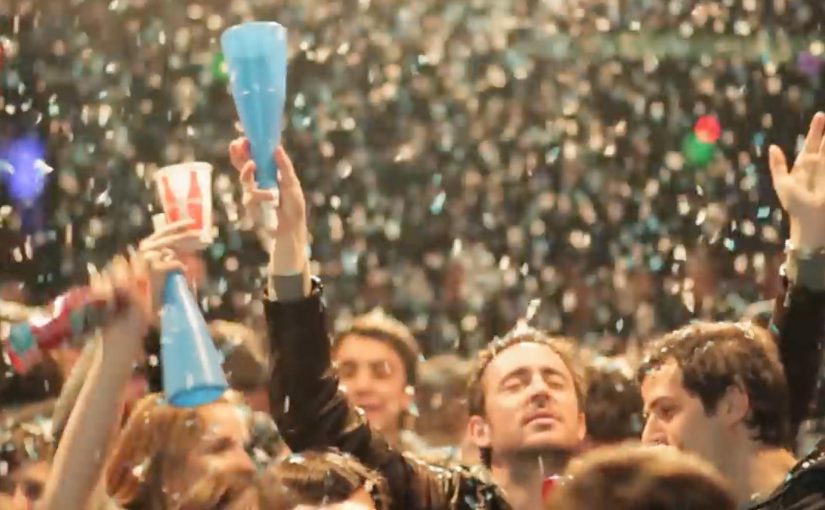
To promote the excitement around Copa America 2011, OgilvyAction worked with Coca-Cola to set up a giant screen in downtown Buenos Aires for fans to watch their favorite teams and provide unconditional cheer to the Argentinean National Team. But there was a catch. Sound sensors were installed to keep the screen on and if the fans stopped cheering, the screen would go blank.

The real question is whether you can make the crowd’s participation the switch that powers the experience.

Why this activation hits

The mechanic is brutally simple. Your cheering is not just encouraged. It is required. Here, an activation is a live brand experience that changes what the crowd can see based on what they do. Because the screen can die, the crowd self-organizes to keep the volume up, which makes “support” feel like a shared responsibility. In sports sponsorship and live-event marketing, conditional access is one of the fastest ways to turn spectators into participants.

Extractable takeaway: If you want participation, make it the required input for a real reward, and show the consequence instantly.

  • Clear rule. Cheer to keep the screen alive.
  • Immediate feedback loop. The crowd sees the consequence in real time.
  • Social amplification built in. People around you become part of the control system.

What marketers can reuse from the idea

This is a strong example of “participation as the power source”. Instead of adding a gimmick on top of the match, the match itself becomes the reward for participation. It also turns a brand message into a behavior, which tends to travel further than a tagline.

  • Make participation the power source. Tie the experience to an audience action instead of adding a side-gimmick.
  • Keep the reward “core”. Use the thing people already want as the payoff, not a separate prize.
  • Show consequences instantly. A visible feedback loop lets the crowd adjust behavior without instructions.

If participation does not change anything in the moment, it will read as decoration, not interactivity.


A few fast answers before you act

What is the Coca-Cola “Cheer-O-Meter”?

It is a live fan-screen activation in Buenos Aires for Copa America 2011 where sound sensors kept the match on screen only while fans kept cheering.

How did the sound-sensor mechanic work?

The cheering volume acted as the trigger. If it dropped too low, the screen went blank, pushing the crowd to keep the energy up.

Why is this effective as a brand experience?

Because it converts brand participation into a simple, memorable rule with instant consequences, and it makes the crowd feel responsible for the outcome.

What is the transferable pattern?

Create one clear rule, attach it to a real reward, then deliver immediate feedback so the audience understands their impact in the moment.