
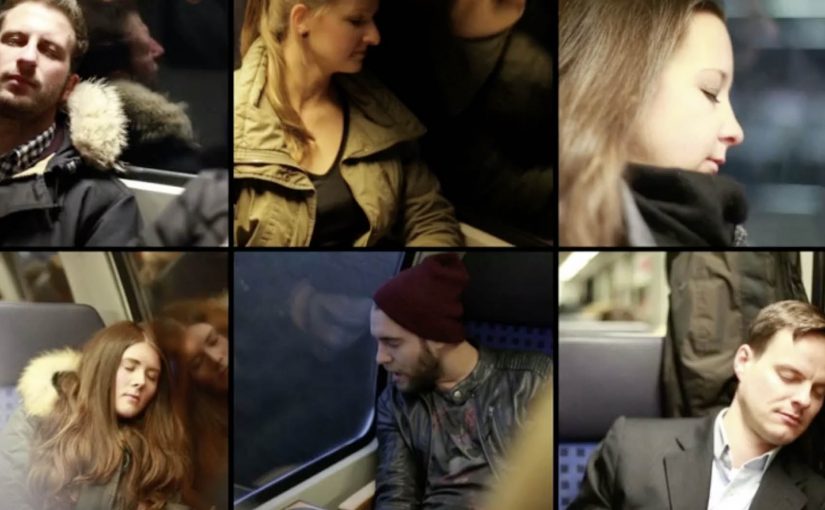
Sky Go: The Talking Window

Train passengers who get bored during travel often lean their head against the window. Sky Go uses that exact micro-moment as an attention trigger, without asking anyone to look up from their seat.

BBDO Germany, together with Audiva, a bone conduction specialist, developed a small transmitter that attaches to the train window and delivers an audio message in a way that feels oddly personal. Bone conduction means transmitting sound to the inner ear through skull vibrations rather than through the air into the ear canal.

How the window “talks”

The transmitter emits an inaudible, high-frequency vibration through the glass. When a passenger rests their head against the window, those vibrations travel through the bones of the skull to the inner ear. The brain interprets the vibration as sound, so the person leaning on the window hears the message while nearby passengers hear nothing.

Bone conduction is the conduction of sound to the inner ear through skull vibrations, rather than through the air into the ear canal.

In public transport advertising, tying a message to a predictable body posture can create “only I can hear this” intimacy without turning the whole carriage into noise.

Why this lands

This works because it is activated by a natural behavior, not by a request. There is no screen to seek, no QR code to scan, no app to open in the moment. The novelty is also self-explaining. The passenger experiences the medium first, then understands the message.

Extractable takeaway: If you want attention in a distraction-heavy environment, design an opt-in trigger that happens through normal movement, and deliver the payload as a private experience rather than a public interruption.

What the campaign is really testing

The real question is where clever intimacy stops and intrusion starts in ambient media.

This format is strongest when the trigger feels voluntary and the message stays restrained. It is not audio quality being tested as much as tolerance. This kind of “whisper only to you” media explores how far ambient advertising can go before it feels intrusive, and where the line sits between clever targeting and unwanted interruption.

What ambient media can borrow from this

  • Exploit a reliable posture. Build around something people already do on autopilot.
  • Make the medium the headline. A new delivery mechanism earns attention before the message even lands.
  • Keep it private. Personal sound beats shared noise in confined public spaces.
  • Design for instant comprehension. If someone needs an explainer to “get it,” the ambient magic collapses.

A few fast answers before you act

What is the Sky Go “Talking Window”?

It is a train-window activation that delivers an audio message only to people who lean their head against the glass, using bone conduction vibration.

Why can only one person hear it?

The sound is carried through the glass and into the listener’s skull when they make contact. People not touching the window do not receive the vibration path.

Is this facial recognition or tracking?

No. The described trigger is physical contact with the window, not identity detection.

What is bone conduction in plain terms?

It is hearing sound through skull vibrations, where the vibration reaches the inner ear without traveling through the air into the ear canal.

What is the main risk of this format?

If it startles people or feels unavoidable, it can be perceived as invasive. The creative and frequency need restraint.
fiftyfifty: Frozen Cinema

A cinema in Germany is set to a brutal 8°C. The audience starts to shiver, then notices blankets placed on the seats. A short film begins, and homeless people on screen comment on the “cold cinema experience”. For them, 8°C is described as cozy.

That contrast is the reality check. It turns “winter hardship” from an abstract idea into a physical sensation you cannot ignore, even if only for a few minutes.

How the donation loop is built

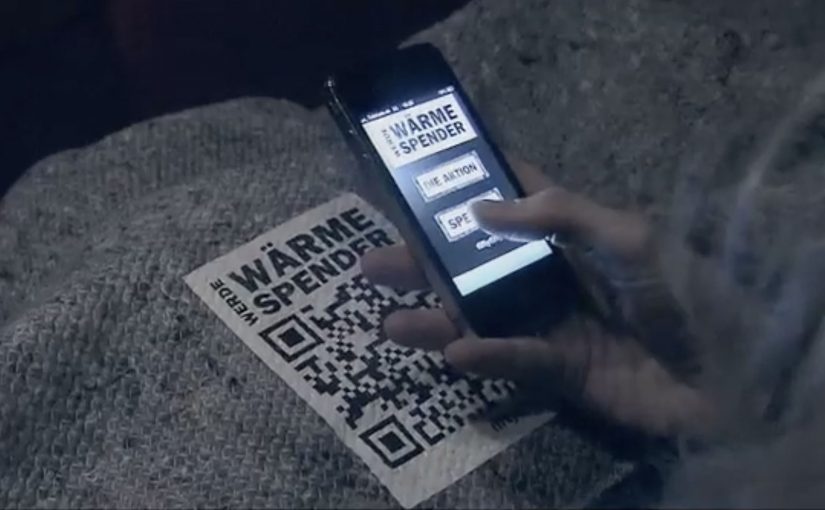
The mechanism is tightly engineered. Lower the temperature. Hand out blankets. Add QR codes to the blankets so the audience can donate instantly while the emotional context is still fresh. Here, the donation loop means a felt trigger, an instant prompt, and a friction-light way to give before the moment fades. The cold primes empathy. The QR code removes friction. That sequence works because the physical cue creates urgency and the QR code captures intent before it cools.

In European urban environments where most people only glimpse homelessness in passing, empathy campaigns land harder when they translate a daily reality into a shared, felt moment.

The real question is how to turn sympathy into immediate action before comfort returns and attention drifts.

Why it lands

This works because it is not just a message. It is a sensory demo. The audience experiences discomfort, then immediately hears the perspective of people who live with worse, for longer, with no quick “rewarm” button.

Extractable takeaway: If your cause depends on empathy, build one controlled, temporary experience that lets people feel a fraction of the problem, then put the simplest possible action in their hands while they still care.

What to reuse in empathy activations

  • Use the environment as media. A small physical change can do more than a big headline.
  • Pair feeling with explanation. The “why” must arrive before people rationalize the discomfort away.
  • Make the action immediate. Donations work best when there is no extra search, form, or delay.
  • Keep it respectful. The goal is recognition and support, not spectacle.

A few fast answers before you act

What is “Frozen Cinema”?

It is a charity awareness and donation activation that chills a cinema to 8°C and uses a short film plus QR-coded blankets to trigger immediate donations for homeless support.

What is the core mechanism?

Physical discomfort creates attention. Context from homeless voices creates meaning. QR codes on blankets remove friction so people can donate on the spot.

Why does the temperature change matter?

It turns an intellectual topic into a bodily experience. That shift makes the message harder to dismiss and easier to remember.

Why put the QR code on the blanket?

It places the donation action inside the experience itself, so people do not have to search for the next step after the emotional moment has passed.

What is the most reusable lesson?

When you need action, design a moment that people can feel, then make the response path effortless and immediate.

Lexus LFA: Scrollbroaaaar

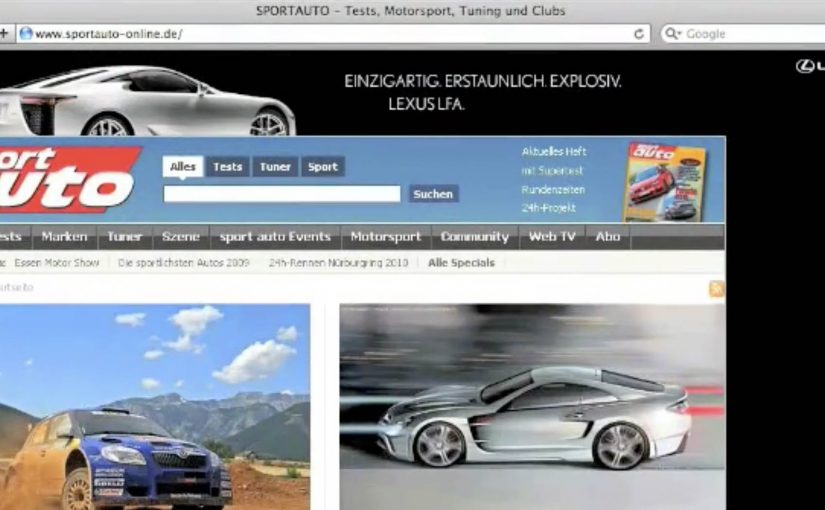
Saatchi & Saatchi Germany has created a clutter-breaking execution for the Lexus LFA on the Sport Auto website by turning a familiar interface element into the ad itself.

When the ad is the interface

The idea is disarmingly simple. Instead of fighting for attention inside a banner slot, the execution is described as a custom scrollbar experience on Sport Auto, shifting the user’s focus to the one thing everyone touches when they move through a long page.

How “Scrollbroaaaar” works

Mechanically, the work hijacks the expected behavior of scrolling and reframes it as a brand moment for a high-performance car. The name “Scrollbroaaaar” signals the point. Here, “Scrollbroaaaar” means the scrollbar itself becomes the branded ad unit. Scrolling becomes a sensory cue for speed and engine attitude, not just a way to navigate content.

In performance automotive marketing, using interface behavior as media can outperform traditional display formats because the user triggers the moment themselves.

The real question is whether you can turn a default UI habit into branded sensation without stealing time from the content.

Why it lands as clutter-breaking

This works because it does not ask for permission. It meets the user inside muscle memory. A scrollbar is invisible until it changes. The second it does, attention spikes. That moment of surprise is the whole value exchange.

Extractable takeaway: If you can attach your product truth to a UI habit the audience already performs, you get attention without demanding a click.

What the brand is really buying here

Beyond impressions, the intent is distinctiveness. Lexus gets a “did you see this” story that is native to the environment where car enthusiasts already browse. The experience also borrows the credibility of a specialist publisher context while keeping the brand in control of the punchline. This is a smarter bet than buying another standard display slot and hoping anyone notices.

What to steal for your own digital creative

  • Make the interaction the media. If a user action triggers the payoff, recall tends to be higher than passive formats.
  • Choose the smallest possible hack. One altered UI element can be more powerful than a page full of widgets.
  • Design for surprise, then exit fast. The novelty works best when it is immediate and does not overstay.
  • Match the mechanic to the product truth. Speed, sound, and control cues belong to a halo performance car.

A few fast answers before you act

What is “Scrollbroaaaar” in one line?

A web takeover that turns the page’s scrollbar into the ad, so scrolling itself becomes the Lexus LFA moment.

Why is it considered clutter-breaking?

Because it bypasses banner blindness by changing a core interface behavior users already rely on, creating instant surprise and attention.

What is the main creative principle behind it?

The principle is viewer control. The user’s action triggers the brand payoff instead of asking them to click away from what they came to do.

When should you use this pattern?

When you have a simple product truth that can be expressed through a single behavior change, and you want memorability more than message density.

What is the biggest risk with interface-as-ad?

If the mechanic slows the page, breaks expected controls, or feels like it traps the user, the surprise turns into frustration and the brand pays for it.