
DoubleClick: Fly over France HTML5 banner

DoubleClick: Fly over France HTML5 banner

You open a banner and, instead of a product shot, you get a hot-air balloon. You pick up speed, drift across a map, and “tour” famous French locations from above, including the Eiffel Tower, Notre-Dame de la Garde in Marseille, and the Château de Versailles.

This demo came out of the DoubleClick HTML5 Banner Challenge, with Biborg Interactive and Alpha Layer showing what happens when a banner is treated like a mini experience instead of a static placement.

The rich media build, meaning a banner unit that runs real-time code in the browser rather than a fixed image, leans on several HTML5 capabilities at once. Geolocation can drop you near your own location at the start. WebGL handles the 3D-like rendering layer in capable browsers. Audio and video tags add atmosphere. Google Maps-style navigation does the heavy lifting for exploration.

HTML5-rich media lets a banner behave like a lightweight web app, while still living inside a standard media buy.

An HTML5 rich media banner is a display unit that runs real-time code in the browser. It can detect location (with permission), render interactive graphics, and respond to user input without plugins.

What makes this feel different from “banner interactivity”

Most interactive banners ask for clicks. This one offers navigation. If your goal is time-in-unit, navigation is the better default than click-to-reveal. The moment you give people directional control, the experience shifts from “ad” to “toy”, and time-in-unit rises naturally because curiosity takes over.

Extractable takeaway: When you turn a banner into something navigable with one obvious control, you trade “interaction” for exploration, and exploration reliably buys you time.

Why the tech stack choice matters

Geolocation is not a gimmick here. It personalizes the first frame by making “your world” the default starting point, if the user opts in. WebGL is not decoration. It signals modernity and smoothness, making the experience feel closer to a game than a widget.

In programmatic display buys, weight and cross-browser reach still win, so the core interaction has to survive even when advanced features fall back.

The business intent behind the challenge demo

This is less about selling France and more about selling a capability. The real question is whether your banner is built to be explored or merely clicked through. It is a proof point for what DoubleClick Studio and HTML5 workflows can support, and it is a portfolio-grade demonstration for the teams who built it.

Steal these patterns for your next HTML5 banner

  • Give viewers one clear control. Navigation beats click-to-reveal when you want time spent.
  • Use “permissioned” personalization. Geolocation works best when it improves the first 3 seconds, not when it tries to be clever later.
  • Design a graceful fallback. If 3D is not available, the core experience should still be enjoyable.
  • Make the value visible without instructions. If someone can understand the interaction from across the room, they will try it.

A few fast answers before you act

What is the DoubleClick HTML5 Banner Challenge demo here?

It is a rich media banner concept that lets users “fly” a hot-air balloon over a map of France and discover landmarks, built to showcase what HTML5 banners can do beyond animation.

Which HTML5 features does the banner use?

It is described as using geolocation (with permission), WebGL for interactive graphics, and native audio and video support, alongside map-based navigation to create a lightweight exploration experience.

Why is geolocation useful in a banner?

Because it can personalize the first moment. Starting near a user’s own location makes the experience feel immediately relevant, as long as it is optional and clearly explained.

What does WebGL add to rich media ads?

WebGL enables GPU-accelerated 2D and 3D graphics in the browser. In advertising units, that can translate into smoother motion, depth effects, and more game-like interaction.

What is the biggest risk with “mini-app” banners?

Weight and compatibility. If the unit is too heavy or too fragile across browsers, you lose reach. The best builds keep a simple core loop and treat advanced effects as optional upgrades.
Samsung: Unleash Your Fingers

Samsung: Unleash Your Fingers

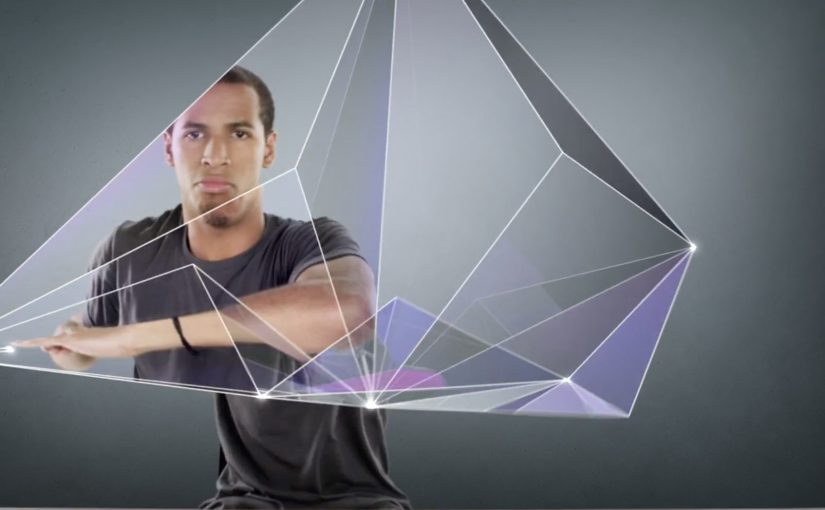
For the launch of the Galaxy S II in France, Samsung brought JayFunk, the internet finger tutting phenomenon, from Los Angeles to Paris to deliver an incredible and surprising choreography.

When “touch” becomes performance

Finger tutting is a style of dance where intricate shapes and geometric figures are created using hands and arms. Samsung frames that craft as the purest expression of what a touch device asks of you. Your fingers become the headline.

The mechanic is the metaphor

The film does one clear thing. It takes a niche skill. It stages it like a reveal. It lets the choreography do the talking, then uses visual treatment to make the hands feel almost “interface-like”. The message is implicit. This is a phone built for what your fingers can do.

In consumer electronics launches, the fastest route to preference is often a single metaphor that makes a feature feel obvious without listing specifications.

Why it lands

This works because it respects attention. There is no explanation tax, no product demo checklist, and no forced storyline. It is a short, repeatable spectacle that makes “touch” feel expressive, not functional. Because the performance externalizes touch as a visible skill, the product promise becomes intuitive before the viewer processes a single specification. Samsung’s own newsroom later described the video as quickly climbing viral charts and reaching millions of views at the time, which fits the format. It is built to be replayed and forwarded.

Extractable takeaway: When your product benefit is hard to visualize, borrow a human craft that embodies it, then let the craft carry the proof while the brand stays in the background.

What Samsung is really signalling

The brand is not only selling a handset. It is staking a position in culture. Touchscreens are not just input. They are a playground. Casting a specialist performer signals modernity, precision, and mastery, all without ever saying those words.

The real question is how to make touch feel culturally meaningful before anyone asks about specifications.

What launch teams can take from this

  • Lead with a single, watchable skill. Spectacle beats explanation when the benefit is sensory.
  • Make the metaphor tight. Fingers, touch, gestures. Everything points to one idea.
  • Keep product presence restrained. Let the audience connect the dots. It feels smarter and travels better.
  • Design for replay. Short, surprising sequences outperform long narratives for launch buzz.
  • Use culture as targeting. A niche community can become your amplification engine if you treat it with respect.

A few fast answers before you act

What is the main idea behind “Unleash Your Fingers”?

Turn touch interaction into a cultural performance, so the phone’s core benefit is felt rather than explained.

Why use finger tutting instead of a normal product demo?

Because it externalizes “dexterity on glass” in a way people can immediately understand and want to share.

What should a brand be careful about with a performance-led launch film?

Do not let the performance become disconnected from the product. The metaphor must stay legible, and the brand role must feel earned.

How could a non-tech brand apply the same approach?

Pick a human craft that embodies your promise, then film it so the craft proves the point without heavy narration or feature lists.

What is a practical success metric for work like this?

Beyond views, look for lift in branded search, share rate, completion rate, and recall of the single idea the film is built around.

Google Maps Racing Advergame

Google Maps Racing Advergame

Mini France has managed to successfully offer a virtual Mini experience with the help of a Social/Google Maps mash-up advergame called “Mini Maps”. Here, advergame means a branded game that turns the marketing idea into the experience itself.

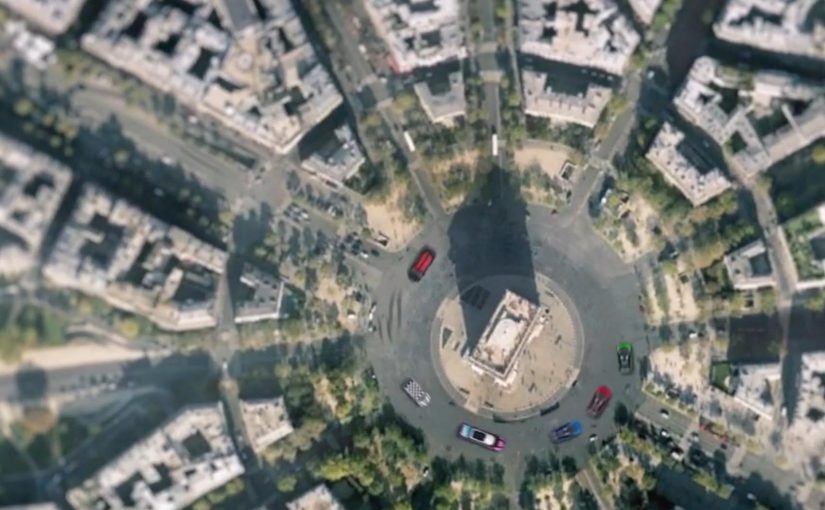
With DDB Paris and Unit9 they created a Facebook app that lets you customize a virtual Mini and then challenge Facebook friends to time trials around the world through Google Maps. In the challenge you are racing your friends over satellite images of your favorite locations around the world!

Why this works

  • The idea is instantly graspable. Customize your Mini. Pick a place. Race the clock. Challenge friends.
  • Google Maps is not a backdrop. The satellite layer becomes the playable surface, which makes every track feel personal.
  • Social competition is built in. Time trials make it easy to compare performance without complex multiplayer setup.

In interactive brand marketing, the scalable advantage comes when a familiar platform becomes part of the mechanic, not just part of the media plan.

What this signals for interactive brand experiences

The real question is not whether a brand can borrow a popular platform, but whether the platform becomes the mechanic that makes the brand memorable. The strongest move here is that Google Maps is not a skin around the idea. It is the idea in use. That matters because location becomes the hook, customization becomes the commitment step, and friendly competition becomes the retention loop, meaning the simple reason people come back and play again. This gives the brand repeat interaction instead of one-time exposure.

Extractable takeaway: When the platform supplies the play mechanic, the brand experience feels more native, more personal, and easier to revisit with friends.

What to steal for map-based social games

  • Use real places as the content. When the track is a familiar location, the hook is instant and personal.
  • Make competition the retention loop. Time trials against friends give players a reason to come back and improve.
  • Keep customization lightweight but expressive. A few visible choices are enough for ownership without slowing play.
  • Build the platform into the mechanic. If Google Maps is the story, the experience should demonstrate it, not just reference it.

A few fast answers before you act

What is “Mini Maps”?

“Mini Maps” is a Facebook advergame for Mini France that combines social sharing with Google Maps to create location-based time trial races.

What does the viewer actually do?

You customize a virtual Mini and then challenge Facebook friends to time trials across Google Maps locations, racing over satellite imagery.

Why is Google Maps central to the experience?

Because it provides the world itself. The satellite view turns real places into tracks, which makes the challenge feel more personal and replayable.

What is the reusable pattern here?

Start with a concrete action, move to a simple challenge mechanic, then let social competition drive repeated return visits.

What should brands copy from this model?

Use a platform feature as the core mechanic, keep the player action simple, and add a lightweight social challenge that gives people a reason to come back.