
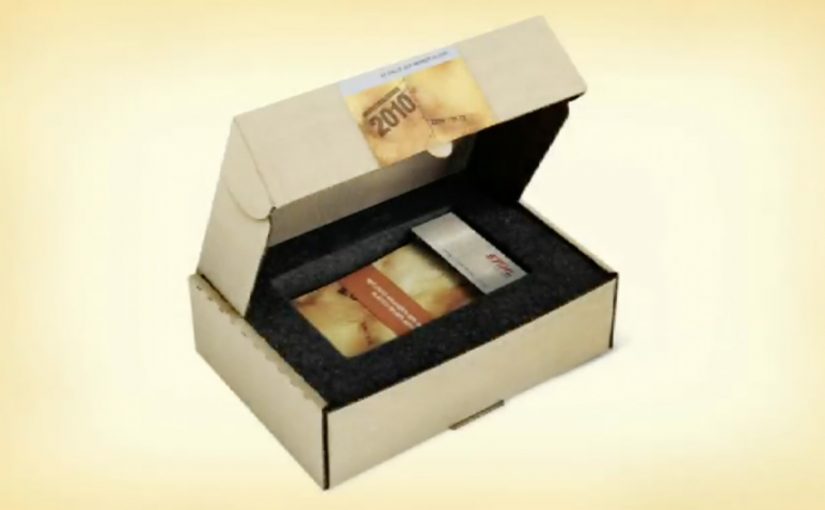
STIHL: The Self-Tearing Autumn Calendar

STIHL asked Euro RSCG Germany to develop a business gift promoting its range of leaf blowers. The target audience was international key accounts, and the brief was clear: create something they had never seen before.

Euro RSCG invented an autumn calendar that tears off its “leaves” automatically. The gag is that the calendar behaves like a tree in fall, dropping leaves without you touching it, and making the “clean-up problem” feel immediate and slightly annoying. Exactly the moment where a leaf blower becomes the satisfying solution.

How the product demo is baked into the gift

The mechanism is pure physical storytelling: an object that creates a small mess on schedule. Each day, another leaf falls. Over time, the pile builds. The calendar turns passing time into accumulating clutter, so the product need is not explained, it is experienced.

In B2B product marketing, tactile gifts are most effective when they are not branded trinkets but working demonstrations of the problem the product solves.

The real question is whether your demo makes the problem felt without a salesperson in the room.

Why it lands

It turns a convenience category into felt relief from a recurring irritation, and it does it repeatedly through a daily trigger that keeps resurfacing without loud branding.

Extractable takeaway: B2B gifts perform when they create a recurring micro-problem that mirrors the customer’s real pain, then let the product category be the obvious, satisfying fix.

  • It makes necessity visible. Leaf blowers are often sold as convenience. This calendar reframes them as relief from a recurring irritation.
  • It creates repeated moments, not a one-time impression. A calendar is a month-long touchpoint. The idea keeps resurfacing every day the “leaf” drops.
  • It respects the key-account audience. The gift is novel, engineered, and story-worthy. It earns attention without needing loud branding.

Borrow this mechanic for B2B demos

  • Turn time into a narrative device. Calendars, subscriptions, and scheduled triggers are built for repeat exposure.
  • Create a controlled irritation. A controlled irritation is a small, reversible annoyance that stays playful. The best demos let people feel the problem in a safe, playful way.
  • Make the object retellable. If the recipient can explain it in one sentence, it becomes a story they share inside the company.

A few fast answers before you act

What is the “autumn calendar”?

A calendar designed so its leaf-shaped pages tear off automatically, mimicking falling leaves and creating a small daily mess.

Why does that sell leaf blowers?

Because it dramatizes the nuisance of accumulating leaves and makes the “cleanup solution” feel immediate and obvious.

Who was this made for?

International key accounts, as a business gift intended to be novel and memorable rather than a standard brochure or giveaway.

What makes this a strong example of B2B creativity?

The gift demonstrates the problem through behavior, not messaging. It earns repeated attention through daily interaction.

What is the transferable lesson?

If you can make the pain point show up physically and repeatedly, you reduce the need for persuasion. The demo does it for you.

Microsoft Office Project 2007: Mega Woosh

Microsoft created a viral featuring Bruno Kammerl, described as building the biggest waterslide on earth. The test run was more than successful, and the film leans into that “did I just see that” energy from the first second.

A stunt film that behaves like a project story

The mechanism is classic viral bait. A bigger-than-life engineering build. A simple premise. A single high-risk moment. Then just enough mystery around “who is this” and “why does this exist” to make people share it while they debate whether it is real.

In enterprise project-management software marketing, a bold proof-like narrative can communicate “we make impossible plans doable” faster than feature lists ever will.

Why it lands

It uses constraint and payoff. The build feels specific enough to be plausible, and the jump delivers an instant, physical climax. Even if viewers suspect it is staged, the film still works because the emotion is the product. Surprise, disbelief, and the urge to forward it.

Extractable takeaway: If you want a product that sells “capability” to feel memorable, show one exaggerated outcome, then let the audience connect the dots back to the promise.

What this says about the brand

The strategic intent is to borrow the energy of ambitious personal projects and map it onto a tool used for complex planning. The viral creates a mental shortcut. Big plan. Bold execution. Managed outcome.

The real question is whether this kind of spectacle makes enterprise planning feel ambitious enough to remember. It does, because the campaign turns project management into a visible, shareable outcome instead of a software demo.

What to steal from Mega Woosh

  • Make the promise physical. If your product sells “capability”, dramatize it with a single, extreme outcome people can picture instantly.
  • Lock one simple story rule. Big build. One test. One payoff. The simpler the rule, the easier the share.
  • Use specificity to create plausibility. Named protagonist, concrete build details, and a clear “test run” moment make the film feel real enough to debate.
  • Let the audience connect the metaphor. Do not over-explain the product. Give them the leap from “impossible project” to “project management”.
  • Design the talk trigger. The best virals are built around a single question people argue about. “Is this real” is a distribution engine.
  • Keep the brand cue clean and minimal. Too much branding breaks the spell. Too little branding loses the credit.

A few fast answers before you act

What is Mega Woosh in one line?

A viral stunt film built around an oversized waterslide jump, used to signal “anything is possible” as a metaphor for managing big projects.

Why does this work as marketing for project software?

Because it dramatizes planning and execution as a single, bold narrative. The story does the positioning work without needing specs.

What makes it so shareable?

One premise, one payoff, and a high-disbelief moment that triggers debate and forwarding.

What is the risk of this approach?

If the audience feels tricked rather than entertained, trust can take a hit. The framing needs to stay playful, not deceptive.

What should marketers copy from this format?

Use one extreme, easy-to-explain outcome to embody the promise, then keep the branding light enough for the spectacle to travel.

Eichborn: Flyvertising at the Frankfurt Book Fair

Jung von Matt just redefined advertising for their client Eichborn at the Frankfurt Book Fair by attaching tiny banners to 200 flies and setting them loose as miniature “sky ads” around the halls. The idea was coined Flyvertising, or “Fliegenbanner”.

A stunt that makes the logo literal

Eichborn’s brand mark is a fly. So instead of printing the fly on a poster and hoping people notice, the campaign turns the fly into the medium and lets it wander through the crowd, uninvited, and impossible to fully ignore.

The weight of the banner itself, attached with a string and some sticky stuff that allowed it to eventually fall off without harming the fly, was so that the fly could fly with it, but not very high and they kept landing on visitors.

How Flyvertising works

The execution uses ultralight banners attached with a string and a sticky material described as designed to let the banner fall off later without harming the fly. The extra weight keeps the insects from flying high, which means they repeatedly land on visitors and surfaces. In a crowded fair, that turns a wandering fly into a moving pointer that creates attention and helps people find the Eichborn stand.

In European trade-show marketing, a stunt wins when it turns wayfinding into a story people cannot ignore in a crowded hall.

Why this lands

The campaign exploits a simple truth about exhibitions. People are overloaded with signage and trained to filter it out, but an interruption that breaks the “expected media” pattern cuts through instantly. Here, the interruption also feels on-brand, because the fly is not a random prop. It is the identity asset brought to life.

Extractable takeaway: If your brand owns a distinctive symbol, find a way to make that symbol behave like media in the real environment where attention is hardest to earn, and let the medium carry the message.

What Eichborn is really buying

The real question is whether a trade-show stunt can turn a hard-to-find stand into the story people repeat across the hall. This is smart exhibition marketing because it fuses wayfinding with a brand asset people will talk about. This is not about explaining a book list. It is about generating foot traffic, conversation, and memorability around a stand number in a hall full of publishers. The flies do the work of a promoter, and the story spreads faster than any brochure.

What to steal for your next event activation

  • Let the identity asset drive the idea. The closer the stunt is to the brand symbol, the less it feels like random noise.
  • Design for physical proximity. A trade show is won at arm’s length. Make the experience land close enough to be felt.
  • Build a “tellable” moment. If a visitor can summarize it in one sentence, it travels through the venue for you.
  • Plan the ethics and the optics. If living things are involved, the “no harm” claim needs to be credible and easy to defend.

A few fast answers before you act

What is Flyvertising?

Flyvertising is an ambient trade-show stunt where Eichborn released flies carrying ultralight mini-banners, turning the insects into moving ads that drew attention and guided visitors toward the publisher’s stand.

Why does this kind of “living media” cut through at exhibitions?

Because visitors are conditioned to ignore static signage. A moving, unpredictable interruption breaks that filter, especially when it happens in personal space.

What makes it feel on-brand rather than a generic stunt?

Eichborn’s identity includes a fly, so the medium directly expresses the brand symbol. That alignment makes the execution easier to remember and retell.

What is the transferable principle behind Flyvertising?

The transferable move is to turn a brand-owned symbol into the delivery system for attention in the exact environment where people normally ignore messages.

What are the risks with this pattern?

Ethics, hygiene perception, and venue rules. If people feel the stunt is harmful or unhygienic, the attention flips from curiosity to backlash.