
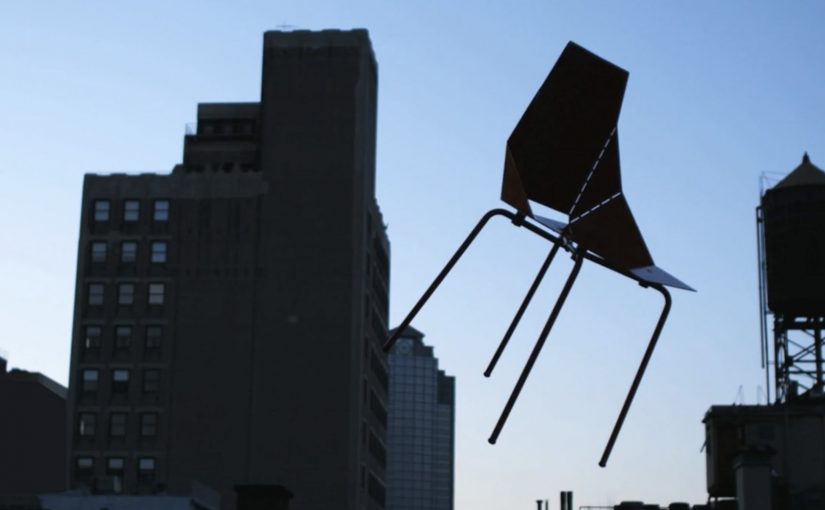
Blu Dot: The Real Good Curb-Mining Experiment

Twenty-five great chairs appear on New York City curbs, free for the taking. Some are quietly GPS-enabled. Then a camera crew follows the trail to see where “free design” actually goes.

“Curb-mining” is the act of finding furniture and art on the streets. Blu Dot decided to conduct its own curb-mining experiment. On November 4, 25 Real Good chairs were dropped around NYC, free for the take. Many were GPS-enabled. Watch the film to see what happened.

How the experiment is staged

The mechanism is deliberately simple. Give away something that normally has clear value, place it in the exact context where curb-miners hunt, then track movement to learn how quickly people claim it, how far it travels, and what stories people attach to it once it is “rescued”.

In urban retail and design-led consumer brands, street-level seeding works best when the giveaway is designed as a story people can retell, not just a free item people can take.

Why GPS changes the meaning of “free”

Without tracking, this is just generosity. With tracking, it becomes a narrative engine. The chair is no longer only an object. It is a moving plot point that creates suspense, location hops, and a human follow-up that turns a giveaway into a documentary. GPS tracking works because it turns an invisible handoff into a visible journey people can follow.

Extractable takeaway: If you can instrument the handoff, you can turn a giveaway into content with a plot, not just a drop.

Definition-tightening: curb-mining is not “dumpster diving”. It is the practice of taking items left out on the curb before they enter the waste stream, which is why the find can feel legitimate and even communal.

What Blu Dot is really buying

This is brand meaning built through behavior. The chairs prove that modern design can live outside showrooms, and the film turns that proof into a piece of shareable content that travels further than a poster ever could. This is a smarter brand move than a one-off giveaway because the documented trail turns product into proof.

The real question is whether you are giving away inventory, or buying a traceable story that people will retell for you.

A street-seeding blueprint you can reuse

  • Seed with intent. Give away something that is unmistakably “worth taking”.
  • Make the context do the targeting. Place the product where the right behavior already exists.
  • Capture the human aftermath. The owner stories are where meaning and memorability come from.
  • Design for repeatable proof. Track, document, and package the journey so it becomes content.

A few fast answers before you act

What is curb-mining?

Curb-mining is the practice of finding and taking usable furniture or objects left out on the street, typically before they enter the waste stream.

What did Blu Dot do in this experiment?

They placed 25 Real Good chairs around NYC for free, with many chairs GPS-enabled, then documented what happened as people took them.

Why add GPS tracking to a giveaway?

Tracking turns a giveaway into a story. It lets the brand show the journey, not just the drop, and it creates a documentary-style narrative that people will watch and share.

What makes this different from a normal stunt giveaway?

The follow-through. The value is not only in the moment of discovery, but in the documented trail and the human stories that emerge afterward.

What is the main execution risk with street seeding?

If it feels staged in a manipulative way, people reject it. The giveaway has to feel authentic to the street context and respectful of public space.

Eichborn: Flyvertising at the Frankfurt Book Fair

Jung von Matt just redefined advertising for their client Eichborn at the Frankfurt Book Fair by attaching tiny banners to 200 flies and setting them loose as miniature “sky ads” around the halls. The idea was coined Flyvertising, or “Fliegenbanner”.

A stunt that makes the logo literal

Eichborn’s brand mark is a fly. So instead of printing the fly on a poster and hoping people notice, the campaign turns the fly into the medium and lets it wander through the crowd, uninvited, and impossible to fully ignore.

The weight of the banner itself, attached with a string and some sticky stuff that allowed it to eventually fall off without harming the fly, was so that the fly could fly with it, but not very high and they kept landing on visitors.

How Flyvertising works

The execution uses ultralight banners attached with a string and a sticky material described as designed to let the banner fall off later without harming the fly. The extra weight keeps the insects from flying high, which means they repeatedly land on visitors and surfaces. In a crowded fair, that turns a wandering fly into a moving pointer that creates attention and helps people find the Eichborn stand.

In European trade-show marketing, a stunt wins when it turns wayfinding into a story people cannot ignore in a crowded hall.

Why this lands

The campaign exploits a simple truth about exhibitions. People are overloaded with signage and trained to filter it out, but an interruption that breaks the “expected media” pattern cuts through instantly. Here, the interruption also feels on-brand, because the fly is not a random prop. It is the identity asset brought to life.

Extractable takeaway: If your brand owns a distinctive symbol, find a way to make that symbol behave like media in the real environment where attention is hardest to earn, and let the medium carry the message.

What Eichborn is really buying

The real question is whether a trade-show stunt can turn a hard-to-find stand into the story people repeat across the hall. This is smart exhibition marketing because it fuses wayfinding with a brand asset people will talk about. This is not about explaining a book list. It is about generating foot traffic, conversation, and memorability around a stand number in a hall full of publishers. The flies do the work of a promoter, and the story spreads faster than any brochure.

What to steal for your next event activation

  • Let the identity asset drive the idea. The closer the stunt is to the brand symbol, the less it feels like random noise.
  • Design for physical proximity. A trade show is won at arm’s length. Make the experience land close enough to be felt.
  • Build a “tellable” moment. If a visitor can summarize it in one sentence, it travels through the venue for you.
  • Plan the ethics and the optics. If living things are involved, the “no harm” claim needs to be credible and easy to defend.

A few fast answers before you act

What is Flyvertising?

Flyvertising is an ambient trade-show stunt where Eichborn released flies carrying ultralight mini-banners, turning the insects into moving ads that drew attention and guided visitors toward the publisher’s stand.

Why does this kind of “living media” cut through at exhibitions?

Because visitors are conditioned to ignore static signage. A moving, unpredictable interruption breaks that filter, especially when it happens in personal space.

What makes it feel on-brand rather than a generic stunt?

Eichborn’s identity includes a fly, so the medium directly expresses the brand symbol. That alignment makes the execution easier to remember and retell.

What is the transferable principle behind Flyvertising?

The transferable move is to turn a brand-owned symbol into the delivery system for attention in the exact environment where people normally ignore messages.

What are the risks with this pattern?

Ethics, hygiene perception, and venue rules. If people feel the stunt is harmful or unhygienic, the attention flips from curiosity to backlash.