
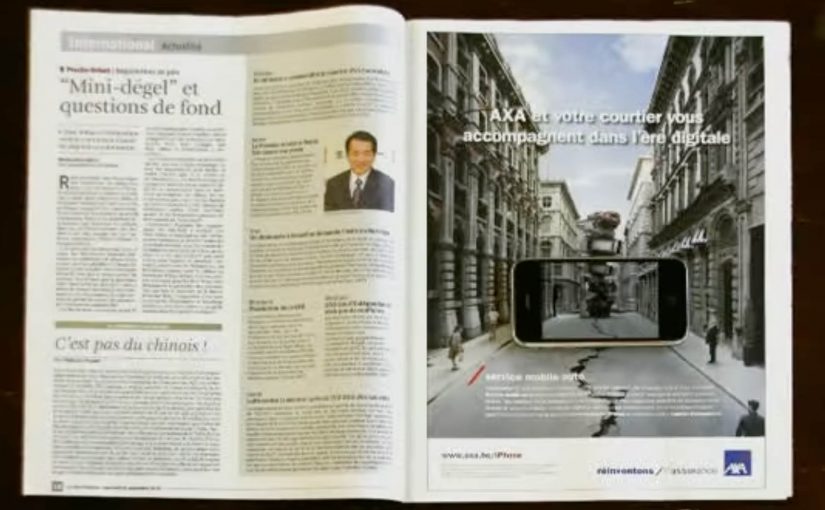
AXA is Belgium’s first insurance company to launch an iPhone app. Their free application helps and guides you through some basic steps when you have a car accident.
To launch this new app Duval Guillaume Antwerp / Modem from Belgium created an innovative print ad that required your iPhone to complete the message.
Why the print idea is a smart match
The product promise is practical. Help me when I am stressed and do not know what to do next. The launch mirrors that by making the iPhone essential to “finishing” the ad, so the viewer experiences the role of the phone immediately.
- Device as the missing piece. The iPhone is not just where the app lives. It is how the message becomes complete.
- Low barrier to understanding. You do one simple action and the concept clicks.
- Print-to-mobile bridge. The campaign uses print to trigger a mobile behavior, instead of treating print as a dead end.
What to reuse from this approach
If the utility of your app is “guidance in a critical moment”, your launch should demonstrate guidance, not describe it. A small, tangible interaction can do that faster than any list of features.
A few fast answers before you act
What does the AXA Belgium iPhone app do?
It helps guide drivers through basic steps after a car accident, providing practical assistance when they need it most.
What made the print launch ad innovative?
The print execution required the viewer’s iPhone to complete the message, turning the phone into an active part of the ad rather than a separate channel.
Why is this a strong launch mechanic for an insurance app?
It demonstrates the phone’s role as a helper in-the-moment, which aligns directly with the app’s accident-assistance promise.
What is the transferable pattern?
Design a simple physical or media trigger that forces a first interaction with the device. Then let that interaction explain the product in seconds.