Coca-Cola Light: The Return of Love in Brazil

A relaunch built on memory. And a ritual

In 2009 Coca-Cola Light was taken out of the Brazilian market. But even after its five year absence, 99% of Brazilians still had the brand in their minds.

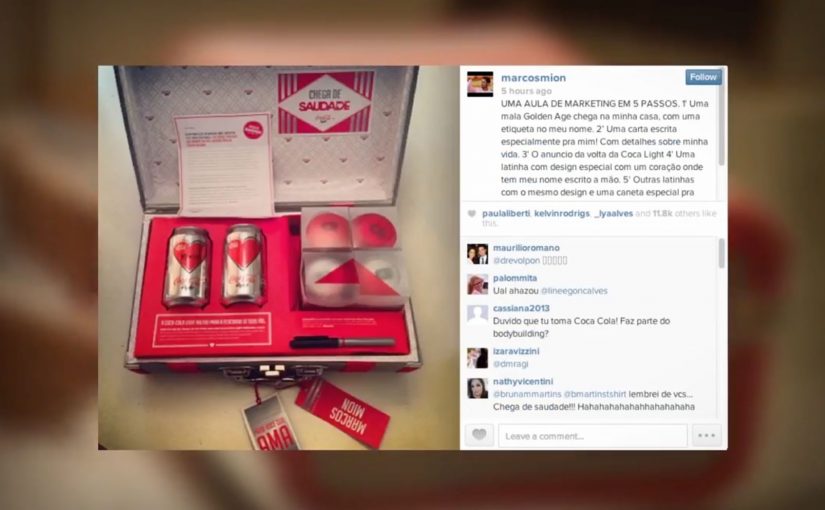
So for their 2014 relaunch they identified 150 influencers that were also real Coca-Cola Light lovers. Here, “influencers” means people with an audience and social credibility who already loved the product. Then a special handmade suitcase was delivered to each one of them. The suitcase contained a personal letter with the relaunch news and a ritual to send Coca-Cola Light cans to special friends with their names handwritten on it. Here, “ritual” means a simple, repeatable set of steps that makes the sharing happen. The results:

The move: turn influencers into messengers, not media

The suitcase is not “merch.” It is a delivery mechanism for a story and a behavior. For relaunches, believers telling believers beats paid amplification. The influencer receives the relaunch news. Then immediately passes it on, name-by-name, to people who matter to them.

In consumer brands with high mental availability, relaunches win when you turn memory into a concrete, shareable action.

The real question is whether your relaunch can ship with a behavior fans can perform immediately, not just a message they can repeat.

Why this feels like love, not marketing

Handwritten names shift the tone. You are not forwarding an ad. You are sending a personal gift with someone’s identity on it. Because the act is one-to-one and named, the relaunch travels through trust and attention, not through reach.

Extractable takeaway: If you want people to carry your message, give them a named, one-to-one action they would feel proud to do, not a generic post they would feel obliged to share.

The relaunch job-to-be-done

Restart conversation and consumption fast by activating people who already love the brand, and giving them a simple way to recruit other “special friends” into the comeback.

Steal this play

  • When a brand returns, start with believers. Then give them a repeatable sharing ritual.
  • Use personalization as the transmission fuel. Names beat slogans.
  • Package the behavior, not just the product. The “how to share” should be inside the box.

A few fast answers before you act

What did Coca-Cola Light do for the 2014 relaunch in Brazil?

They identified 150 influencers who were genuine Coca-Cola Light lovers and delivered handmade suitcases containing a personal letter and a sharing ritual.

What was inside the suitcase?

A personal letter announcing the relaunch and a ritual for sending Coca-Cola Light cans to special friends with names handwritten on the cans.

Why use handwritten names?

It turns distribution into a personal gesture. The relaunch message travels as a named gift rather than a generic announcement.

What is the core mechanic behind the campaign?

Activate true fans first, then convert them into one-to-one distributors by giving them a simple ritual to pass the product on to friends.
Orange: Instagallery

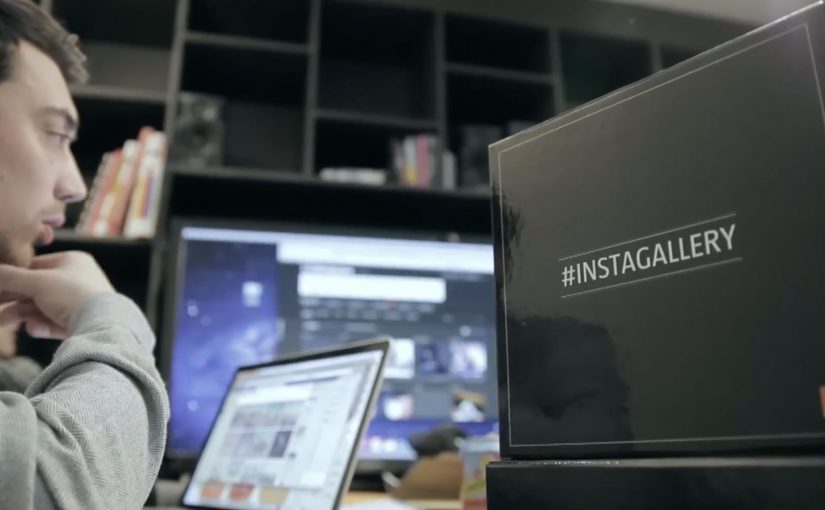
An Instagrammer posts a photo and suddenly sees it displayed as “art” in a gallery setting, complete with strangers commenting on it in real time. That is the hook behind Orange France’s Instagallery. A campaign built to make network speed feel like instant cultural presence.

A gallery built from other people’s feeds

To promote a new high-speed network, Orange works with Cake Paris to target influential Instagram users by pulling their photos into a staged photo exhibition in Los Angeles. The exhibition becomes a physical set for a second move. Capturing the reactions.

The mechanism: personal proof sent back to the source

Orange films people walking through the gallery and making awkward, unfiltered comments on the displayed photos. Those short films are then sent directly to the original Instagrammers, who share the clips with followers. The sharing loop creates buzz for Orange France without buying classic reach in the same way a traditional launch campaign would.

In European telecom marketing, speed messaging becomes more believable when it is demonstrated as immediacy inside a social platform people already use daily.

Why this lands

It works because it is personal before it is promotional. The influencer is not asked to “post an ad”. They receive a surprising artifact starring their own content, with a built-in narrative their audience wants to watch. The physical gallery in Los Angeles adds a scale cue, and the awkward commentary makes the clip feel real rather than polished brand content.

Extractable takeaway: If you need influencers to spread the message, give them a shareable object that is already about them, and let the brand benefit ride inside the story instead of sitting on top of it.

What Orange is really buying

The real question is how to make a technical speed claim travel through social sharing without feeling like a telecom ad.

This is less an Instagram stunt and more a distribution design. By distribution design, this means structuring the idea so the creator’s reason to share also becomes the brand’s route to reach. Orange turns “network speed” into a reason for participation, then uses personalization to lower friction. The brand benefit is present, but it is not the main character. The creator is.

What to borrow from Instagallery

  • Start with the creator’s ego, not your slogan. Make the shareable asset feel like a reward for them.
  • Move digital into a physical set. A real-world installation creates legitimacy and better footage.
  • Build a loop, not a one-off post. Content goes from user, to brand, back to user, then out to audience.
  • Make the reveal fast. The audience should understand “why this exists” in the first seconds.

A few fast answers before you act

What is Orange’s Instagallery?

It’s a campaign that turns selected Instagram photos into a staged gallery exhibition, then sends creators short reaction films they can share to drive buzz for Orange France.

Why build a gallery in Los Angeles for a French telecom brand?

A distant, recognisable cultural setting amplifies perceived scale and surprise. It makes the creator’s photo feel like it “travels” instantly and matters beyond their feed.

How does the influencer loop work here?

Creators post normally, the brand repackages their content into an event and a film, and the creator then shares the film because it features them, not because they were handed a script.

What are the main risks with this pattern?

Rights and permissions for using user photos, avoiding a “creepy” feeling, and ensuring the brand role stays clear enough that the message does not get lost behind the stunt.

How can a non-telecom brand adapt this?

Create a “real-world upgrade” of customer-created content, capture authentic reactions, and return a ready-to-share edit to the creator so distribution feels like self-expression.

Pinterest 2012: Early Brand Campaigns

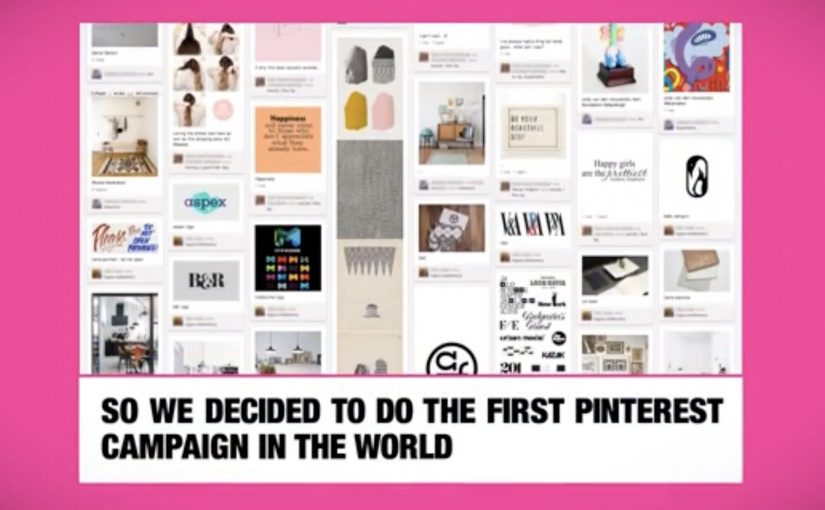
Pinterest is one of the most talked about and fastest growing social networks of 2012. What makes this social site different from the others is its pinboard-styled social photo sharing feature that allows users to create and manage theme-based image collections.

Since it is still very new, a lot of major brands do not know what to make of it. However, a couple have already found creative ways to exploit the potential of the new social media destination.

Why the native loop matters

In early-stage social platforms, the first campaigns that win tend to be the ones that treat the platform’s native behavior, pinning, collecting, repinning, as the mechanic, not as an afterthought. The native loop, the repeatable cycle of pinning, repinning, and collecting, is what makes participation feel like curation instead of work.

In global consumer brands and agencies, early pilots work best when the platform’s native loop is the unit of design, not a channel to paste old formats into.

The real question is whether your idea makes the platform’s default action rewarding before you add any media spend.

Brands should ship only what is native-first, and skip anything that needs heavy explanation to feel like it belongs.

Four early Pinterest plays worth studying

Women’s Inspiration Day by Kotex

In Israel, Kotex reportedly identified 50 inspiring women and looked at what they were pinning on Pinterest, then sent them virtual gifts. If they re-pinned the gift, Kotex would send a real gift by mail. Smoyz, the agency behind the effort, claims nearly 100% of the women posted something about their gift, not only on Pinterest, but on Facebook, Twitter and Instagram.

Puzzle by Peugeot Panama

Peugeot Panama ran a contest that awarded fans who completed their Pinterest puzzle. The brand’s Pinterest presence featured images of cars running over two or more boards. In each case, a board was missing. To get the missing pieces, fans had to go to Peugeot Panama’s website to find and complete the full image set.

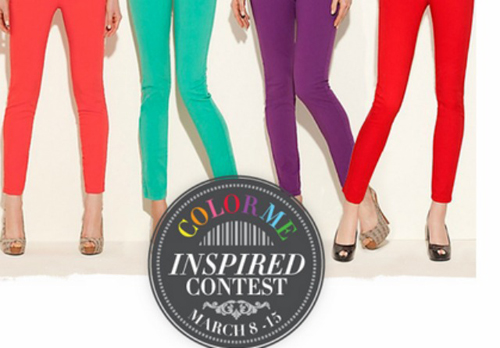
Color Me Inspired by Guess

Color Me Inspired by Guess

Guess challenged its fans to create boards based on four spring colors: Noir Teal, Hot House Orange, Red Hot Overdue and New Plum Light. Participants were asked to title their boards as “Guess My Color Inspiration” and pin at least five images, each tagged with #GUESScolor, in them. Four winners were then chosen by fashion bloggers Kristina Bazan of Kayture, Michelle Koesnadi of Glisters and Blisters, Jennifer Rand of Belle De Couture and Samantha Hutchinson of Could I Have That.

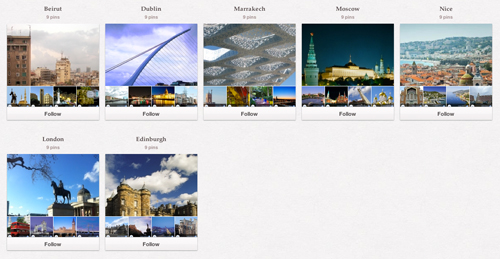
Pinterest Lottery by British Midland International

Pinterest Lottery by British Midland International

British airline “bmi” launched a game of chance to engage its fans. With “Pinterest Lottery”, bmi encouraged fans to re-pin up to six images of its travel destinations Beirut, Dublin, Marrakech, Moscow, Nice, London and Edinburgh. At the end of each week, the company chose a number at random, and users who had re-pinned the image with that number qualified for a chance to win a free return flight.

What these early campaigns get right

These ideas differ in execution, but they all turn Pinterest behavior into a simple loop you can complete and share.

Extractable takeaway: When a platform is new, design around the action people repeat, then let the reward validate the behavior, not the other way around.

  • They make “repin” the action, not the decoration. The platform behavior is the participation mechanic.
  • They reward curation. People are not asked to broadcast. They are asked to build a board that reflects taste.
  • They turn visuals into utility. Gifts, missing puzzle pieces, color palettes, destination boards. Each idea uses images as a system, not as wallpaper.

Rules for your first Pinterest test

  • Start with one native behavior. Make it do the heavy lifting, then build the incentive around it.
  • Design for identity, not reach. Boards are self-expression. Campaigns that respect that feel less like ads.
  • Keep the rules explainable. If the mechanic cannot be retold in one sentence, participation drops.

A few fast answers before you act

What made Pinterest feel different from other networks in 2012?

Its core object was a curated pinboard. People collected and organized images by theme, which made self-expression look like curation rather than status updates.

What is the common pattern across these early brand campaigns?

They use Pinterest’s native loop. Pin, repin, collect, complete, as the interaction, then attach a reward or outcome to it.

Why did Kotex’s approach travel well?

Because the output was personal and “worth pinning”. The gift reflected what someone had already revealed about themselves through their boards.

Why do puzzle and lottery mechanics fit Pinterest?

Because Pinterest already feels like collecting. Turning boards into completion tasks or numbered sets makes the platform behavior feel like a game, not a campaign.

What is the biggest risk when brands jump onto a new platform too early?

Forcing old formats into new behaviors. If the campaign does not feel native to how people already use the platform, it gets ignored or mocked.