
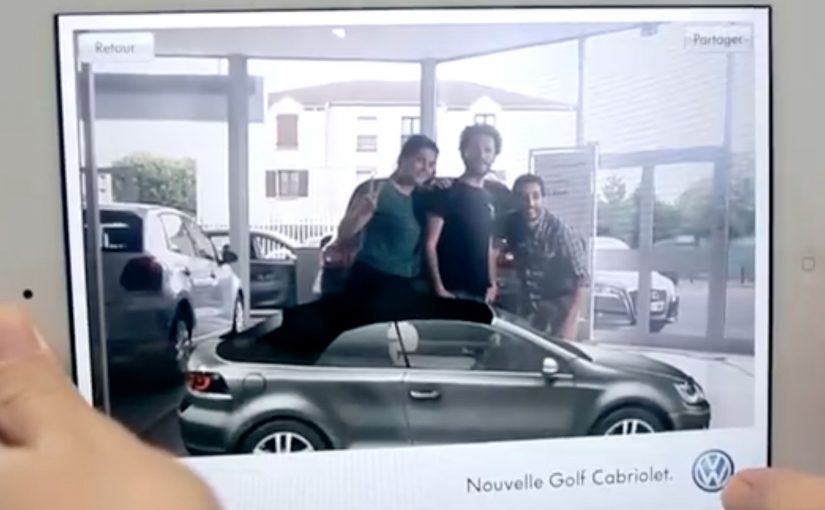
Volkswagen virtual Golf Cabriolet app

The Golf Cabriolet is back after 9 years of absence, since production was stopped in 2002. Volkswagen together with Paris based agency ‘Agency.V.’ have come up with the worlds first augmented reality car showroom app for the iPad2, iPhone and Android. Here, augmented reality means using the phone or tablet screen as a lightweight showroom for a virtual version of the car.

The app lets you explore the vehicle and play with it’s features like opening the soft-top roof, rotating the car, checking the vehicle’s details, changing the body colour or the style of the rims. You can even take a picture of yourself with the virtual car and share each step of this experience through your social networks.

Why this is a useful AR showroom idea

This is a clean, practical use of augmented reality. It gives people a way to “handle” the car without needing a dealership visit. The experience stays focused on the things people actually want to try first. The roof open and close. The rotation. The color and rim changes. Because the app turns the screen into a hands-on showroom, the product feels easier to explore and share.

Extractable takeaway: AR product demos work best when they compress first-touch exploration into a few obvious actions people already want to try.

In car marketing, that shifts the first product interaction from the dealership to the viewer’s own screen.

What Volkswagen is really demonstrating here

The business intent is not to recreate the full dealership experience. It is to move the first high-interest product interaction into a portable format people can control, personalize, and share.

The real question is whether that kind of lightweight showroom removes enough friction to make early product interest feel immediate and worth passing on.

What to take from this if you are building AR product demos

  1. Prototype “touch” moments first. Opening, rotating, and quick configuration are the behaviors people expect before they care about specs.
  2. Keep the interaction set small and obvious. A few high-intent controls beat a feature dump in early-stage AR.
  3. Make sharing a natural outcome of exploration. A photo-with-the-product moment is a low-friction distribution mechanic.
  4. Use AR to remove the dealership barrier. The value is access and play, not realism for its own sake.

A few fast answers before you act

What is the Volkswagen virtual Golf Cabriolet app?

An augmented reality car showroom app for iPad2, iPhone and Android that lets people explore and customize the Golf Cabriolet.

What can you do inside the app?

Open the soft-top roof, rotate the car, check details, change body colour, change rim styles, and take a photo with the virtual car to share socially.

Who created it with Volkswagen?

Paris based agency ‘Agency.V.’.

Why is this a useful AR showroom idea?

It brings the core product exploration moments onto a personal screen, so people can interact with the car before any dealership visit.

Where could people download it?

From the French iTunes Store for iPhone and iPad 2, and from the Android market for Android devices.
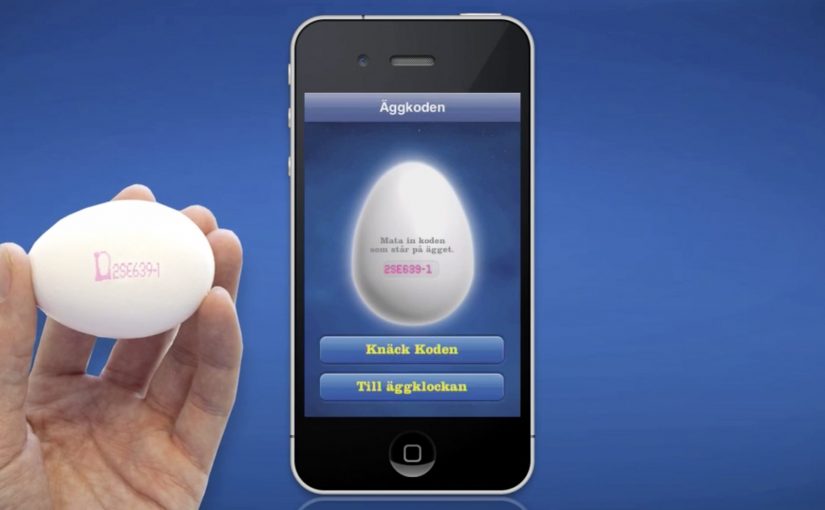
Kalles Kaviar: Egg Timer iPhone App

This egg timer iPhone app was created by CP+B for Swedish sandwich spread Kalles Kaviar.

The idea behind the app is to help users boil the perfect egg. It goes further than a simple countdown. It accounts for variables like egg size and how you like it cooked, and it even builds an iTunes playlist where the end of the music means your egg is ready.

The campaign is described as a hit with caviar and egg lovers. It reportedly passed 53,000 unique iPhone downloads and reached number three in Sweden’s iTunes list of the most downloaded free apps.

A breakfast brand that ships something useful

The clever move here is the product logic. Kalles is frequently eaten with sliced boiled egg, so the brand does not start by shouting about taste. It starts by making the egg outcome easier to get right, which makes the pairing more likely to happen again.

How the app turns boiling into a timed soundtrack

  • Input choices. The user selects preferences like softness, and the app adjusts timing accordingly.
  • Playlist as timer. Instead of watching the clock, you listen. When the playlist ends, the egg is done.
  • Extra detail for the obsessed. The experience is described as accounting for factors like altitude, and in some write-ups it is also credited with letting users enter the code printed on Swedish eggs to trace the farm.

In FMCG breakfast categories, small utility tools can turn a habitual pairing into a repeatable ritual and a sales lever.

Why it lands

It respects the moment. People boil eggs while distracted, usually in the morning, and they want confidence without effort. The playlist mechanic is memorable because it is a sensory shortcut, and it also turns waiting time into entertainment.

Extractable takeaway: If your product is most often consumed in a “pairing,” build utility around the pairing step, not around the product claim. Help the ritual succeed, and the product sells itself inside that ritual.

What it is really trying to grow

The real question is whether the utility increases the frequency of the Kalles-plus-egg pairing, not whether the app feels clever.

This is not primarily an “app idea.” It is a demand-shaping idea. By “demand-shaping,” I mean shifting how often the adjacent habit happens, not just which brand wins when it does. If more people boil eggs more often, Kalles has more occasions to be squeezed onto the table. Some coverage also credits the work with lifting egg sales in Sweden, which is a neat reminder that expanding the adjacent habit can be bigger than fighting for share in the core category.

Steal the pairing-first utility play

  • Attach utility to the highest-friction step. Fix the thing people get wrong or avoid.
  • Make the mechanic feel inevitable. A playlist that lasts exactly as long as boiling time is easy to explain and easy to trust.
  • Design for the real context. Morning routines reward hands-free, glance-free interaction.
  • Use delight as reinforcement, not distraction. The music is not decoration. It is the timer.

A few fast answers before you act

What is the Kalles Egg Timer app in one line?

A branded iPhone egg timer that uses your inputs to calculate boiling time and plays a music playlist that ends exactly when the egg is ready.

Why use a playlist instead of a normal countdown?

Because it reduces the need to watch the screen. The soundtrack becomes a passive, low-effort signal that fits cooking behaviour.

What brand problem does this solve?

It makes the product pairing easier to repeat. If the egg step becomes more reliable, the Kalles plus egg habit becomes more frequent.

What makes a branded utility app worth downloading?

It must do a real job better than a generic alternative, and it must fit naturally into a routine people already have.

What should you measure if you run a similar utility idea?

Downloads are not enough. Track repeat usage, time-to-task success, how often the utility is used per week, and whether it correlates with increased occasions for the core product.