
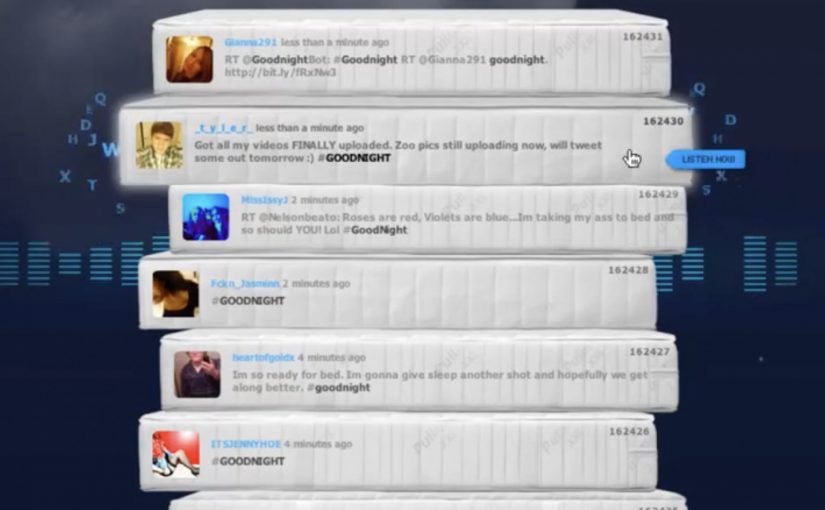
Around the world, people say good night on Twitter, often with #goodnight. Jung von Matt/Elbe collected those tweets for mattress manufacturer Fey & Co and turned them into a daily, shareable sleep ritual.
Every good night tweet automatically became part of the campaign. With a simple retweet, users were invited to www.lullaland.net, where short tweets were converted into melodic “lullatweets” for the world. Fey & Co positioned itself as an ambassador for good sleep inside the bedtime behavior of a digital generation.
How Lullaland turns tweets into lullabies
The mechanic is a tight translation loop. Capture tweets containing the hashtag. Convert the letters into tones to generate a simple melody. Store and present the results as a browsable collection, so each new tweet becomes both content and invitation. That works because the system turns an existing bedtime signal into branded content without adding effort.
In consumer categories built on comfort and routine, attaching the brand to an existing nightly habit is a durable way to earn repetition without forcing a new behavior.
Why it lands
It respects the moment. “Good night” is already intimate and low-energy, so the idea stays lightweight and fits the mood. The conversion from text to sound also makes participation feel magical without requiring people to do anything beyond what they already do, tweet.
Extractable takeaway: When you want to own an emotional territory, do not only advertise the feeling. Embed the brand into a recurring micro-ritual, then turn real audience behavior into the content that keeps the ritual alive.
What the brand is really buying
This is not a mattress demo. It is salience at the exact time the category is most relevant, right before sleep. Each contribution expands the library, each retweet can recruit new contributors, and the campaign accrues credibility because it is built from real messages rather than brand copy.
The real question is how a sleep brand earns a place in the bedtime habit before the purchase decision is even active.
What to steal from Lullaland
- Use an existing verb. Build on a habit people already perform daily, then add one small layer of transformation.
- Translate data into emotion. Turning text into music creates feeling fast, even when the input is mundane.
- Make participation automatic. Lower friction by letting normal behavior qualify as entry.
- Create a browsable archive. A growing collection gives the idea longevity beyond a launch spike.
A few fast answers before you act
What is Lullaland in one sentence?
A campaign that collects #goodnight tweets and converts them into short lullaby-like melodies, linking Fey & Co to a nightly digital ritual.
Why does converting tweets into music matter?
It turns a familiar social action into an emotional artifact, which makes the participation feel more meaningful than a normal hashtag post.
What makes this effective for a mattress brand?
It shows up at bedtime, uses real “good night” behavior, and reinforces sleep as a cultural moment rather than a product feature list.
What is the main risk with ritual-based campaigns?
If the experience is slow, confusing, or repetitive, people do it once and stop. The conversion has to feel instant, and the output has to feel varied enough to revisit.
What should brands copy from this idea?
Start with a recurring user behavior, add one simple transformation that creates emotion, and make the output easy to browse or share so the system keeps renewing itself.