KLM: Live High Five

KLM: Live High Five

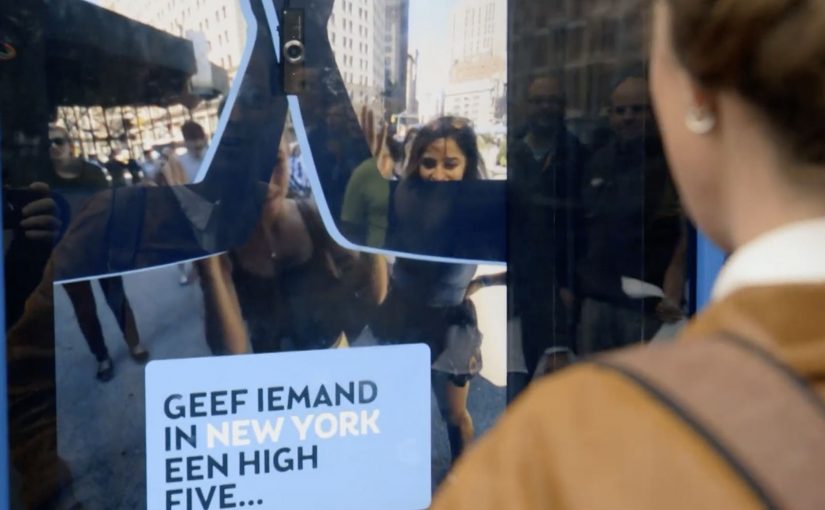
On 28 August, KLM connects hundreds of people in Amsterdam and New York via a live interactive video display, letting strangers on the streets of two cities come face to face.

It echoes the kind of “city to city” street connection seen before, such as the French railway (SNCF) linking Lyon and Brussels.

How the high five contest works

The twist is competitive: the connected pairs are asked to high five each other through the screens. For every successfully timed high five, participants win two tickets to New York or Amsterdam.

In global travel marketing, adding a clear participatory mechanic, meaning a simple action anyone can attempt without instruction, turns a “nice moment” into a repeatable behavior people recruit others into.

Why a high five is the right interaction

A high five is universally understood and visually obvious at distance. It is also time-bound, which creates tension. People lean in. They coordinate. They try again. That retry loop, the quick cycle of attempt, miss, adjust, and try again, is where energy builds and the crowd becomes part of the content.

Extractable takeaway: Pick an interaction that is instantly readable to bystanders, time-bound, and designed to invite visible retries. That is how the crowd becomes the amplification.

What KLM is really buying here

This is a route brand idea, meaning a story that makes a specific connection between two places feel tangible, disguised as play: KLM makes the transatlantic connection feel immediate, human, and winnable. The real question is whether your activation makes distance feel collapsible in under five seconds. This is the right kind of public interactivity when your promise is connection between places. The prize is valuable, but the real asset is the public proof that the brand can engineer connection between two cities in a way passers-by can instantly grasp.

Patterns to borrow for your own city-scale activation

  • Use one gesture everyone knows. The simpler the action, the more strangers will attempt it without instruction.
  • Add a timing challenge. Time-based coordination creates drama and repeat tries.
  • Make the reward match the story. Here, tickets reinforce the “two cities” premise.
  • Design for crowds. The best interactions are legible to bystanders, not just participants.

A few fast answers before you act

What is KLM Live High Five in one line?

A live video street installation connecting Amsterdam and New York where timed high fives between cities unlock travel tickets.

What is the key mechanism?

Two public screens link strangers in real time, then convert the connection into a simple, repeatable contest action.

Why does the high five mechanic work so well?

It is universal, physical, and instantly readable. The timing requirement creates suspense and encourages repeated attempts.

What is the biggest execution risk?

If timing feedback feels laggy or unclear, people stop retrying. The interaction needs instant, visible confirmation so the crowd stays invested.

What is the transferable lesson?

If your idea is “connection”, make people physically coordinate across distance and reward the moment with a prize that matches the narrative.

KLM: Disney’s Planes Pre-Screening on a Plane

KLM: Disney’s Planes Pre-Screening on a Plane

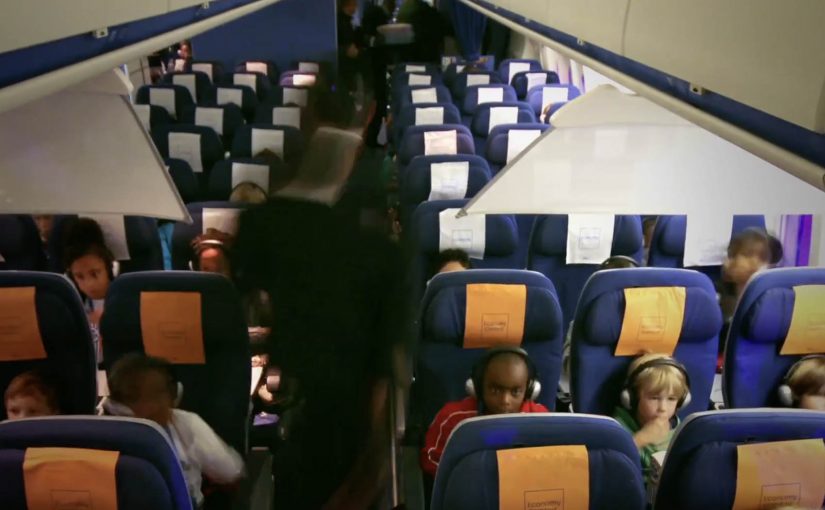
On October 2, KLM gave 300 kids an experience of a lifetime. The lucky kids were invited to a spectacular pre-screening of the new Disney film Planes.

To make the event unforgettable, KLM held the pre-screening on an actual airplane, then used timed special effects to recreate the world of Planes in a live setting around the aircraft. KLM described it as the world’s first movie experience in and around a plane.

A movie theatre that already has wings

The clever bit is not “screening a film on a plane”. That is normal. The clever bit is synchronizing the environment with the story so the audience feels like the film has leaked into real life.

In airline and travel brands, immersive launches work best when the setting is native to the promise you sell.

The real question is whether your launch idea could only happen in the world your brand already owns.

This is worth copying because it makes the brand story feel inevitable rather than advertised.

The most memorable launches turn passive viewing into a physical moment that people can retell in one sentence.

Why it sticks

It sticks because the story, the setting, and the timed effects all reinforce the same feeling, and the audience experiences it rather than just watching it.

Extractable takeaway: Immersive brand experiences land when the environment is part of the content. If you can make the setting behave like the story, you create a memory people repeat for you.

It collapses brand and story into one setting. An airline is already a stage for travel narratives. Parking a film about aircraft inside a real aircraft makes the connection immediate.

It treats immersion as service, not spectacle. The effects are not there to show off production budget. They are there to make the kids feel looked after and included in something that cannot be repeated at home.

It earns conversation because the headline is simple. “They screened Planes on a plane” is a line anyone can pass on. The live effects turn that line into a story worth sharing.

Steal the sync-moment playbook

  • Pick a venue that makes your message inevitable. The location should do half the explaining before a single word is said.
  • Design “sync moments”. By “sync moments” I mean timed physical cues that match a few key beats so people feel the story, not just watch it.
  • Optimize for retellability. If the concept cannot be summarized in one sentence, it will not travel as earned media.
  • Make the audience the hero. For kids especially, the emotional memory is the product. The brand benefit follows.

A few fast answers before you act

What did KLM actually do here?

They hosted a pre-screening of Disney’s Planes for 300 kids inside a real aircraft and staged timed effects around the plane to mirror moments from the film.

Why is the airplane venue more than a gimmick?

Because it is native to both the brand and the story. It makes the experience feel “only possible with KLM”, which is the point of experiential work.

What makes this different from a normal premiere?

The environment is synchronized to the content, creating immersion. It is closer to live theatre than to a standard screening.

What is the business intent behind an event like this?

To build brand affinity and memorability, especially with families, by creating a high-emotion story people associate with the airline.

What is the most transferable lesson?

Choose a setting that embodies the message, then add a few well-timed sensory cues that turn viewing into a felt experience.