
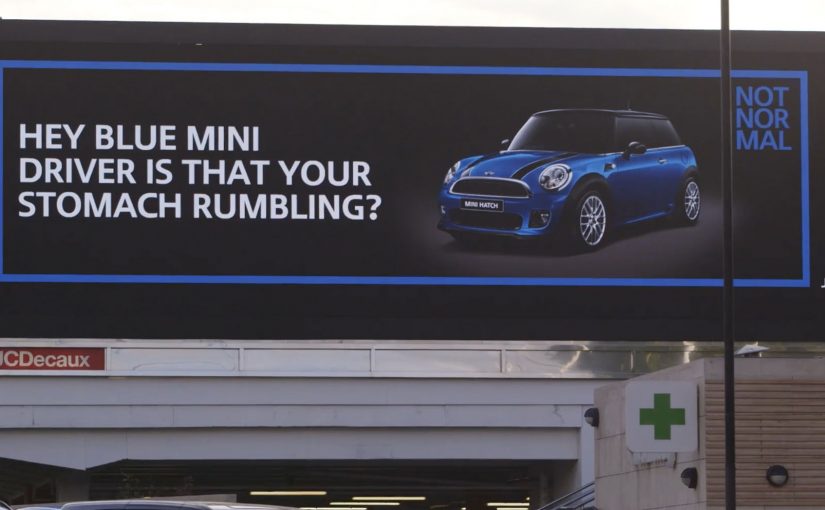
MINI: Salutes You in London

In August I wrote about how Coca-Cola Israel used technology to personalise billboards for people who drove by.

Now, as part of its ongoing Not Normal campaign, MINI decides to give MINI drivers in London a custom message by taking over a run of giant billboards along a fast-paced road for a two-week period. “Not Normal” is the positioning line for celebrating owners over product claims.

Reportedly, the campaign reached out to 1,941 MINI drivers in London during the run.

How the billboards “recognise” drivers

The mechanism is deliberately human. Spotters use iPads to identify approaching MINIs and trigger the right creative. Each message is sent with pictures of the make and model of the MINI it relates to, so the driver sees something that feels directed, not generic.

In urban out-of-home advertising, combining live triggers with personalised creative can make a brand message feel like a service moment, not just media.

A human-triggered approach is the right call on a fast road, because it keeps the moment specific without pretending you have perfect recognition tech.

Why this lands on a road, not in a feed

Most personalised media is private and one-to-one. This flips it into a public setting. The driver gets a direct salute, and everyone else sees a brand that appears to be paying attention to its community in real time. That publicness is the multiplier, because it turns a personal moment into shared talk value, meaning people retell it.

Extractable takeaway: Public personalisation works when the proof cue is instantly legible to bystanders, not just meaningful to the target.

What the campaign is really doing for MINI

The work reinforces the Not Normal positioning by celebrating owners rather than pushing product claims. It also turns “existing drivers” into the hero audience, which is a neat way to build loyalty and social proof at the same time.

The real question is whether the salute feels like a genuine community nod, not a clever stunt.

Transferable moves from MINI Salutes You

  • Use a simple trigger and a clear payoff. Recognition plus a tailored line is enough if the timing is perfect.
  • Keep it brand-native. A salute fits a community brand. A hard sell would break the spell.
  • Make personalisation visibly specific. Showing the make and model is the proof cue that prevents it feeling random.
  • Design for safety and readability. Short messages, high contrast, instant comprehension.

A few fast answers before you act

What is “MINI Salutes You” in one line?

A digital out-of-home activation that displays personalised messages to MINI drivers as they pass selected London billboards.

How are the personalised messages triggered?

Human spotters using iPads identify approaching MINIs and trigger the relevant creative, including make and model visuals.

Why use billboards for personalisation?

Because it makes recognition public. The driver feels noticed, and bystanders see a brand visibly celebrating its community.

What do you need to make this work without advanced tech?

A small set of tightly written messages, clear proof cues (like make and model), and a reliable human trigger that can fire the right creative at the right moment.

What is the main transferable lesson?

If you can time a simple personalised moment perfectly, you do not need complex tech to create a campaign people retell.
MINI: The Thrill Bench

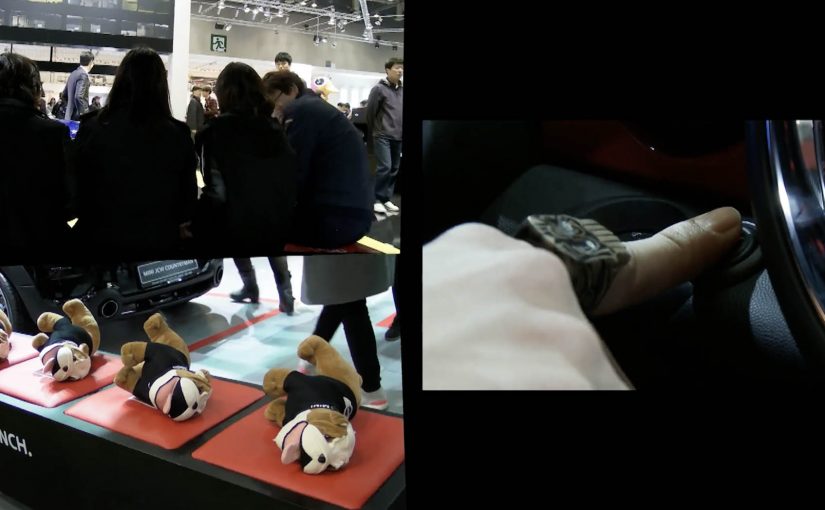
During the Geneva Motor Show 2012, MINI found a novel way to get people talking about the MINI Countryman. A special vibrating bench was installed on the street. Every time someone sat down, a MINI would sneak up from behind and rev its engine. The bench would then vibrate and capture some great reactions.

A bench that turns engine power into a punchline

The mechanism is beautifully low-tech. The car is the soundtrack, and the bench is the amplifier. The moment a passer-by becomes the participant, the installation delivers a sudden physical sensation that is impossible to ignore and hard not to laugh at.

In event-adjacent street activations, the fastest route to earned attention is a one-step setup with an instantly readable payoff.

The real question is whether you can turn a brand cue into a physical joke in under one second.

Why it lands

This works because it creates a clean before-and-after. Calm street moment. Sit down. Surprise rev. The body reacts before the brain explains. That involuntary reaction is the content. It is also brand-consistent. A MINI launch does not need to lecture about features when it can dramatise “fun” through a simple interaction.

Extractable takeaway: If you want people to share, design for an automatic reaction and make the trigger obvious. The best “reaction marketing” needs no explanation and no rehearsal. Here, “reaction marketing” means engineering an immediate, involuntary response that becomes the content.

What MINI is really buying with a vibrating bench

The goal is talkability at the edges of the show, outside the exhibition hall where not everyone will see the product stand. The bench turns the city into a distribution channel, and it gives the model a personality. Playful. Slightly mischievous. Confident enough to sneak up on you. This is a stronger use of attention than explaining “fun” in copy.

Steal the one-step reaction loop

  • Use a familiar object. A bench is self-explanatory, which removes instruction friction.
  • Make the trigger binary. Sit down. Experience the effect. No steps in between.
  • Keep the payoff physical. Tactile moments are more memorable than visuals alone in busy streets.
  • Design for the crowd. The bystanders are the multiplier. They laugh, film, and recruit the next sitter.
  • Protect safety and consent. Surprises should startle, not scare. Calibrate intensity and timing.

A few fast answers before you act

What is the Thrill Bench in one sentence?

It is a street installation where sitting on a bench triggers a nearby MINI to rev, making the bench vibrate and creating a shareable surprise reaction.

Why does this work during an auto show?

It reaches people beyond the show floor and turns the city into a stage, generating attention and social sharing without buying additional media.

What makes this “reaction marketing” effective?

The reaction is genuine and immediate. Viewers trust real behaviour more than scripted claims, and the format is easy to film and share.

What is the biggest execution risk?

Intensity. If the vibration feels aggressive or unsafe, the moment flips from fun to discomfort and sentiment turns negative.

What should you measure in a similar activation?

Participation rate, bystander clustering, video shares, sentiment, and whether the stunt lifts search, dealership queries, or event footfall in the same period.

MINI: Photo Box Billboard

A billboard that turns fans into the creative

MINI has launched an innovative electronic billboard on Berlin’s Kurfürstendamm shopping boulevard. The billboard is connected to a Photo Box booth that captures the faces of MINI fans and puts them onto a massive screen along with each participant’s favourite MINI model, for a chance to win their preferred car.

Contestants have four colours and four models to choose from, including the MINI Hatch, Convertible, Clubman and Countryman.

The mechanism: Photo Box in Berlin. Facebook everywhere else

On the street, you step into the Photo Box, clamp on a pair of headphones, pick your colour and model, and the system outputs a ready-to-share moment on a giant public screen.

Fans from around the world can also join through the MINI Facebook app, where you can snap a picture with your webcam wearing a pair of virtual headphones in your favourite MINI colour.

In high-footfall city retail corridors, interactive out-of-home turns passersby into opt-in media, where participants choose to become the message through participation.

The real question is whether you can turn a simple preference into a public moment people want to share.

Why it feels modern: ecommerce choice, but on a building

The experience borrows the best part of online shopping. Configuration, without forcing the rest of it: specs, comparisons, and checkout. Because the billboard outputs a finished result in seconds, the act of choosing feels like content, not a form.

Extractable takeaway: When the environment publishes a participant’s choice at street scale, social proof becomes the distribution, and the moment feels bigger than a personal post.

The business intent: acquisition through identity

This is acquisition marketing that avoids hard selling. MINI lets people declare a preference. model plus colour. and then wraps that declaration in a contest mechanic. The brand gets reach, participation data, and a stream of shareable assets without asking people to create anything from scratch.

What to steal for your next interactive OOH build

  • Make the choice set small and satisfying. Four colours and four models is enough to feel personal, without feeling complex.
  • Design one iconic prop. Here, the headphones act as a visual signature that unifies street and Facebook participation.
  • Let the environment do the distribution. A giant screen creates built-in attention and bystander reach.
  • Mirror the experience online. The Facebook version keeps the same core mechanic so the idea travels beyond the location.

A few fast answers before you act

What is MINI’s Photo Box Billboard?

It is an interactive out-of-home billboard in Berlin where fans take a photo, choose a MINI model and colour, and see themselves displayed on a massive public screen, tied to a chance to win their preferred car.

How does the street mechanic work, step by step?

Step into the Photo Box. Pick your colour and model. The system captures your photo and outputs a finished, public “moment” on the billboard that is easy to share and talk about.

How does the Facebook app extend the same idea?

It mirrors the participation loop online. Fans take a webcam photo, add the campaign’s signature headphones motif in their chosen colour, pick a model, and participate without being in Berlin.

What role do the headphones play in the concept?

They are the visual signature that links the physical Photo Box experience to the Facebook version. One iconic prop makes the campaign instantly recognizable across channels.

Why does this work as acquisition marketing, not just a stunt?

It turns preference into a visible artifact. People declare model and colour, then the street-scale screen adds social proof and bystander reach while the brand collects intent signals.

What should you measure if you build something like this?

Participation rate, completion rate, average time to choose, shares, and downstream lead or test-drive intent. Also track whether the billboard creates bystander attention, not only participant engagement.