Québec City Magic Festival: The Magic Poster

To promote the Québec City Magic Festival, lg2 makes the poster behave like a trick, not a billboard.

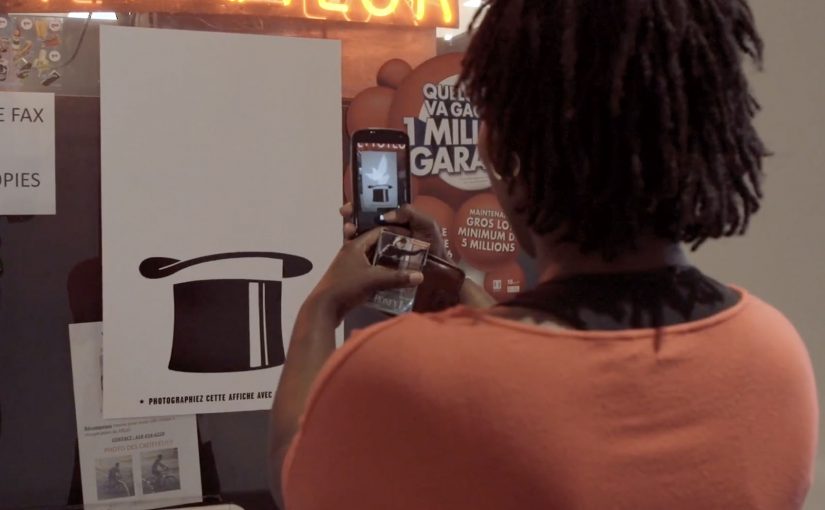
The creative is a magician’s hat poster with a message printed in invisible ink. Curious passers-by discover the mechanic by doing what people already do. They pull out a phone, take a picture, and turn the flash on. The flash reveals the hidden copy, and a lucky few are rewarded with a free ticket for the festival’s closing show.

A poster that turns curiosity into participation

The mechanism is invisible ink plus a flash-triggered reveal. Instead of asking for attention, the poster pays attention back. It gives you a reason to stop, and it gives you a satisfying “aha” the moment you do.

In out-of-home, the strongest interactive ideas do not demand a new behavior. They attach to a behavior already in the environment and simply add a twist.

Why it lands for a magic festival

The medium is perfectly aligned with the message. The campaign does not merely advertise magic. It performs magic in the street. That alignment makes the experience feel like a preview of the festival rather than an ad for it.

Extractable takeaway: When promoting an experience product, make the marketing behave like the product. Let the audience sample the feeling, not just read the promise.

The free-ticket twist strengthens the loop. The reveal provides instant reward. The prize provides delayed reward. Both motivate sharing, because people want friends to try it and to see if they win.

What to steal for your next OOH execution

  • Hide something worth revealing. The reveal must feel like a payoff, not a gimmick.
  • Use a native trigger. Flash photography is a default phone capability, not an app install.
  • Reward the behavior. Even a small chance of winning can meaningfully increase participation.
  • Make it repeatable. The interaction should be easy enough that people can show someone else on the spot.

A few fast answers before you act

What is “The Magic Poster” concept?

A festival poster printed with invisible ink that reveals its message when someone photographs it with a phone flash, turning a passive billboard into a small magic trick.

Why is the flash-triggered reveal effective?

It uses a built-in phone behavior, creates instant payoff, and turns the audience into the operator of the trick, which increases attention and sharing.

What makes it more than a novelty poster?

The mechanic reinforces the product truth. The campaign demonstrates magic rather than merely claiming it, making the ad itself a preview of the festival experience.

How can brands adapt this without copying the exact technique?

Design a simple reveal that matches your story, attach it to a native behavior in the environment, and ensure the revealed content is genuinely rewarding, not just hidden for hiding’s sake.

McDonald’s: Save the Sundae Cone

A melting cone that asks the street to help

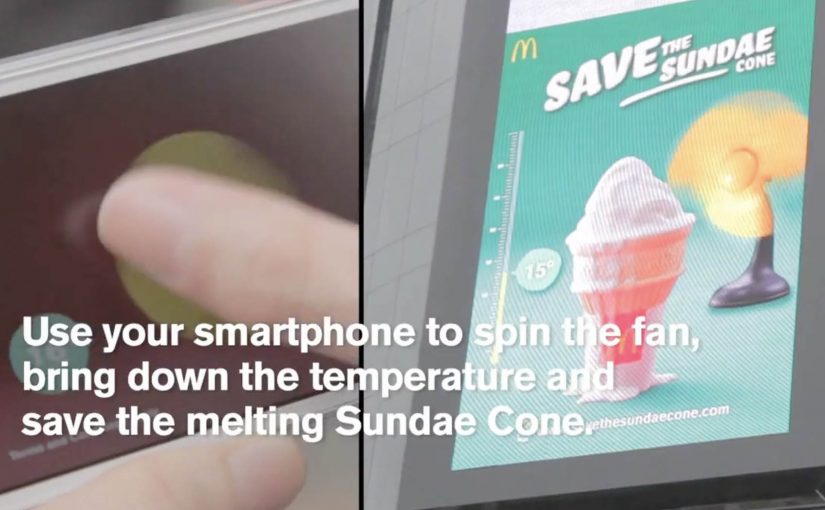
Summer is here and McDonald’s is back with an interactive outdoor campaign built around one simple problem. A giant LED billboard in Bukit Bintang, one of Kuala Lumpur’s best-known shopping districts, showcases the iconic Sundae Cone. But it is melting.

To save it, people use their smartphones to spin a fan on the billboard, bring the temperature down, and stop the cone from disappearing.

The mechanic: one shared control, one visible outcome

The execution translates an abstract idea, “cool it down,” into a single piece of viewer control. You open the experience on your phone and spin a fan. The billboard responds in real time. When more people join in, the cooling effect accelerates, so the experience naturally becomes collaborative rather than solo.

In some write-ups, participation is also rewarded with a Sundae Cone e-voucher that arrives on the phone, adding a clean payoff to the play.

In high-footfall retail districts, interactive DOOH works best when the action is obvious, social, and instantly rewarded.

Why it lands

It is instantly legible from a distance. Something is melting. A crowd can fix it. That clarity creates a low-friction loop: notice. join. watch the shared progress. earn the reward. The “melting” constraint also adds urgency without needing any heavy messaging, and the big screen makes every participant feel like they are influencing something larger than a banner.

Extractable takeaway: If you want people to interact in public, reduce the mechanic to one familiar gesture, make the result visible to everyone, and design the reward so participation feels worth it even for a 30-second engagement.

What McDonald’s is really buying

This is not only awareness. It is behavior. Get people to take out their phone, do a playful action tied to heat and refreshment, and then convert that attention into a reason to walk into a nearby store. The billboard becomes a live demo of “cool relief,” not a static claim.

What to steal

  • Design for crowds first. If spectators cannot immediately understand what participants are doing, participation stalls.
  • Make progress collective. Shared outcomes create social proof and naturally recruit more people.
  • Keep the gesture native. One simple interaction beats a clever multi-step flow in outdoor environments.
  • Tie reward to proximity. If you can convert engagement into a nearby redemption moment, the media becomes a traffic engine.

A few fast answers before you act

What is “Save the Sundae Cone”?

It is an interactive digital out-of-home campaign in Kuala Lumpur where a billboard shows a melting Sundae Cone and invites the public to cool it down using their smartphones.

How do people control the billboard?

They use their phone to spin a fan mechanic that cools the on-screen temperature. More participants increase the effect, making it collaborative.

Why is the melting mechanic effective?

Melting creates urgency that anyone understands, and it turns participation into a visible “save” moment the crowd can watch.

What makes this a strong example of interactive DOOH?

The action is obvious, the feedback is immediate, and the experience becomes social because progress is shared on a large public screen.

What is the key takeaway for other brands?

Use one native gesture, show real-time feedback in public, and reward participation quickly so interaction feels like a fair trade.

Navarro Correas: Wine Art Project

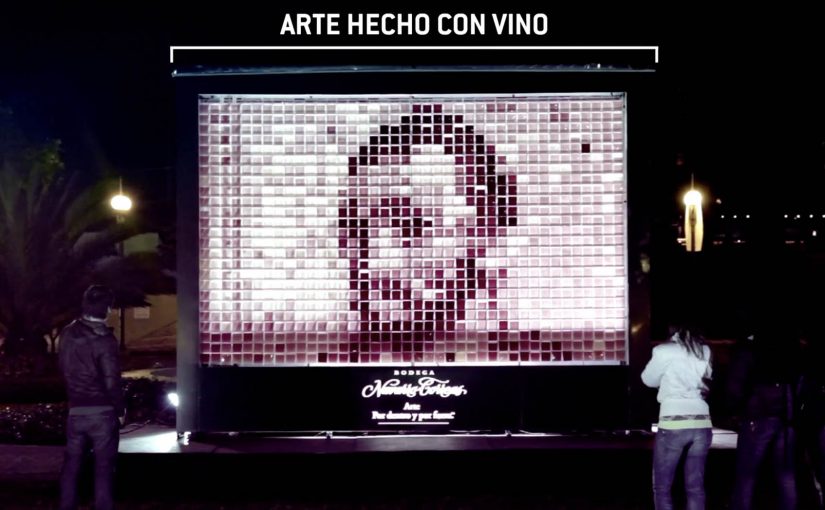
Navarro Correas creates a 13 x 8.2 meter structure in Bogotá, Colombia. It consists of 1,000 acrylic cells and an automated robotic mechanism that fills each cell with six different shades of wine.

How the installation works

People activate the robotic mechanism by sending a text message with the acrylic cell number they want filled. Over time, 1,000 text messages build the full image, described as recreating Van Gogh’s self-portrait. A masterpiece made with Navarro Correas’ own wines.

An SMS-controlled installation is a public artwork where participants trigger physical changes by texting simple commands, turning the audience into the “interface”.

In large-scale city activations, participation gets dramatically stronger when the crowd can see their input change a shared object in real time.

Why it lands: it turns contribution into ownership

This works because it makes participation concrete. You are not “liking” or “voting”. You are choosing a specific cell and watching a physical outcome appear. The growing picture becomes a public scoreboard of collective effort.

Extractable takeaway: If you want mass participation, design a mechanic where each small action is visible, additive, and irrevocably part of the final outcome. People engage longer when they can point to “their piece” of the whole.

The wine-as-paint choice also earns attention twice: first as a spectacle (liquid filling the grid), and then as a reveal (the final portrait). The mechanism creates suspense, and suspense keeps people texting.

What the brand is really doing here

The installation positions the wine as a maker’s material, not just a drink. It borrows the credibility of craft and art, then backs it with a participatory system that feels modern and social without needing a social network.

What to steal for your next interactive public piece

  • Make the input trivial: one action, one identifier, no learning curve.
  • Make the effect observable: people should immediately see change after they act.
  • Use “additive progress”: partial completion should still look interesting, so the build phase has its own payoff.
  • Design for attribution: let participants feel “I contributed”, even if the contribution is small.
  • Pick a reveal that rewards patience: the final image should be worth waiting for.

A few fast answers before you act

What is the Navarro Correas Wine Art Project?

It is a public installation made of 1,000 acrylic cells that are filled by a robotic mechanism with different shades of wine. People participate by texting a cell number to trigger a fill, gradually revealing a final portrait image.

Why use SMS for interactivity?

SMS is frictionless and universal. It requires no app download, works on basic phones, and is fast enough for impulse participation in a public space.

What makes this different from a normal billboard stunt?

The audience directly controls the build. Each message produces a visible change, so the piece becomes a collective construction rather than a one-way display.

What is the key behavioral driver?

Ownership through contribution. People engage more when they can claim a specific part of the outcome and see the shared progress accumulate.

What should you measure for a campaign like this?

Participation volume, unique participants, repeat participation, time-to-completion of the full artwork, dwell time around the installation, and any earned media or social mentions driven by the live build.