
Exito: Flossbook

Over the last year or so I have seen numerous brands use the basic website functionalities of Twitter and Pinterest to reach out and engage with their audiences.

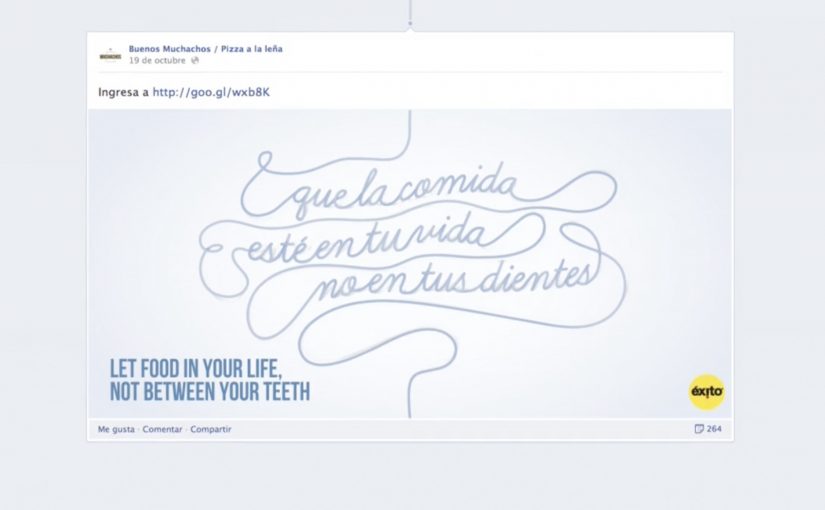
In this example, Sancho BBDO from Colombia creates a “banner” that promotes Exito dental floss by taking advantage of the Facebook Timeline. In the case video below you can see how the banner behaves like dental floss, sliding between pictures of food posted on restaurant fan pages.

The campaign reports that the Exito website received 30% more traffic and that the banner collected more than 200,000 likes across restaurant fan pages.

A banner that borrows the feed’s own grammar

The idea works because it treats the feed as the medium, not as a placement surface. Instead of shouting for attention, the unit inserts itself where the problem actually happens. Between the food and the teeth.

How the mechanism works

The execution uses a Timeline-format ad unit designed to appear between consecutive image posts, creating the visual metaphor of floss moving through a meal-heavy feed. It is still advertising, but it behaves like an interaction with the stream rather than a block sitting next to it. That matters because when the ad uses the stream’s own sequencing, the metaphor reads instantly and needs less explanatory copy.

In social platform marketing, the most durable executions are the ones that act like native feed behavior instead of interrupting it.

Why it lands

It lands because the metaphor is immediate and the placement is earned. If you are scrolling through indulgent food photography, you are already in the mental space where “maybe I should floss” makes sense. The banner does not have to convince you with copy. It just has to show up in the right gap, in the right moment, with a visual that explains itself.

Extractable takeaway: When a platform has a strong, repetitive content pattern, design your unit to exploit the “gap” between posts. The gap is where attention resets, and where metaphors can do more work than claims.

The business intent behind the trick

The real question is not whether a banner can get seen, but whether it can make its relevance obvious in the exact moment people are already primed for it.

This is efficient attention engineering. It makes a low-involvement product feel relevant by tying it to a high-frequency behavior. Scrolling food photos. That linkage is what turns a standard banner into a feed-native reminder you actually notice. Here, feed-native means the ad works inside the platform’s normal flow and spacing instead of fighting it.

What oral-care brands can lift from this

  • Start with the platform pattern. Identify what people repeatedly do and what they repeatedly see.
  • Build a metaphor that uses placement as part of the idea. Here, “between photos” is the point.
  • Keep the unit visually self-explanatory. If it needs instructions, it loses the feed moment.
  • Target the most relevant content contexts. Food imagery is the natural trigger for oral care.
  • Measure beyond clicks. Engagement and downstream site lift can be the real win for a feed-native format.

A few fast answers before you act

What is “Flossbook” in one sentence?

A Facebook Timeline-format banner that visually acts like dental floss by appearing between food photos in the feed.

Why is the Timeline placement essential to the idea?

Because the meaning is created by the gap. The banner becomes “floss” only when it sits between two posts like something threading through them.

What makes this feel native instead of intrusive?

It uses the feed’s own rhythm and spacing. The unit behaves like a piece of the stream, not an unrelated rectangle alongside it.

What is the biggest risk with “platform mechanic” ideas?

If the platform changes the format, the idea can break overnight. These executions need contingency planning for UI shifts.

How can other brands apply this without copying the metaphor?

Find the repeatable content pattern in your audience’s feed, then design an insertion that only makes sense in that exact pattern and moment.

Viajes Galeón: Twitpoker

A poker table. Five of Colombia’s best-known Twitter personalities. Except the chips are not money. They are followers.

Viajes Galeón, a Colombian travel agency, and Y&R Colombia create Twitpoker, a poker game where players bet their Twitter followers instead of cash. The match is streamed live to audiences via web cams, pulling spectators into the tension of every hand because every raise has a visible social cost.

As described, the live format scaled beyond the five invited players. More than 27,000 people played together on a single table experience, and a brand with little or no prior social footprint used the stunt to kick-start its Twitter presence.

Followers as currency

The mechanism is a value swap. Twitter followers become the stake, which instantly reframes poker from private risk to public reputation. Every decision is legible to the audience and personally meaningful to the players, because the loss is social proof, not cash.

In social-led brand building, the most persuasive “launch” is a mechanic that makes your audience feel they are participating in the growth, not merely watching an ad about it.

Why it lands

The idea works because it turns a platform metric into a story engine. Most follower counts sit idle as vanity. Twitpoker makes the number consequential, and consequence creates attention. The live stream adds immediacy, and the five invited players supply recognizable personalities, so the audience is watching real identities collide with real incentives.

Extractable takeaway: If you want social growth fast, design a mechanic where the platform’s native currency is genuinely at stake, then stage it live so spectators feel the outcome unfolding in real time.

What the travel brand is really buying

The real question is how a low-awareness travel brand gives people a reason to follow right now.

Viajes Galeón is not buying “engagement” as a buzzword. It is buying a credible reason for people to follow, talk, and keep watching. The campaign converts a travel agency into a social event host, which is a stronger role for a brand with low awareness than trying to shout offers into a quiet feed.

What to steal from Twitpoker

  • Make the platform metric matter. Treat followers, likes, time, or access as something that can be risked or earned.
  • Use live to create urgency. Live formats compress attention and increase sharing because people do not want to miss the outcome.
  • Cast with credibility. Recognizable participants provide narrative without needing heavy scripting.
  • Let the audience feel included. Scale participation beyond the core cast so it becomes a shared event, not a private stunt.

A few fast answers before you act

What is Twitpoker?

A live-streamed poker game where participants bet their Twitter followers instead of money, built to generate attention and grow a brand’s social presence.

Why does “betting followers” work as a mechanic?

Because it converts a familiar social metric into a real stake, making every play emotionally legible and socially consequential.

What role does the live stream play?

It creates immediacy and shared tension, which increases participation, sharing, and real-time commentary.

What is the key requirement for this to feel credible?

The stakes must be real and visible, and the participants need an audience that cares about their reputations.

When should a brand use a stunt like this?

When the goal is to bootstrap social attention quickly, and when you can translate platform-native value into a simple game with a clear win and loss.

Homecenter: The Man Who Gave Everything Away

Homecenter is a large retail chain in Latin America that deals in goods related to home improvement and construction.

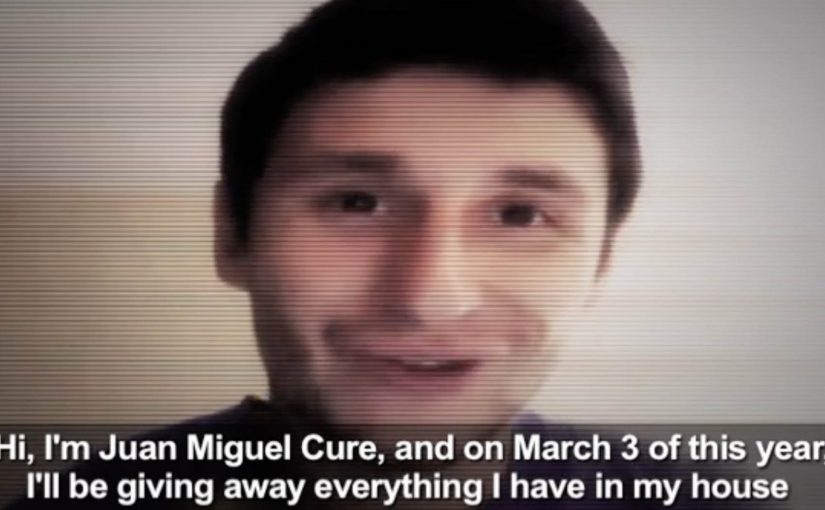
To create buzz for the opening of their new store (in March), Young & Rubicam Colombia got Juan Miguel Cure to give away everything from his house.

A launch story built on real sacrifice

Most store openings lean on discounts, flyers, and a ribbon-cut photo. This one flips the script by making the “offer” feel personal and public. One person gives up his stuff, and the opening becomes a story people want to repeat.

How the mechanic works

The mechanic is simple. Here, “mechanic” means the branded action that makes the story travel. Pick a relatable figure. Strip his home of its belongings. Turn that act into a public event and a piece of film that people can share. The brand is not trying to outshout competitors. It is trying to earn attention through a narrative that feels larger than retail.

In retail marketing for big-box home improvement brands, openings are won through local word-of-mouth and press amplification as much as through paid media.

Why it lands

Giving everything away is an extreme signal. It creates instant curiosity and a moral tension. Why would someone do this. That tension keeps people watching, and it makes the brand’s opening feel like something happening in the community, not something happening to the community. The generosity angle also changes the default posture toward promotion. Instead of “come buy”, it reads as “come witness”. Because the giveaway turns a retail opening into a witnessed act of sacrifice, people process it as a story worth passing on, not just a promotion to ignore.

Extractable takeaway: If you can attach your launch to a human-scale story with a clear sacrifice, you convert opening-day marketing from “announcement” into “news”, and news travels further than ads.

The business intent behind the generosity

The real question is whether the stunt can convert local attention into store traffic and brand memory. This is a smart launch idea because the stunt gives the store opening a memory structure, not just a promotional wrapper. This is a classic buzz play. It creates a shareable film asset, it seeds conversation locally, and it frames the new store as culturally present before the doors even open. The giveaway is the hook, but the real objective is simple. Get people to show up, talk about it, and remember the brand when they need home improvement goods.

What to steal for launch marketing

  • Choose one bold proof point. Extreme beats complicated. One clear act is easier to retell.
  • Build a narrative people can summarize in one sentence. If the story cannot be repeated quickly, it will not travel.
  • Make the brand role legible without forcing it. The brand can frame the moment, but the human story must stay in front.
  • Design for local amplification. Openings benefit from community sharing and local media interest more than global cleverness.
  • Plan the follow-through. When attention spikes, the store experience must be ready to convert curiosity into habit.

A few fast answers before you act

What is the core idea behind “The Man Who Gave Everything Away”?

Turn a store opening into a human story. A real giveaway becomes the headline, and the opening becomes the payoff.

Why does this work better than a normal “grand opening” campaign?

Because it behaves like news. A surprising, emotional act is more likely to be shared, discussed, and covered than a standard promotional announcement.

What is the biggest execution risk?

If it feels staged, manipulative, or unclear why the brand is involved, the audience will reject it. The motive must read as coherent, not exploitative.

How can a retailer adapt this without copying the stunt?

Use the same structure. One decisive act, one human lead, one simple story that points to the opening. The act does not have to be “everything away”, it just has to be unmistakable.

How do you measure whether the buzz actually helped?

Track opening-period footfall uplift, local share-of-voice, earned mentions, branded search lift, and conversion into repeat visits in the weeks after launch.