
UNICEF Tap Project: Dirty Water Machine

What if someone bottled the water that millions in developing countries drink every day and offered it on the streets of New York?

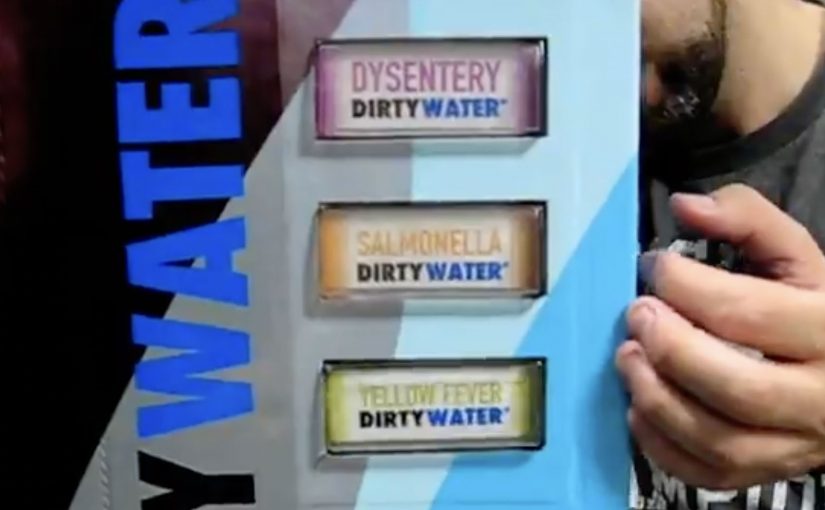
For just a buck, during World Water Week (March 22-29), New Yorkers in the Union Square Park area are invited to “enjoy” the benefits of Dirty Water. It comes in a range of choices like Malaria, Cholera, or Typhoid Dirty Water, and is described as having 900 million consumers.

Dirty Water is not an actual product, but a real problem for millions of children around the world.

A vending machine that sells disgust

The mechanism is a classic reversal: a familiar vending machine is repurposed to dispense bottles labeled with water-borne diseases. The point is not to get anyone to drink it. The point is to make the problem visceral and immediate for people who normally never have to think about it. By keeping the interaction familiar, the reversal lands because it turns moral distance into a physical reaction in seconds.

In global cause marketing, turning an abstract statistic into a physical choice can move more people from awareness to action than another informational poster ever will.

The real question is whether you can turn a distant, abstract problem into a personal encounter that makes action feel unavoidable.

Why “nobody drinks it” is the message

New Yorkers are startled to see options like Yellow Fever or Hepatitis Dirty Water. They look at the machine in disgust. And that disgust is the creative payload, meaning the emotional reaction the campaign is designed to deliver, because it mirrors the reality that millions of families do not have the option to refuse unsafe water.

Extractable takeaway: When the barrier is “I cannot feel this problem,” engineer a harmless encounter that triggers the right emotion on contact, then attach one immediate action that turns that emotion into help.

The donation promise that makes the $1 meaningful

The idea of “selling” dirty water is framed as being inspired by UNICEF’s promise that every dollar donated provides safe drinking water to 40 children for a day. Even if the bottle is never purchased as a “product”, the transaction becomes a small, concrete unit of impact.

How the campaign stays active beyond the street

This Dirty Water initiative is positioned as ongoing, with continued donation options online at tapproject.org or via text message. Text TAP or AGUA to UNICEF (864233) to make a $5 donation.

Steal the Dirty Water pattern

  • Use reversal with familiar UX. Put the message inside an everyday interaction so the emotional hit lands before the rational debate starts.
  • Make the abstract a physical choice. Let people “choose” the problem in front of them, then offer one simple action to refuse it for someone else.
  • Price the action as a unit. Frame the donation as a small, concrete purchase so the person feels immediate impact, not vague virtue.

A few fast answers before you act

What is the “Dirty Water” vending machine in one line?

A public vending machine that dispenses “dirty water” bottles labeled with diseases to shock passers-by into donating for clean water.

Why price it at $1?

Because $1 is a friction-light ask that feels like a purchase, not a pledge, and it maps to a clear “unit” of impact in the campaign story.

What is the main creative trick that makes it work?

Reversal: it sells something no one wants, so the emotional response is disgust, and that response reframes clean water as a privilege rather than a given.

What should brands learn from this without copying the cause?

If the problem is invisible, make it physically encounterable, and tie the encounter to one simple action that feels immediately meaningful.

What is the lowest-risk way to adapt this pattern?

Keep the reversal honest and harmless, avoid sensational claims, and make the action as clear as the emotion: one step, one outcome, no hidden complexity.

Jameson: Are You Talking To Me?

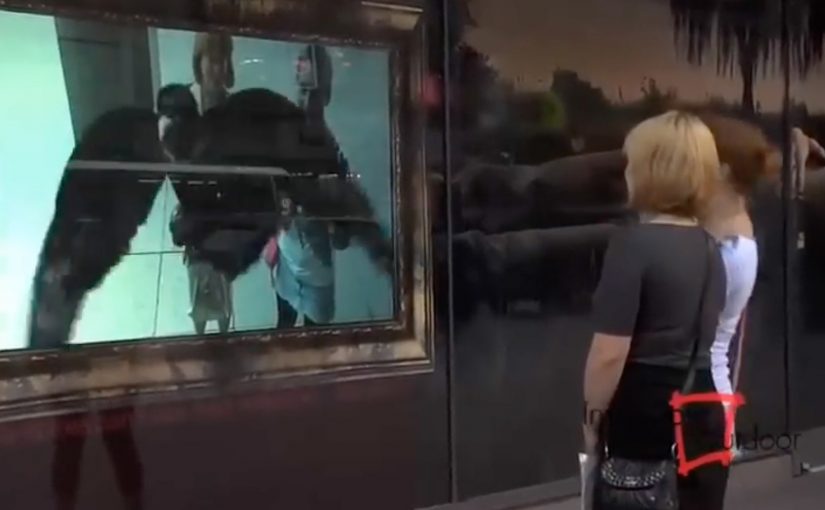
“Are you talking to me?” becomes a real question when a wall talks back. This month, people in high foot-traffic areas across New York and Los Angeles react to Jameson Irish Whiskey as if the city itself has started a conversation.

The idea defies the downturn mood by shifting from broadcast to banter. The wall does not just show a message. It performs a social moment with whoever walks past.

How the talking wall works

The mechanism is described as a projected interactive ad. A large-scale wall projection delivers conversational prompts and responses that feel directed at individuals in the crowd, turning a static surface into something closer to a street-level character than an ad unit. That works because the projection frames the encounter as a social exchange people instinctively want to resolve.

In urban brand marketing, interactive out-of-home can behave like a social channel when it turns passersby into participants rather than impressions.

Why it lands

It flips the usual power dynamic of outdoor media. Instead of you watching an ad, the environment appears to notice you. That creates a tiny moment of surprise and self-conscious humor, which is exactly what people share with friends standing next to them.

Extractable takeaway: If you want out-of-home to travel beyond the street, give it a social script, meaning a prompt people naturally know how to answer or perform. When the medium feels conversational, people perform it, and performance becomes distribution.

What Jameson is really buying

The business intent is to make the brand feel present in the city’s social fabric, not just visible on its surfaces. A “talking” installation creates memory through interaction, which can outperform pure reach when budgets are tight and attention is scarce.

The real question is whether the interaction makes Jameson feel socially present enough to be retold after the moment ends. Jameson is right to use interactivity here as a behavior engine, not a decorative layer.

What to steal from conversational out-of-home

  • Write for interruption. A short line that sounds like it belongs in real life earns the first glance.
  • Design for group reactions. Outdoor works best when it creates a moment that strangers can share in real time.
  • Make the medium feel alive. Interactivity is not a feature. It is the reason people stop.
  • Keep the proof simple. A single video that shows the reaction is often the most scalable artifact.

A few fast answers before you act

What is the core idea here?

Turn a wall into a conversational brand moment, using a projected interactive execution that feels like it is speaking directly to people on the street.

Why does “talking” out-of-home get attention?

Because it breaks expectation. Outdoor is usually passive. When it behaves like a person, people pause to resolve the surprise.

What makes this more than a stunt?

The interaction itself is the brand experience. The wall creates a repeatable feeling, and that feeling is what people remember, record, and retell.

What should a brand copy from this?

Start with a line that sounds native to the street, then make the interaction readable from a distance. If the setup triggers a shared reaction, the format can extend beyond the physical site.

What is the main pitfall to avoid?

If the interaction is unclear from a distance, people will not stop. The hook must read instantly, even before someone understands the tech behind it.

Vampire Diaries Augmented Reality

An outdoor advertising campaign by Inwindow Outdoor for CW’s Vampire Diaries appears in Los Angeles and New York. It uses augmented reality to trigger the on-screen display. Here, augmented reality functions as the activation cue that starts the display at the right moment.

The idea. Outdoor that reacts

The execution uses augmented reality as the activation layer. Instead of treating the screen as a static placement, the display is triggered through AR to create a moment that stands out in public space.

The real question is whether the AR layer changes what the outdoor screen does, or just decorates the same placement.

How it works. A trigger drives the screen

The on-screen content is not always running. It is initiated when the AR trigger is detected, turning a standard outdoor screen into a timed reveal rather than a constant loop.

In global entertainment marketing, outdoor activations like this work best when the trigger creates a clear before-and-after moment people can notice in a few seconds.

Where it runs

The installation appears in two major markets. Los Angeles and New York.

Why it lands

AR is worth the added complexity in outdoor only when it changes the behavior of the medium in public space. A triggered reveal creates contrast versus always-on loops, which is what makes the moment feel different rather than merely placed.

Extractable takeaway: Use AR as an activation layer that creates a noticeable state change on the screen, so the placement reads as a triggered experience, not static media.

What to apply in your next OOH activation

  • Design for a visible state change: Make the triggered moment look materially different from the idle screen state.
  • Keep the trigger simple: The audience should not need instructions to notice that something just changed.
  • Treat AR as the switch: Use AR to initiate the moment, not as decorative overlay on an unchanged placement.

A few fast answers before you act

What is this campaign?

An outdoor advertising campaign for CW’s Vampire Diaries by Inwindow Outdoor that uses augmented reality to trigger an on-screen display.

Where does it appear?

Los Angeles and New York.

What role does augmented reality play?

It is used as the activation layer that triggers the on-screen display.

Who executes it?

Inwindow Outdoor.

What is the core takeaway?

Use AR as an activation layer that turns an outdoor screen from static media into a triggered experience.