
BMW i window into the near future

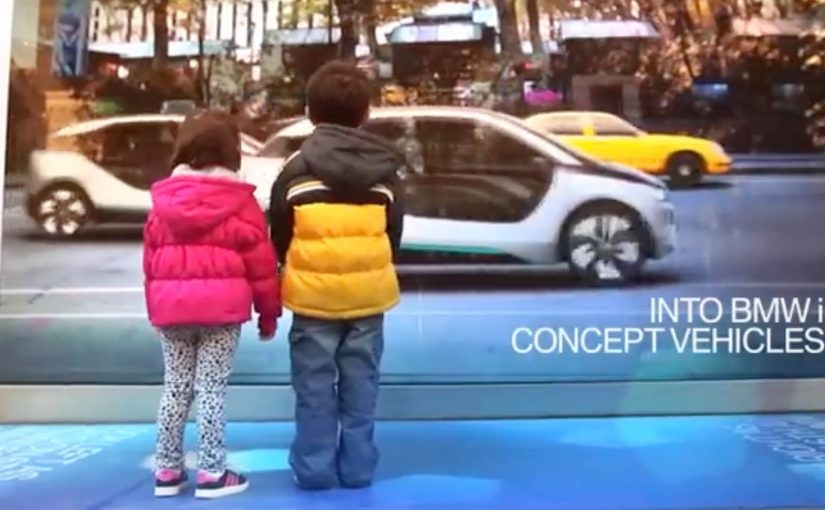
A street-level window in New York City behaves like a digital mirror. Here, “digital mirror” means a live street scene that can replace the cars in the image in real time. As traffic passes, the “reflection” transforms everyday cars into BMW i3 and i8 vehicles, giving passersby a glimpse into the near future.

The context. BMW i and “Born Electric”

The upcoming BMW i vehicles look distinctly futuristic and are positioned to arrive as early as late 2013. To build awareness for the BMW i Born Electric Tour in New York City, BMW reinforces a simple message. The future is closer than you think.

The real question is whether you can make a future-state product promise feel present without asking people to opt in.

This kind of work succeeds when the transformation is unmistakable from a distance and repeats for every passerby.

The execution. A live reflection that rewrites reality

BMW turns a window at the event location into a real-time “reflection” of passing traffic. The system captures what is happening on the street and swaps the vehicles in the live view for BMW i models, so the future feels present in the exact moment people walk by.

In public spaces, low-friction interactive experiences win when they are legible from a distance and require no download or instruction.

Why this works. Low friction, high surprise

The interaction requires no download, no instruction, and no commitment. It is immediate, legible from a distance, and designed for public curiosity. Because the swap happens in the same sightline people already have, surprise arrives before skepticism. The value is the reveal. A familiar street scene. Then a future version of that same scene.

Extractable takeaway: If you want people to believe “the future is close,” show the future inside a familiar frame, in real time, with one unmistakable before-and-after.

Make the promise feel present

  • Borrow a default behavior. Use a frame people already check, like a reflection or a window, so attention is automatic.
  • Make the change binary. One clear swap that anyone can spot, even in motion.
  • Let repetition do the work. Design it so the reveal happens again and again for new passersby, without setup.

A few fast answers before you act

What is BMW i Window Into the Near Future?

A street-level installation that turns a window into a live digital “reflection,” transforming passing traffic into BMW i3 and i8 vehicles.

What is it promoting?

Awareness for the BMW i Born Electric Tour in New York City, and the idea that the future is closer than you think.

What is the main user behavior?

Walk by, notice the window, and experience the surprise as the street scene is transformed in real time.

Why is the window format effective?

It uses a natural behavior, looking at reflections, then subverts it with a future-state overlay.

What is the transferable pattern?

Place the experience where attention already exists, then deliver one high-clarity transformation that makes the product promise tangible.

Jameson: Are You Talking To Me?

“Are you talking to me?” becomes a real question when a wall talks back. This month, people in high foot-traffic areas across New York and Los Angeles react to Jameson Irish Whiskey as if the city itself has started a conversation.

The idea defies the downturn mood by shifting from broadcast to banter. The wall does not just show a message. It performs a social moment with whoever walks past.

How the talking wall works

The mechanism is described as a projected interactive ad. A large-scale wall projection delivers conversational prompts and responses that feel directed at individuals in the crowd, turning a static surface into something closer to a street-level character than an ad unit. That works because the projection frames the encounter as a social exchange people instinctively want to resolve.

In urban brand marketing, interactive out-of-home can behave like a social channel when it turns passersby into participants rather than impressions.

Why it lands

It flips the usual power dynamic of outdoor media. Instead of you watching an ad, the environment appears to notice you. That creates a tiny moment of surprise and self-conscious humor, which is exactly what people share with friends standing next to them.

Extractable takeaway: If you want out-of-home to travel beyond the street, give it a social script, meaning a prompt people naturally know how to answer or perform. When the medium feels conversational, people perform it, and performance becomes distribution.

What Jameson is really buying

The business intent is to make the brand feel present in the city’s social fabric, not just visible on its surfaces. A “talking” installation creates memory through interaction, which can outperform pure reach when budgets are tight and attention is scarce.

The real question is whether the interaction makes Jameson feel socially present enough to be retold after the moment ends. Jameson is right to use interactivity here as a behavior engine, not a decorative layer.

What to steal from conversational out-of-home

  • Write for interruption. A short line that sounds like it belongs in real life earns the first glance.
  • Design for group reactions. Outdoor works best when it creates a moment that strangers can share in real time.
  • Make the medium feel alive. Interactivity is not a feature. It is the reason people stop.
  • Keep the proof simple. A single video that shows the reaction is often the most scalable artifact.

A few fast answers before you act

What is the core idea here?

Turn a wall into a conversational brand moment, using a projected interactive execution that feels like it is speaking directly to people on the street.

Why does “talking” out-of-home get attention?

Because it breaks expectation. Outdoor is usually passive. When it behaves like a person, people pause to resolve the surprise.

What makes this more than a stunt?

The interaction itself is the brand experience. The wall creates a repeatable feeling, and that feeling is what people remember, record, and retell.

What should a brand copy from this?

Start with a line that sounds native to the street, then make the interaction readable from a distance. If the setup triggers a shared reaction, the format can extend beyond the physical site.

What is the main pitfall to avoid?

If the interaction is unclear from a distance, people will not stop. The hook must read instantly, even before someone understands the tech behind it.

Vampire Diaries Augmented Reality

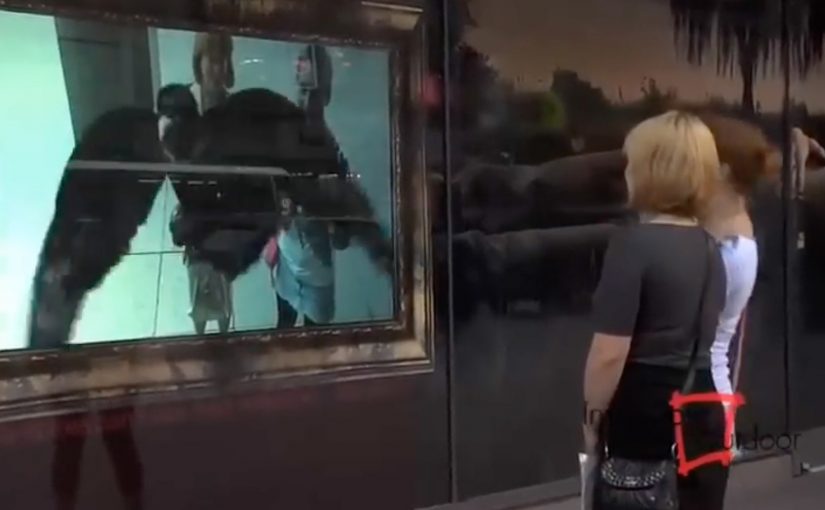
An outdoor advertising campaign by Inwindow Outdoor for CW’s Vampire Diaries appears in Los Angeles and New York. It uses augmented reality to trigger the on-screen display. Here, augmented reality functions as the activation cue that starts the display at the right moment.

The idea. Outdoor that reacts

The execution uses augmented reality as the activation layer. Instead of treating the screen as a static placement, the display is triggered through AR to create a moment that stands out in public space.

The real question is whether the AR layer changes what the outdoor screen does, or just decorates the same placement.

How it works. A trigger drives the screen

The on-screen content is not always running. It is initiated when the AR trigger is detected, turning a standard outdoor screen into a timed reveal rather than a constant loop.

In global entertainment marketing, outdoor activations like this work best when the trigger creates a clear before-and-after moment people can notice in a few seconds.

Where it runs

The installation appears in two major markets. Los Angeles and New York.

Why it lands

AR is worth the added complexity in outdoor only when it changes the behavior of the medium in public space. A triggered reveal creates contrast versus always-on loops, which is what makes the moment feel different rather than merely placed.

Extractable takeaway: Use AR as an activation layer that creates a noticeable state change on the screen, so the placement reads as a triggered experience, not static media.

What to apply in your next OOH activation

  • Design for a visible state change: Make the triggered moment look materially different from the idle screen state.
  • Keep the trigger simple: The audience should not need instructions to notice that something just changed.
  • Treat AR as the switch: Use AR to initiate the moment, not as decorative overlay on an unchanged placement.

A few fast answers before you act

What is this campaign?

An outdoor advertising campaign for CW’s Vampire Diaries by Inwindow Outdoor that uses augmented reality to trigger an on-screen display.

Where does it appear?

Los Angeles and New York.

What role does augmented reality play?

It is used as the activation layer that triggers the on-screen display.

Who executes it?

Inwindow Outdoor.

What is the core takeaway?

Use AR as an activation layer that turns an outdoor screen from static media into a triggered experience.