
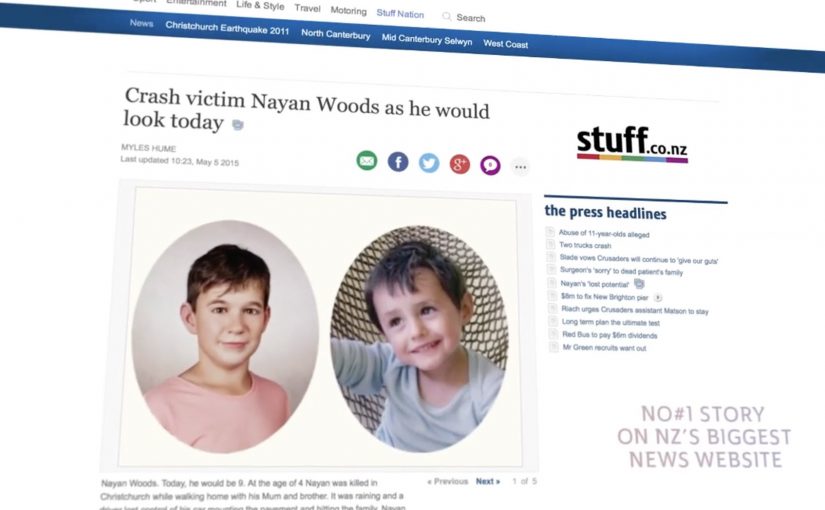
Brake New Zealand: Living Memories

Five families sit down to meet someone they have not seen in years. Not in footage, and not in memory. They are shown a new portrait of what their child would look like today if the crash had not happened.

That is the emotional core of “Living Memories”, a campaign created for New Zealand road safety charity Brake with Y&R New Zealand. Five bereaved families volunteer their stories and photographs. A forensic age progression specialist creates an age-progressed sketch for each child, then Weta Digital applies a film-grade 3D character workflow to render those sketches into lifelike portraits.

From forensic sketch to a portrait that feels real

The mechanics are deliberately simple and respectful. Start with family photos. Build a plausible “today” version using forensic age progression. Then use a VFX-grade craft process to land realism: facial structure, skin texture, hair, lighting, and the small imperfections that make an image feel like a person, not a concept.

In interviews about the project, the team describes avoiding the usual driver-centric shock formula. Instead, the work reframes a fatal crash as a theft of future, not only a loss of life. The portraits are the device that makes that reframing unavoidable, which is why the work lands as empathy instead of another warning people learn to tune out.

In road safety communication, behaviour change work gets stronger when it makes consequences specific, personal, and imaginable, rather than statistical and abstract.

Why it lands without lecturing

The real question is how to make the cost of a crash feel immediate before another family has to imagine the years that never happened. It works because it replaces generic warning language with a concrete counterfactual. That counterfactual means a specific life that should have continued. You are not asked to fear injury. You are asked to face a specific life that could have continued. That shift moves the message from compliance to empathy, and empathy is harder to shrug off. This is a stronger road safety move than another driver-centric shock ad because it turns consequence into empathy instead of noise.

Extractable takeaway: If you need behaviour change, pick one vivid, human “missing future” moment your audience can picture in seconds, and build your creative device around making that moment feel undeniably real.

The brand and charity intent behind the emotion

Brake’s job is awareness plus support for people affected by road trauma. This execution earns attention without spectacle, and it gives the charity a clear platform story to carry through the week. For Y&R, it is a case study in how craft and restraint can outperform volume, especially when budgets are limited.

What to steal for your next high-stakes message

  • Stop telling people to “be careful”. Show the specific, lifelong cost of one decision.
  • Use a single, truthful device. Here, it is age progression plus realism, not a pile of tactics.
  • Cast real stakeholders, not actors. Voluntary participation carries moral weight and credibility.
  • Let craft carry the persuasion. When realism is the point, invest in the details that make it believable.
  • Build the story for earned reach. The reveal moment is inherently newsworthy and shareable.

A few fast answers before you act

What is “Living Memories” in one sentence?

It is a Brake New Zealand road safety campaign that uses forensic age progression and Weta Digital craft to show what five children killed in crashes might look like today.

What is the core mechanism?

Family photos become age-progressed forensic sketches, then those sketches are rendered into realistic portraits so the audience can emotionally grasp “lost futures”, not just “lost lives”.

Why use portraits instead of crash scenes?

Portraits shift the message from fear to empathy. They make the consequence personal and imaginable, which tends to travel further than generic warnings.

How do you keep work like this from feeling exploitative?

Consent and dignity are the guardrails. Participation must be voluntary, families must control boundaries, and the storytelling must centre the person lost, not the brand or the spectacle.

What is the most reusable lesson for other topics?

When you need serious behaviour change, replace abstract statistics with a single, concrete “this is what is missing” moment that people can picture instantly.
Sony: The Bottled Walkman

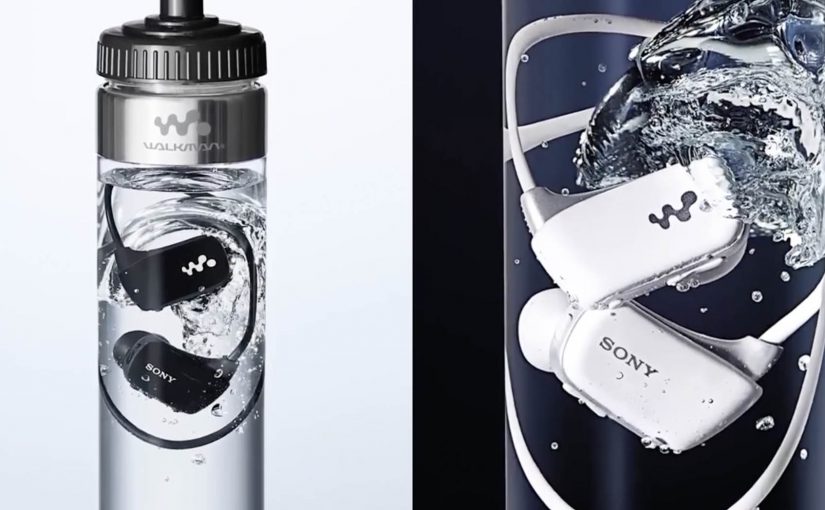
To promote Sony’s NWZ-W270 MP3 waterproof Walkman, DraftFCB Auckland packaged it inside bottles full of water. The bottles were then placed in special vending machines at pools and gyms across New Zealand.

The idea turns packaging into proof. The product sits submerged in plain sight, so the waterproof benefit is demonstrated before you even consider buying it.

Packaging that performs the demo

The mechanism is as literal as it is effective. Take a promise that people doubt. “Waterproof”. Then make the product live inside the condition that normally destroys electronics. The bottle becomes both display unit and credibility device. Here, a credibility device means packaging that makes the claim feel true before any copy has to explain it. That works because the same object that holds the product also removes the shopper’s main doubt at the point of purchase, and the vending machine puts it exactly where the need is strongest.

In consumer electronics marketing, the fastest way to overcome skepticism is to replace explanation with visible proof at the point of decision.

Why it lands

It works because it collapses three steps into one moment. Awareness, belief, and purchase happen in the same place, with the same object. Instead of asking people to trust a spec, the packaging forces a simple conclusion. If it can sit in water all day, it can survive your swim or workout.

Extractable takeaway: When your key benefit is hard to believe, design a retail experience where the product is shown living inside the benefit. Let the environment do the persuading, then make purchase frictionless.

What Sony is really optimizing

The real question is how to make a doubtful product claim feel true before a shopper has to trust the copy.

The vending placement is not just a media choice. It is distribution strategy. Pools and gyms are the exact contexts where “waterproof audio” feels immediately relevant, and where a vending machine purchase is already normalized as an impulse decision.

What to steal from the retail proof

  • Make the proof the packaging. If the box can demonstrate the claim, you do not need to over-argue it.
  • Sell where the benefit matters most. Context does half the persuasion if the product solves a live problem.
  • Reduce steps to purchase. Vending machines convert curiosity into action while attention is still high.
  • Keep the message one-beat simple. One look should be enough to understand the point.

A few fast answers before you act

What is “The Bottled Walkman”?

It is a Sony retail and packaging activation where the NWZ-W270 waterproof Walkman is sold sealed inside a bottle filled with water to demonstrate the product’s core benefit instantly.

Why use vending machines at pools and gyms?

Because that is where the waterproof use case is most obvious, and where a quick, impulse-style purchase fits the setting.

What problem does this solve versus a standard box on a shelf?

It removes doubt. The customer sees the product surviving in water before they ever read a claim.

Is this more “packaging innovation” or “experiential marketing”?

It is both. The packaging is the experience, and the experience is built to drive retail conversion.

How can another brand apply the same principle?

Identify the most doubted benefit, then engineer a display or pack that lets the product visibly live inside that benefit in the buying moment.

Burger King: Anti Pre-Roll Pre-Roll

Turning the internet’s biggest annoyance into the idea

The smartest digital work often starts with a blunt truth the audience already feels. Burger King’s take on pre-roll irritation is a clean example of that approach.

Pre-rolls on YouTube are considered as one of the most annoying things on the internet. Here, “pre-roll” means the ad that plays before a video starts.

It is a fact that even Burger King acknowledges, even though they profit enormously from them.

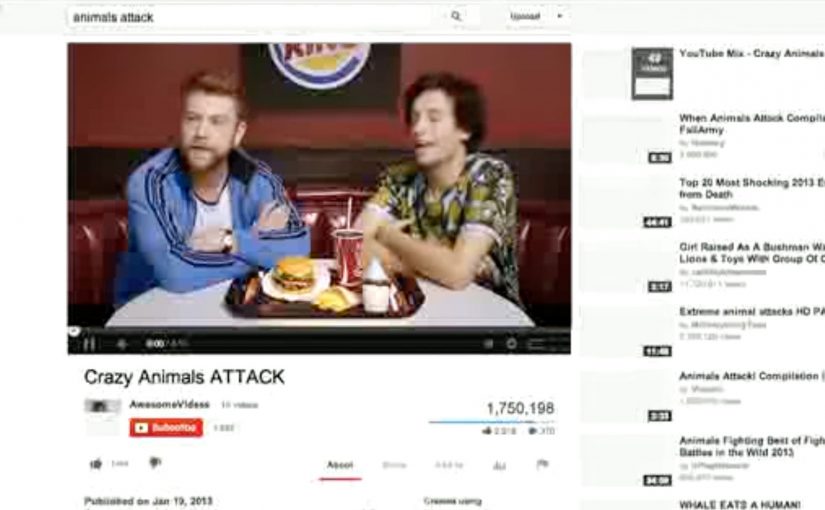
So for their campaign in New Zealand they decided to take a slightly different approach. They created 64 videos that made fun of the annoying pre-rolls and then tailored it to the video that was about to be watched.

How 64 tailored pre-rolls made interruption feel relevant

The mechanism was contextual creative at scale.

Instead of running one generic pre-roll, Burger King produced a library of short spots designed to match the viewer’s intent. The pre-roll referenced the type of content about to play, making the interruption feel less random and more like a commentary on the moment. By “contextual creative,” I mean variants that change based on the content about to be watched.

That shift matters because it changes the viewer’s question from “how fast can I skip?” to “what are they going to say about this one?”

The real question is: can you turn the skip reflex into a moment of curiosity.

In global consumer brands buying always-on video, contextual creative is the simplest way to make paid interruption feel earned.

Why self-aware interruption can win attention

Pre-roll is hated because it steals time and breaks flow.

Extractable takeaway: If you cannot remove an interruption, acknowledge it and pay it back with relevance.

This idea reduced that emotional tax by acknowledging the annoyance and using humor to create alignment with the viewer. When a brand says what people are already thinking, it earns a small amount of trust. Tailoring the message to the next video adds a second reward: relevance.

In other words, it does not remove the interruption. It makes the interruption entertaining enough to tolerate.

The business intent behind mocking the format

The intent was to keep the media advantage of pre-roll while reducing the brand penalty that comes with it.

By turning the format itself into the joke, Burger King aimed to increase watch time, reduce skip reflex, and improve brand sentiment. The audience still gets interrupted. But they feel understood, and that changes how the brand is remembered.

If you have to run pre-roll, self-aware contextual creative is a cleaner play than pretending the format is not annoying.

What to steal for your next video campaign

  • Start with a shared frustration. If the audience already dislikes the format, acknowledge it instead of pretending it is fine.
  • Make relevance the reward. Contextual tailoring can turn an interruption into a moment of curiosity.
  • Scale with a clear template. A creative system. Many variants. One consistent joke structure.
  • Earn seconds, not impressions. In pre-roll, attention quality is the real KPI.

A few fast answers before you act

What did Burger King do differently with pre-roll in New Zealand?

They created 64 pre-roll videos that mocked the annoyance of pre-roll and tailored the message to the video the viewer was about to watch.

What was the core mechanism?

A library of contextual creative variants designed to match viewer intent, making the interruption feel relevant and humorous.

Why does self-aware humor work in an interruptive format?

Because it aligns the brand with what viewers already feel, reducing irritation and increasing willingness to watch.

What business goal did this support?

Improving attention quality and sentiment while still benefiting from the reach and placement of pre-roll media.

What is the main takeaway for brands?

If you cannot remove an interruption, redesign it so the audience gets a payoff. Relevance and humor are two of the fastest payoffs available.