Turquoise Cottage: The Buddy Stamp

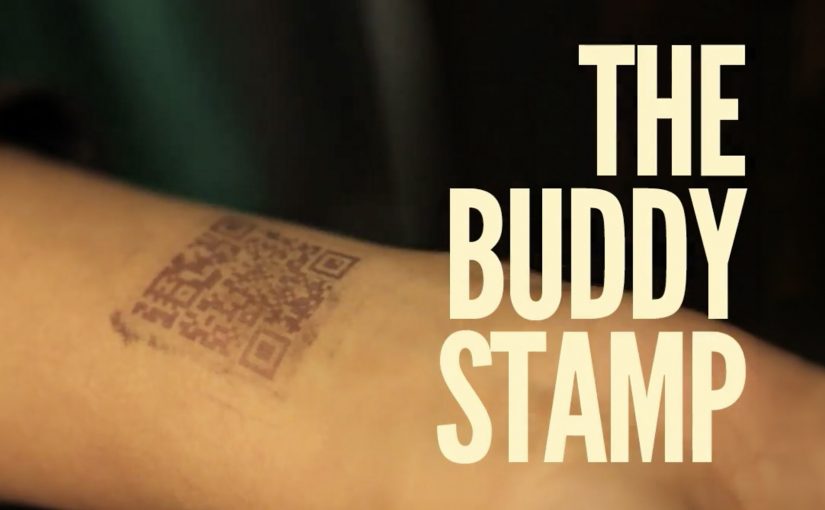
Most nightclubs in India put an admittance stamp on the wrist of their customers. Turquoise Cottage, a nightclub based in Vasant Vihar, New Delhi, was no different. However, with their digital agency, Webchutney, they created what then went on to be coined as “The Buddy Stamp”.

“The Buddy Stamp” was a unique QR code stamp which upon scanning gave customers useful and actionable information depending on the time of night.

A wrist stamp that keeps working after entry

The clever move is that the stamp is not branding. It is a tool. You already have it on you, so the lowest-effort scan becomes a doorway to whatever you need next, without searching, asking staff, or opening a menu.

How the QR code changes by time of night

The stamp routes to different content depending on when it is scanned. Early in the evening it can point to venue offers and drink specials. Later it can switch to practical “get home” help like cab options. It can even pivot the next day into recovery-style tips, which extends the brand’s care beyond the club.

In high-energy hospitality environments, time-based mobile utilities work when they reduce friction at the exact moment the customer needs help.

Why this lands

It respects how nights actually unfold. People do not want a generic microsite when they are out. They want one fast answer that fits the current hour, and they want it without social overhead.

Extractable takeaway: If you already “touch” the customer as part of entry, turn that touchpoint into a changing utility that anticipates the next decision, not just a logo.

What the club and agency are really optimizing

This is experience design disguised as a stamp. It upgrades service without adding staff steps, and it makes responsibility and convenience feel like part of the venue’s personality, not a lecture.

The real question is how a venue can turn a mandatory entry ritual into timely help people will actually use.

What venue teams can steal from this

  • Attach the utility to an unavoidable ritual. Admission is the perfect moment because everyone participates.
  • Use time as the personalization layer. You do not need profiles when the clock predicts needs well enough.
  • Design for the “next 30 minutes”. The best content is the thing people would otherwise ask a friend.
  • Extend care past the venue. Post-night help builds goodwill that outlasts the party.

A few fast answers before you act

What is The Buddy Stamp?

It is a QR code wrist stamp used as a nightclub admission stamp that links to different, practical information depending on the time of night.

What makes it different from a normal QR code poster?

The QR code lives on the customer. That makes it always available, and the time-based switching makes it feel context-aware without asking the user to do anything extra.

Why does “time of night” matter as a design input?

Because needs change predictably across an evening. Offers and discovery matter early. Getting home safely matters late. The best experiences match that rhythm.

What is the transferable pattern for other venues or brands?

Turn an existing physical touchpoint into a dynamic utility. Let one simple scan deliver the most useful next step for the customer’s current situation.

Why is the wrist stamp a better utility surface than a poster?

Because entry already puts it on every guest. That makes the utility universal, immediate, and easy to revisit without asking people to find a sign again.

Durex: Xerud, The Lover’s Fortune Teller

Durex Taiwan’s sales were in decline, but reminding a young audience about the risks of unprotected sex came with a local constraint. Sampling works well in many markets, yet in Taiwan the category carries enough taboo that street promoters struggled to start conversations and hit daily contact targets.

OgilvyAction’s answer is a low-budget distribution idea disguised as something people already seek out. An unbranded fortune-teller machine called “Xerud”, placed in bars, nightclubs and karaoke venues.

The machine prints playful “predictions” about relationships and sex, then dispenses a discreet sample condom pack matched to the forecast and the product benefit. The pack also includes simple educational tips about safer sex.

A sampling machine that earns permission first

The core mechanic is not the giveaway. It is the cover story, meaning the socially acceptable reason to approach the machine. People approach “Xerud” for curiosity, not for condoms, which changes the emotional posture from embarrassment to play. The venue context does the rest. Lower inhibition, higher openness, and a built-in reason to talk about love.

In mainstream consumer marketing, the most efficient way to handle taboo topics is to place them inside a familiar cultural ritual, then let that ritual create permission to engage.

Why it lands

This works because it swaps confrontation for self-service. Nobody is being “sold” to in public. The user opts in privately, receives a personalized message, and gets a product sample that feels relevant rather than generic. The experience also makes the first sentence easier. It gives people a prompt to laugh about, which is often the fastest route into a serious subject.

Extractable takeaway: When your category is socially sensitive, design distribution that people can initiate themselves, inside a context that already legitimizes the topic. That one design choice can triple throughput versus direct promotion.

What the numbers are really saying

The case write-up reports that an average street promoter hands out about 23 samples per hour, while “Xerud” dispenses about 77. The real question is whether the framing removes enough shame to make self-initiated sampling scale better than promoter-led outreach. The headline is not “a clever machine”. It is that the right framing can outperform manpower when the bottleneck is shame, not reach.

What taboo-category marketers can steal

  • Use an unbranded entry point. Let the experience earn consent before the logo arrives.
  • Match the venue to the conversation. Nightlife lowers barriers for relationship and intimacy topics.
  • Personalize the “why this sample”. Relevance reduces awkwardness and increases retention.
  • Make education feel like a bonus. Tips land better when they arrive inside a playful ritual.
  • Measure throughput honestly. Compare against the real baseline, not a best-case scenario.

A few fast answers before you act

What is Xerud, in one sentence?

An unbranded fortune-teller machine placed in nightlife venues that prints love predictions and discreetly dispenses matched condom samples with safer sex tips.

Why does the “fortune teller” disguise matter?

It gives people a culturally familiar reason to approach, which reduces embarrassment and makes the first interaction feel voluntary rather than confrontational.

What is the main marketing objective?

Increase trial and restart conversation in a category where social taboo blocks normal sampling and awareness tactics.

What is the biggest execution risk?

If the machine feels too obviously “a condom stunt”, the protective disguise collapses and usage drops. The socially acceptable reason to approach has to feel legitimate in the venue.

How can other taboo categories borrow this approach?

Pick a trusted ritual or interface people already opt into, then embed sampling and education as an unobtrusive “extra” that follows the ritual’s logic.