In the past, Hellmann’s has used novel ways to encourage consumers to use their mayonnaise for more than just sandwiches. Now, for their latest campaign, they team up with Ogilvy Brazil to create Recitweet.
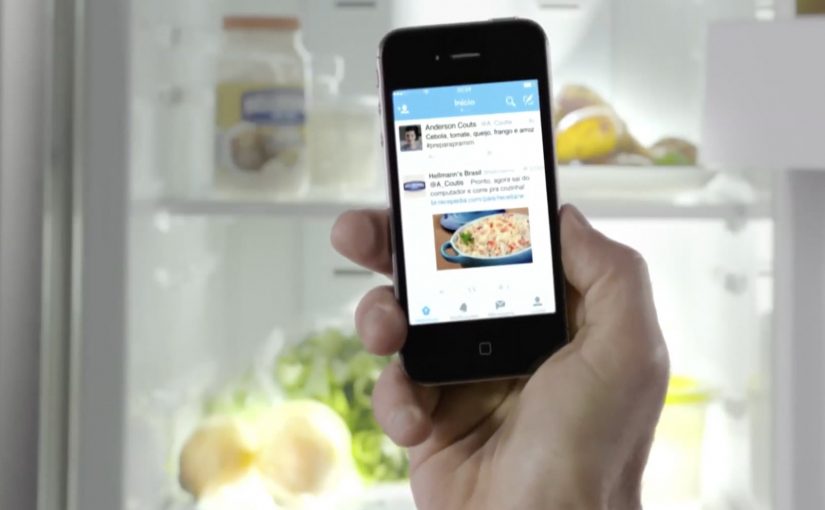
The use case is instantly familiar. You open the fridge, you see ingredients, and you still do not know what to cook. With Recitweet, consumers tweet their ingredients with the hashtag #PreparaPraMim (“prepare for me” in Portuguese). Hellmann’s replies with a recipe that is designed to use those exact ingredients.
A recipe engine built on a social reply
The mechanism is ingredient matching through a public tweet. The input is a short list of what you have at home. The output is a tailored recipe suggestion delivered back as a tweet reply, so the brand behaves like a lightweight cooking helper rather than a broadcaster.
In FMCG food brands, this utility-led social pattern turns content into a small service that appears at the exact moment the consumer is stuck.
The real question is: can a food brand reliably remove the “what should I cook” hurdle in the channel where people already ask for help. When you can answer fast and specifically, the helper role beats another round of broadcast recipes.
Why it lands
It respects the consumer’s real problem. “I have food, I lack an idea.” The campaign does not start with a product claim. It starts with a decision obstacle, then uses the brand to remove it. That makes the engagement feel earned, because the interaction produces something usable in the next 30 minutes.
Extractable takeaway: If your product is an ingredient, win by solving the “what do I do with what I already have” question. Make the brand the shortest path from inventory to action, using the channel where the consumer already asks for help.
Stealable moves for social utility
- Constrain the input. A short list of ingredients forces clarity and makes the interaction easy to start.
- Return a specific next step. A recipe beats a generic tip, because it includes implied quantities, sequence, and outcome.
- Make the service feel personal, at scale. The reply is the moment of value. Treat it like customer service, not advertising copy.
- Design for repeat behavior. The best activations are not one-off stunts. They create a habit loop people can use again the next time the fridge looks random.
A few fast answers before you act
What is Recitweet in one sentence?
Recitweet is a Twitter-based recipe helper that takes a list of tweeted ingredients and replies with a recipe designed to use them.
Why use a hashtag like #PreparaPraMim?
It standardizes the request so the brand can find, process, and respond to it consistently, while keeping participation friction low.
What makes this more effective than posting recipes on a website?
It is contextual and initiated by the consumer. The recipe arrives when the person is actively deciding what to cook, using what they say they have.
What is the minimum viable version of this idea?
A constrained ingredient input and a fast, specific reply that gives one clear next step, without forcing the consumer to leave the channel to “go search.”
What is the biggest operational risk?
Response quality and response time. If replies are slow, irrelevant, or repetitive, the “service” framing collapses and it starts to feel like a gimmick.