Adshels with Difference: IKEA LEDshel and ANAR

Adshels with Difference: IKEA LEDshel and ANAR

Here are two adshel innovations currently doing rounds online. An adshel is a street shelter advertising unit, typically at a bus stop. Both use the media surface itself as the message, not just a place to hang a poster.

Ikea LEDshel

IKEA swapped the regular neon tubes found in adshels around Vienna with its LED range. The product becomes the medium, and the demonstration happens at full scale in the street. Credited to DDB Tribal Vienna, the move turns “better light” into something you can experience, not just read about.

Only for children

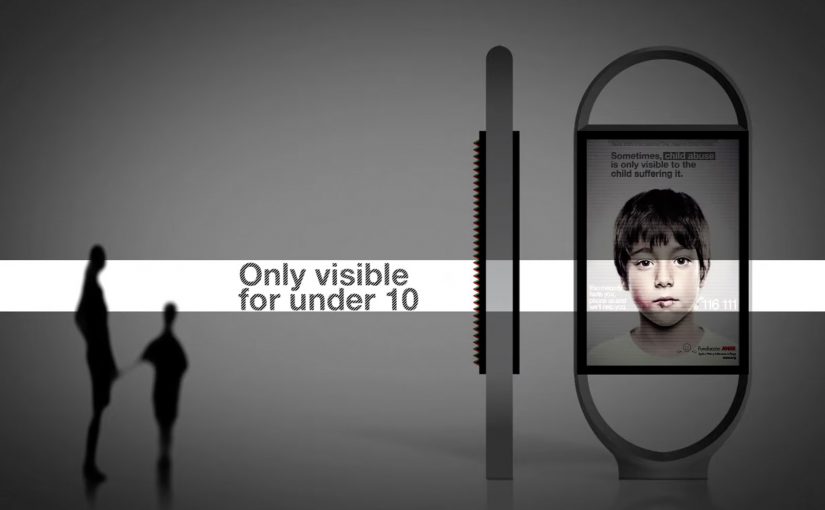
In an effort to give abused children a safer way to reach out for help, the Spanish organization Fundación ANAR created an ad that displays a different message to adults and children at the same time.

The poster uses a lenticular top layer to show different images at varying angles and heights. An adult sees the image of a sad child with the line: “sometimes, child abuse is only visible to the child suffering it.” A child sees bruises and a direct help message with a phone number. This work is widely credited to Grey Group España.

What makes these “adshels with difference”

The shared mechanism is simple: upgrade the shelter from a passive frame into an active communicator. One example changes the hardware so the ad site demonstrates the product. The other changes the optical layer so the message adapts to who is looking.

Because the shelter itself performs the claim, the viewer can grasp the argument in seconds, which is why these ideas travel in public space.

In European city out-of-home media, small physical changes to the site often persuade more powerfully than a clever headline alone.

The real question is whether your out-of-home idea still works when the media unit itself has to do the explaining.

These are the out-of-home ideas worth borrowing because the medium carries the proof, not just the copy.

Why it lands

It makes the proof unavoidable. IKEA does not claim “LED looks better.” It lets the street lighting show it. ANAR does not claim “victims can’t speak safely.” It builds a channel that protects the child in plain sight.

It respects context. Adshels sit in public space where attention is brief. Both ideas communicate at a glance, because the medium itself is doing part of the explanation.

It uses targeting without data. The lenticular execution “targets” by viewpoint and height, not cookies. It is a physical interface decision, not a digital one.

Extractable takeaway: Out-of-home innovations travel when the site behavior carries the argument. If the medium demonstrates the product, or adapts the message to the viewer’s vantage point, the campaign becomes self-explanatory and hard to ignore.

Borrowable adshel moves

  • Turn the placement into the demo. If the product has a sensory benefit, make the environment show it.
  • Use physical segmentation. Angle, distance, height, light, and motion can personalize a message without any personal data.
  • Design for public constraints. Fast comprehension wins. The structure should communicate before the copy finishes.
  • Let the medium do the persuasion. When the execution is the proof, the message needs fewer claims.

A few fast answers before you act

What is an “adshel” in this context?

A street shelter advertising unit, typically at bus stops, that combines a poster frame with lighting and protective glass.

What is the IKEA LEDshel idea actually demonstrating?

LED lighting quality in real conditions. The shelter itself becomes a live showroom for the light range.

How does the ANAR poster show two messages at once?

Through a lenticular layer that changes what is visible based on viewing angle and height, so adults and children see different visuals and text.

Why is this more effective than a standard awareness poster?

Because it delivers a help message to the child without alerting the accompanying adult, which is the real constraint in the situation.

What is the reusable principle across both examples?

Make the media unit behave like the idea. When the medium demonstrates, adapts, or protects, the campaign does not need heavy explanation.
UTEC: Potable Water Generator

UTEC: Potable Water Generator

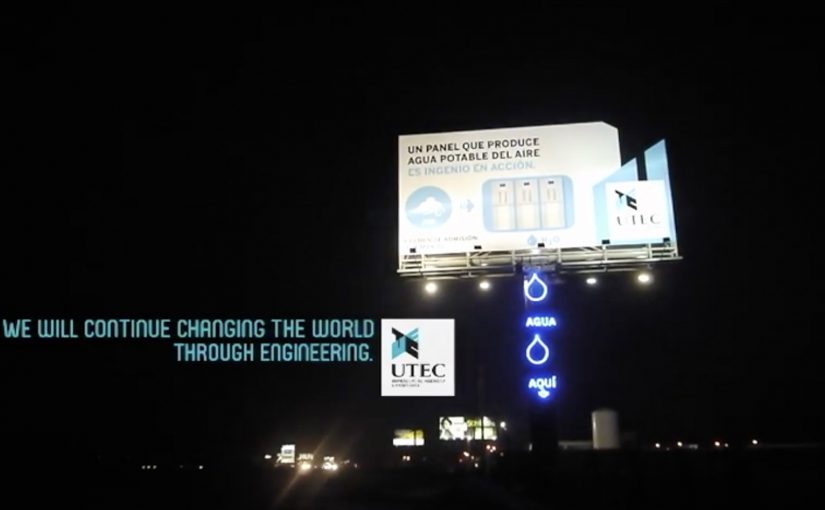
A billboard in Lima does not just advertise. It dispenses drinking water.

UTEC, the University of Engineering and Technology in Peru, believes engineering can change the world. To make that belief tangible and to attract future applicants, it tackles a local constraint. Lima is often described as a major capital city set on desert conditions, where rainfall is minimal, but atmospheric humidity can be extremely high. UTEC uses that humidity to build a billboard that is described as producing potable water out of air.

Definition tightening: This is atmospheric water generation. Moist air is captured, condensed into liquid, then treated so it can be dispensed as drinking water.

A recruitment message you can literally use

The mechanism is a public proof. Turn an engineering principle into civic micro-infrastructure, then let the infrastructure demonstrate the promise of the institution. You do not need to argue that engineering matters. You show it working on the street.

In urban Latin American contexts where infrastructure gaps are visible in daily life, recruitment marketing becomes more believable when the brand contributes something functional before it asks for attention.

Why it lands

It works because the outcome is immediate and legible. People understand “clean water from a billboard” faster than they understand any tagline about innovation. The board also flips the usual direction of advertising. Instead of taking attention, it gives utility, and that trade feels fair.

Extractable takeaway: If you want trust fast, build a single, real-world demonstration where your capability produces a public benefit, then make the benefit the headline.

What UTEC is really positioning

This is engineering as an identity. The university is not selling courses first. It is selling a worldview. Engineers notice constraints. Engineers build systems. Engineers improve the lived environment. The billboard makes that identity concrete, and the recruiting message follows naturally.

The real question is whether you can prove a capability in public before you ask people to believe the story around it.

What to borrow from UTEC’s water billboard

  • Pick one local constraint people feel. Water access is not theoretical. It is daily.
  • Make the demonstration self-explanatory. No app. No instructions. Just a visible result.
  • Let utility replace persuasion. If the object helps, the story spreads on its own.
  • Design the “proof moment”. A tap and a container beat any infographic.

A few fast answers before you act

What is “Potable Water Generator”?

It is a UTEC outdoor activation in Peru where a billboard is described as producing drinkable water from atmospheric humidity, turning engineering into a visible public service.

What is the core mechanism?

Capture humid air. Condense it into water. Treat it for safe consumption. Dispense it from the billboard so the benefit is immediate and observable.

Why is this also recruitment marketing?

Because it demonstrates the kind of engineering UTEC wants to be known for. Practical, applied, and aimed at solving local problems, not just talking about them.

What makes this more memorable than a standard awareness billboard?

The outcome is functional. People can use it, which turns the campaign into an experience and a story, not just a message.

What is the most reusable lesson?

When your brand promise is capability, prove it with one tangible demonstration that improves the environment people are standing in.

Jameson Irish Whiskey: Blippar Space Invaders

Jameson Irish Whiskey: Blippar Space Invaders

Outdoor ads that turn into a game

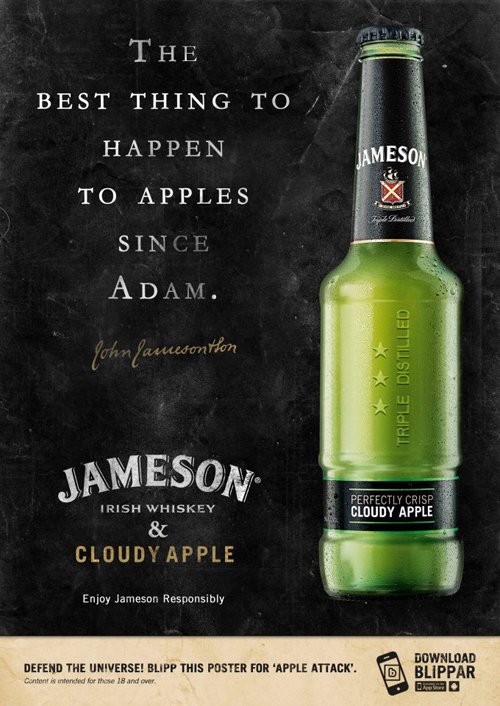
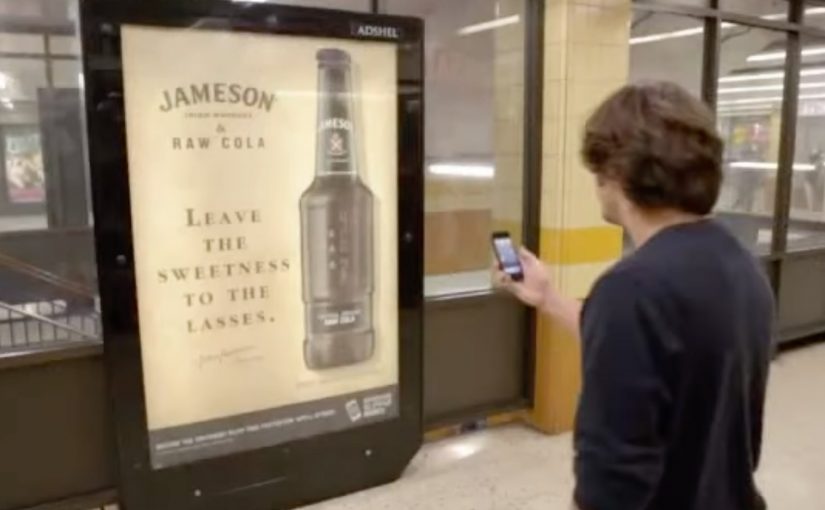
Jameson Irish Whiskey recently launched a huge outdoor campaign, teaming up with augmented reality specialist Blippar for image recognition technology. Here, “image recognition” means the app matches what the camera sees to known Jameson creative and then triggers the experience.

People with the Blippar app could scan any Jameson Irish Whiskey ad or bottle and immediately get immersed in a Jameson Irish Whiskey version of Space Invaders.

How the Blippar scan-to-play mechanic worked

The mechanism was straightforward. A phone camera scan triggered Blippar’s image recognition. That recognition launched an interactive AR experience on the device.

In practice, the physical media became the “portal”. The ad or bottle was the entry point. The phone was the display and controller. The game was the reward.

In spirits and FMCG outdoor campaigns, scan-to-play AR works best when the payoff is immediate and the controls feel natural in a standing, on-the-street context.

Why it landed, and where the interaction could be smoother

The win is immediacy. Scan and you are inside the brand world without a long setup. Because recognition launches the game instantly, it converts a fleeting poster glance into play time.

Extractable takeaway: If you turn physical media into a “scan to reward” portal, deliver the reward within seconds and design controls that match the real-world posture of the moment.

After playing the game myself, I found it would have been a better experience if they had allowed viewer control through tilting the phone around, instead of non-stop tapping at the screen. However, it is still good to see more brands innovating like this.

What the brand was really buying

This was not just about novelty. It was about extending an outdoor campaign into a personal, interactive moment that people could not get from a standard print execution.

The real question is whether your outdoor media can earn voluntary attention, not just reach.

The intent was clear. Increase attention time. Add talk value. Create a reason to engage with the bottle and the ads beyond the first glance.

This pattern is worth copying when you can reward immediately and keep interaction comfortable enough to sustain play.

What to steal for your next AR activation

  • Make the entry point universal. “Scan any ad or bottle” reduces friction and increases participation.
  • Reward immediately. If the scan does not pay off fast, the experience loses the environment it depends on.
  • Design the controls for comfort. Favor natural motion and simple gestures over repetitive tapping when sessions run longer than a few seconds.
  • Use AR to earn time, not impressions. The value is the extra seconds of focused attention, not the novelty headline.

If you would like to give it a try, download the Blippar app on your smartphone and scan the below bottle to start playing.

Jameson Irish Whiskey


A few fast answers before you act

What was Jameson doing with Blippar?

They used Blippar’s image recognition so people could scan Jameson ads or bottles and launch an interactive AR game experience on a smartphone.

What was the core mechanic?

Scan the physical creative with the Blippar app. The scan triggers recognition. The phone immediately launches the game.

Why does scan-to-play work well for outdoor advertising?

It turns a passive glance into an active moment. The ad becomes a portal to content that holds attention longer than print.

What interaction improvement could make this smoother?

More natural viewer control, such as tilting the phone, can reduce fatigue compared to continuous tapping during gameplay.

What is the main takeaway for brands?

Use AR to earn time and engagement by delivering an immediate reward, and make the control scheme comfortable enough to sustain play.