
Eterna Cadencia: The Book That Cannot Wait

Eterna Cadencia: The Book That Cannot Wait

Last month I wrote about Austria Solar’s annual report, whose pages became visible only when exposed to sunlight.

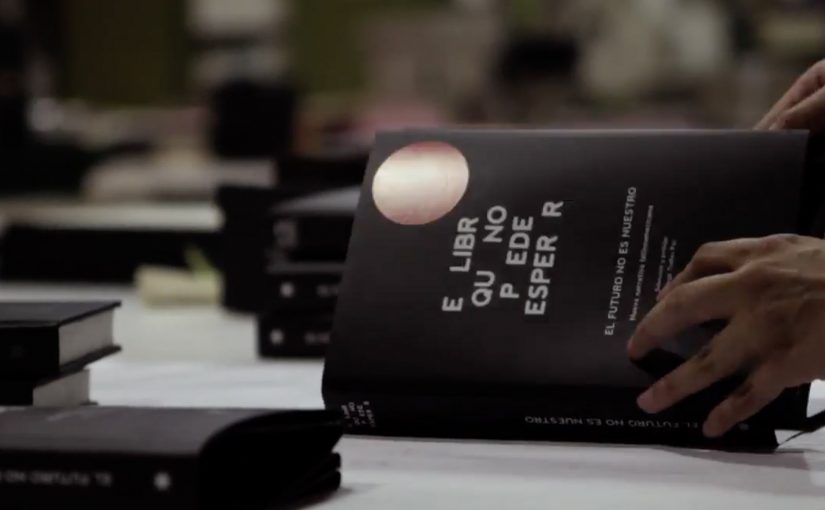
Now Buenos Aires based bookshop and publisher Eterna Cadencia has released “El libro que no puede esperar”, “The book that cannot wait”. It is an anthology of new fiction printed in ink that disappears after two months of opening the book.

The mechanic: ink that fades once you open the seal

How is that possible. Here, the mechanic is a built-in physical rule: the books are described as being silk-screened using a special ink, then sealed in air-tight packaging. Once opened, the printed material reacts with the atmosphere and starts to fade. The result is that, after roughly two months, the text vanishes.

In global publishing markets where e-books change reading habits, physical formats regain attention when they add a constraint that digital cannot replicate.

Why it lands: urgency turns reading into an action, not an intention

The idea does not compete with e-readers on convenience. It competes on psychology. A normal book is patient. This one is not. It creates a deadline, and deadlines change behavior. Because the fading is irreversible, the deadline feels real rather than promotional.

Extractable takeaway: If you want people to stop postponing a behavior, make the cost of waiting tangible and irreversible. Scarcity works best when it is built into the product, not added as a marketing slogan.

What it is really doing for new authors

The real question is whether a physical constraint can turn passive interest into immediate reading.

This is smart publishing design, not a gimmick for its own sake.

At face value, this is a publishing gimmick. Underneath, it is an argument for momentum. New fiction struggles when it sits unread on a shelf, because “I’ll get to it” often becomes “never”. A time-limited book reframes the purchase as a commitment to read now, which is exactly what emerging authors need.

The project is also widely described as being developed with DraftFCB, which helps explain why the execution feels like an idea engineered for cultural pickup, not just for bookstore shelves.

What to steal if you are marketing anything physical

  • Build the message into the object: the product itself should carry the story, even without a campaign.
  • Make the constraint legible: people should understand the rule in one sentence.
  • Turn delay into loss: urgency works when waiting has a real consequence.
  • Use packaging as a trigger: opening the seal is a clear “start” moment, and that matters for behavior.
  • Design for retellability: “a book that disappears if you do not read it” spreads on its own.

A few fast answers before you act

What is “The Book That Cannot Wait”?

It is a print book sealed in packaging where the text is printed with ink that starts fading once the seal is opened, so the content disappears after around two months.

Why would a publisher want ink that disappears?

To create urgency. The mechanic nudges readers to start and finish the book quickly, which can help emerging authors get read instead of getting postponed.

Is this a product innovation or a marketing campaign?

It is both. The object is the media. The disappearing ink turns the product into the message, which then earns coverage and conversation.

What is the biggest risk of copying this idea?

Trust. If people feel tricked or if the fade behavior is inconsistent, the stunt becomes resentment. The rules need to be clearly communicated and reliably delivered.

Where else does “built-in urgency” work?

It can work in limited editions, time-bound access, perishability, or experiences that change after first use. It is strongest when the constraint feels meaningful, not arbitrary.
Carlsberg: Probably the Best Ad in the World

Carlsberg: Probably the Best Ad in the World

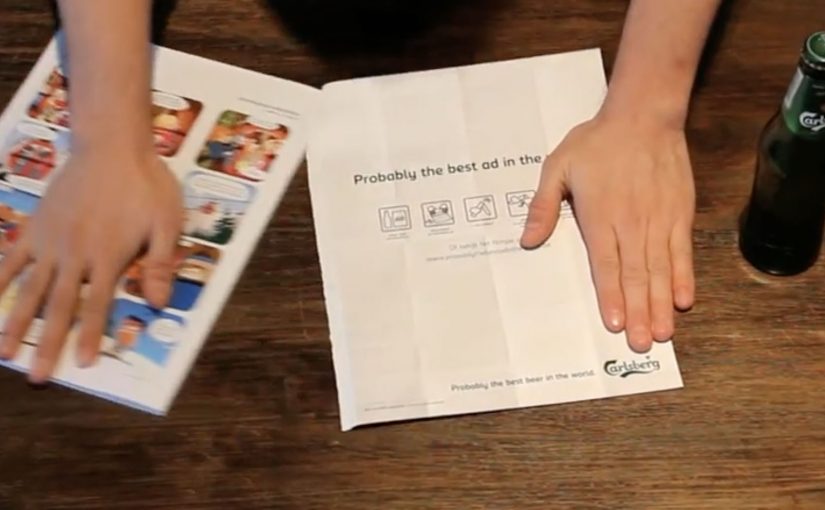
You can debate the effectiveness of magazine advertising all day long, but this Carlsberg ad from Belgian agency Duval Guillaume is undeniably useful. The advertisement reportedly appeared in Men’s magazine Menzo. Follow its instructions and you can use the flimsy piece of paper to open a bottle of Carlsberg.

How the idea is built

The mechanic is the message: the page is not just media. It is a tool. The ad teaches you how to tear and fold it into a working opener, which turns “try the product” into a physical action inside the magazine.

In print-led FMCG marketing, the fastest way to earn attention is to make the medium do something the viewer can immediately test.

The real question is whether your medium can deliver proof, not promises.

Why it lands

It turns a claim into proof. There is no argument to win and no feature list to remember. You either open the bottle, or you do not.

Extractable takeaway: Interactive print works when the action is the demonstration. Here, “interactive print” means the paper itself triggers a physical action, not just reading or looking. If the audience can do the product benefit with their hands in under a minute, the ad becomes memorable because it turns attention into a small personal “win”.

It forces participation. The reader cannot stay passive. The ad only completes itself when someone follows the instructions.

It earns a second look. Utility creates curiosity. People keep it, show it, and try it, which is the opposite of how most print gets treated.

Try it out yourself by downloading the advertisement from: www.probablythebestadintheworld.be.

But does it make this “probably the best ad in the world”? Not if you consider the likely inspiration below. The video shows someone using a piece of paper to open a bottle of Carlsberg.

Steal this: make the page a tool

  • Make the medium carry the benefit. If the product is about a moment. Build an execution that creates that moment.
  • Keep the instruction set frictionless. Fewer steps. Clear folds. Obvious success condition.
  • Design for sharing in the real world. The best print innovations get passed around physically before they get shared digitally.

A few fast answers before you act

What makes this print ad “interactive”?

It is not just read. It is folded into a functional bottle opener, so the reader completes the ad by doing something.

Why is a bottle-opener mechanic effective for beer?

It links the ad directly to the consumption moment. The ad becomes part of opening the product, not just talking about it.

Does utility automatically make a print ad effective?

It improves attention and memorability, but effectiveness still depends on distribution and whether people actually try it.

What is the biggest risk with “useful” print ideas?

If the build is fiddly or fails, the novelty collapses. The interaction must work reliably with minimal effort.

What is the most transferable lesson for advertisers?

When possible, replace messaging with demonstration. If the audience can experience the benefit through a simple action, persuasion gets easier.

McDonald’s: Everyone Saves for Something

McDonald’s: Everyone Saves for Something

When a low price becomes a citywide signal

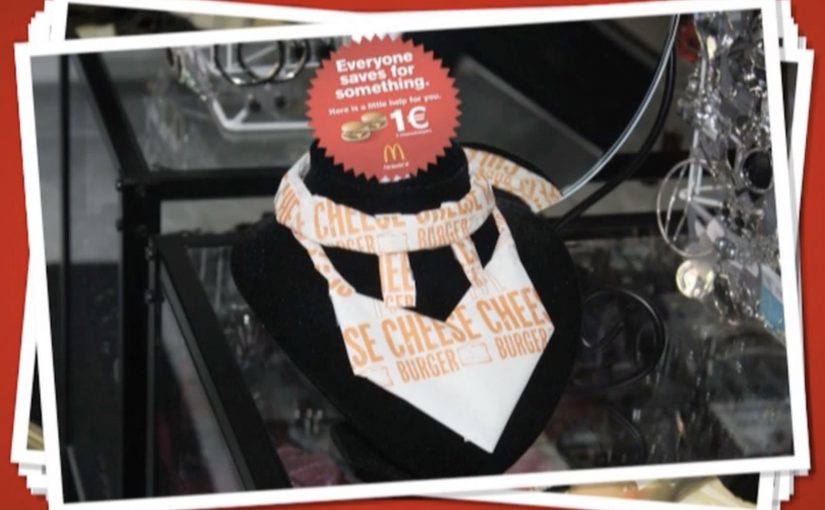
McDonald’s and ad agency DDB Budapest launched a campaign to promote an offer of two cheeseburgers for one Euro. The positioning is simple. A price so low it gives the target audience room to save for things they want.

The twist: turn wrapping paper into media

The challenge is standing out from the usual low-price playbook. Instead of shouting numbers louder, the campaign uses the most recognizable asset McDonald’s already owns. Its iconic cheeseburger wrapping paper.

They wrap “cool stuff” in the same paper, partner with different shops around the city, and turn those places into unusual touchpoints that visually encode the offer without needing to repeat the offer everywhere.

In European QSR value campaigns, price messaging sticks better when it is turned into a tangible object people encounter in everyday places.

The real question is how you make a low-price offer feel noticeable without turning it into just another louder discount ad.

Why it lands

This works because it makes value feel physical. The stronger move is to let a distinctive brand asset carry the value message instead of repeating the price claim more aggressively. People are trained to ignore price claims, but they notice an object that looks out of place. The wrapping paper acts like a visual shortcut. If you recognize it, you decode the brand instantly. If you do not, you still feel the oddness and look closer. The partner locations add credibility because the idea appears to have “escaped” the ad slot and entered the city.

Extractable takeaway: If your message is “cheap,” avoid saying “cheap” more often. Use a distinctive brand asset as a portable visual language, then place it where people already shop, browse, and compare.

What to steal from this value stunt

  • Make one brand asset do the heavy lifting. A recognizable wrapper can outperform another headline about price.
  • Build distributed touchpoints. Partner locations create repeated exposures that do not feel like repeated ads.
  • Let the audience complete the message. Recognition is satisfying. It increases memorability with less copy.
  • Keep the offer legible, but not loud. The stunt earns attention. The offer converts it.

A few fast answers before you act

What is “Everyone Saves for Something” for McDonald’s?

It is a value campaign that promotes an ultra-low cheeseburger deal by wrapping everyday objects in McDonald’s iconic cheeseburger paper and placing them across partner shops as unusual city touchpoints.

What is the core mechanic?

Use distinctive packaging as a portable visual language, then deploy it outside the restaurant to make the offer feel present across the city.

Why does wrapping objects work better than another price poster?

Because it turns a price message into a curiosity trigger. People notice the anomaly first, then decode the brand and offer.

What’s the transferable principle for other brands?

If your message is functional and easy to ignore, embed it inside a recognizable asset and place it where people already make choices.

What is the main risk with this approach?

If the asset is not instantly recognizable, or the placements feel random, the idea becomes decoration instead of a decodable message.