
NotCo: AI-Powered Fragrance With Purpose

Back in 2014, Oscar Mayer showed how powerful scent becomes when it stops behaving like a message and starts behaving like a mechanic. Its bacon alarm let people wake up to the sound of sizzling bacon on the stove, while the brand inserted itself into a daily habit instead of a one-off impression.

Fast forward to 2026, and NotCo is pushing scent from playful activation into AI-enabled product development. With Giuseppe AI and its fragrance formulation work with Cramer, a Latin American multinational in flavors and fragrances, NotCo is showing how a sensory cue can become a personalized product proposition. Giuseppe is positioned as an end-to-end product development platform, meaning it helps move from idea to formulation to scalable output within one workflow.

How Aroma Best Friend makes Giuseppe easy to understand

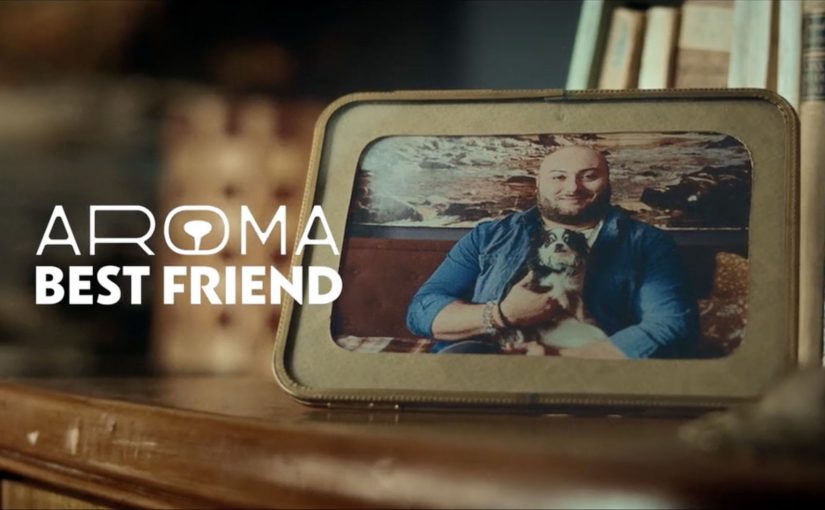
Aroma Best Friend does not try to explain AI through dashboards, technical architecture, or speed claims. It explains the platform through a very human tension point: a dog struggling when its owner leaves home. The story is simple, emotional, and commercially useful at the same time.

The mechanism is easy to retell. The campaign presents a personalized fragrance generated from the owner’s scent profile so a dog is left with an olfactory stand-in for presence. An olfactory profile is the identifiable mix of volatile compounds associated with a person’s scent signature.

In consumer goods, this is the kind of AI story that travels fastest because it links formulation capability to a sensory outcome people can instantly understand.

The film frames the idea around making your dog happier, which keeps the promise focused on an outcome instead of a technology demo.

Why this lands harder than most AI demos

Most AI campaigns still make the same mistake. They tell you the model is powerful and then expect the audience to infer the commercial value. Aroma Best Friend works better because the technology claim is attached to a felt problem and a tangible output, which makes the platform easier to understand and easier to remember.

Extractable takeaway: AI becomes more persuasive when it is shown solving a problem people can emotionally grasp, not when it is described as a capability stack. The sharper the human tension and the clearer the output, the stronger the commercial story.

Scent is not decorative here. It is the proof. That turns Giuseppe from a backstage R&D engine into the source of a new kind of product experience. NotCo is not just advertising AI. It is advertising the kinds of product experiences AI can now help create.

The business play behind the emotion

The real question is whether an AI platform can turn an invisible R&D capability into a story that brand teams, partners, and future buyers instantly understand.

The official waitlist for the product makes clear that joining does not guarantee access to or availability of the product. That suggests this is as much about validating demand and capturing interest as it is about launching a ready-to-scale offer.

That is the smarter move. Aroma Best Friend works as a campaign, a proof-of-capability demo, and a demand signal test at the same time. Instead of saying that Giuseppe enables personalization and creativity, NotCo dramatizes a specific version of personalization that people can picture, repeat, and remember.

What FMCG and CPG teams should borrow now

  • Turn capability into consequence. Do not market the model first. Market the human outcome the model makes possible.
  • Use one emotionally legible use case to explain a broader platform. Aroma Best Friend is about dogs on the surface, but the deeper message is that Giuseppe can work where formulation and personalization matter.
  • Make the demo do double duty. The strongest AI campaigns are not just communications assets. They also test demand, capture leads, and reposition the company.
  • Choose outputs people can feel, not just read about. Text is easy. Fragrance is harder. That is exactly why this idea carries more weight.
  • Prove customization through specificity. Personalized fragrance is stronger than generic AI-powered personalization because it gives the claim an object, a use case, and a memory.

A few fast answers before you act

What is Aroma Best Friend really marketing?

Aroma Best Friend markets a personalized scent concept for pet separation anxiety on the surface, but at a deeper level it markets Giuseppe AI as a product-development engine that can move into formulation-led use cases.

Why does this explain Giuseppe better than a typical AI demo?

It explains Giuseppe better because it connects the technology to a human problem and a sensory output. That makes the platform easier to understand than abstract claims about intelligence, speed, or creativity.

Is Aroma Best Friend already a scaled product launch?

Not yet in any proven commercial sense. The waitlist language makes clear that joining does not guarantee access to or availability of the product, so the initiative still functions as a signal test as much as a launch story.

Why is scent such a strong choice for this idea?

Scent carries memory, comfort, and presence more directly than most brand cues. That gives the campaign emotional force and turns formulation technology into something people can instantly imagine in use.

What should marketers and innovation teams steal from this?

They should steal the structure. Start with a real human tension, let the technology solve it in a tangible way, and make the output specific enough that people can retell the story in one sentence.
Crafted By My Heart

A ring becomes more than a ring when the pattern is literally yours.

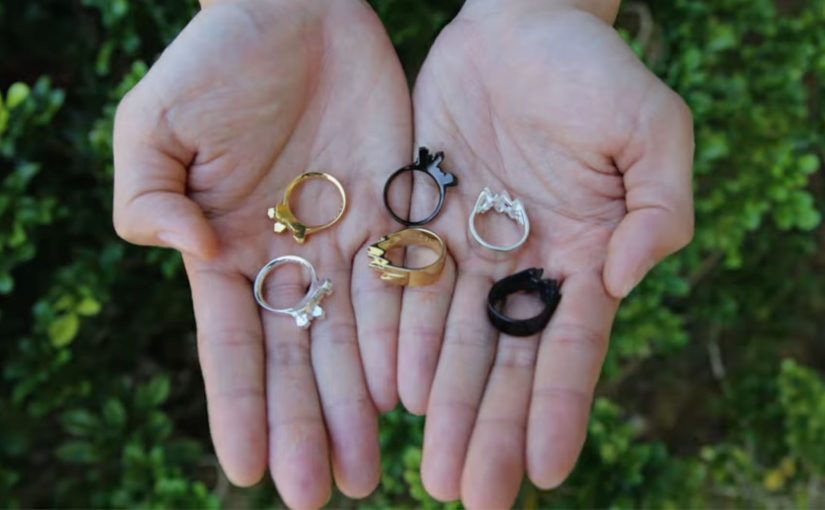
“Crafted By My Heart” is an app launched by DDB Group Hong Kong that lets you customize jewelry with your own heartbeat. You place a finger over the smartphone’s camera and flash. The app detects subtle changes in finger coloration, measures your heartbeat, then translates its intensity and rhythm into a unique digital rendering. That rendering becomes the basis for a one-of-a-kind ring.

From pulse to pattern

Turn a biometric signal into a personal design language, then manufacture it as a physical object. By “biometric signal,” I mean a measurable body output, like heart rhythm, captured directly from the user.

How the experience works

The flow is intentionally simple. The mechanism matters because it converts an invisible, emotional idea (“this is us”) into visible proof that feels undeniably personal.

  1. Capture
    You use the phone’s flash and camera to read your heartbeat through small changes in skin coloration.
  2. Translate
    The heartbeat becomes a digital rendering that is unique to your rhythm.
  3. Craft
    That rendering is used to create a ring. It is not a generic engraving. It is a form generated by your own signal.

In premium gifting categories, the story attached to the object often matters as much as the object itself.

The product choices are clear and bounded

The app offers two base designs, Surge and Sierra, with three finishes: gold, silver, or black silver. Rings cost between HK$1,198 and HK$1,588 (listed as US$155 to US$205), and take around 15 to 20 working days to complete.

Why a heartbeat beats engraving

Most “personalization” is decorative choice. This is structural personalization, where the customer input generates the form, which raises perceived meaning and makes the purchase easier to justify.

Extractable takeaway: If the customer’s input does not change the form of the product, you are offering decoration, not personalization, and it will be competed away by more options and lower price.

Personalization is structural, not cosmetic

A lot of customization is color, text, or surface. Here, the customer input generates the form. That feels materially more personal.

Technology removes the intimidation barrier

Biometrics and jewelry-making sound complex. The interaction is not. One finger. One phone. A result you can explain in one sentence.

The story is built-in

The product carries a narrative you can repeat instantly. It is your heartbeat, turned into a physical object. That makes it inherently giftable.

The deeper point

The real question is: how do you turn personalization from “more choices” into emotional proof people will pay for?

Meaningful personalization rarely comes from expanding menus. It comes from finding a signal that matters emotionally, translating it into a design system, and making the creation process easy enough that people actually do it.

What to steal

  • Start with a signal, not a style. Pick an input customers already value emotionally (not just data you happen to have).
  • Translate the signal into form. Make the input change geometry or structure, not just surface decoration.
  • Keep choices bounded. Offer a small set of base options so the “unique” part stays legible.
  • Design for retellability. If the owner cannot explain it in one sentence, it will not travel socially.

A few fast answers before you act

What is the core mechanic behind Crafted By My Heart?

The phone’s camera and flash detect heartbeat via subtle changes in finger coloration, then translate the rhythm into a digital rendering used to craft a ring.

What does the customer actually customize?

They select a base design and finish. The unique part is the heartbeat-generated rendering that drives the final piece.

What are the available designs and finishes?

Two base designs, Surge and Sierra. Three finishes, gold, silver, and black silver.

What are the price and production timelines?

HK$1,198 to HK$1,588 (US$155 to US$205). Around 15 to 20 working days.

What is the transferable lesson for other categories?

If you can capture a personal signal that people care about and make it visibly change the product’s form, you turn “customization” into meaning, not configuration.

Klépierre: Inspiration Corridor

One of the biggest problems brick-and-mortar retailers face is that many consumers prefer the convenience of shopping online. So Klépierre, a European specialist in shopping center properties, decides to give customers a unique and personal window shopping experience that simultaneously advertises multiple brands available in its shopping center.

How the corridor turns browsing into a saved journey

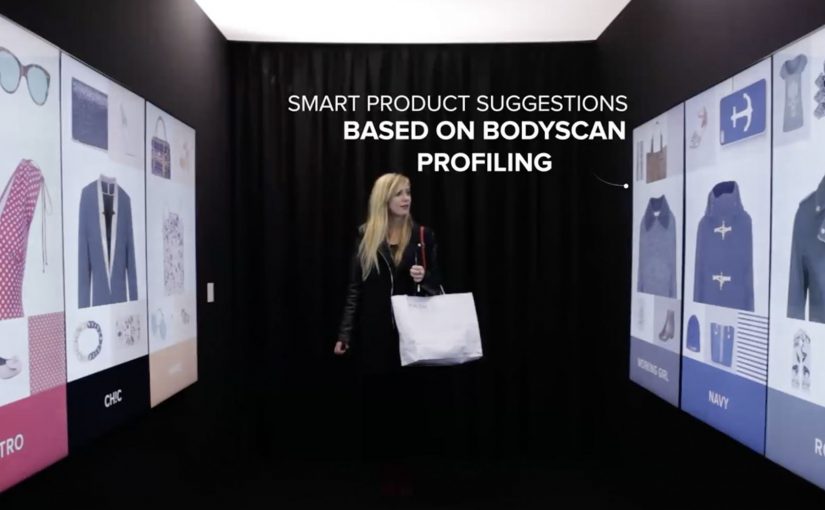
The mechanism is a walk-in “inspiration corridor” that is described as using an infrared camera and live detection to adapt the interface to the visitor. The walls then show a curated set of products pulled from real-time inventory, and the visitor can tap items to add them to a personal shopping list. At the end, the selection syncs to the Klépierre mobile app, which then helps locate the chosen products in the mall.

Here, live detection means the corridor reads the visitor in the moment and adjusts what appears on the walls accordingly.

In European shopping centers, the winning retail experiences blend discovery and convenience, giving visitors a reason to browse physically while keeping the efficiency people associate with online shopping.

The result is a browse-first experience that keeps discovery and wayfinding in one flow.

Why this beats “more screens”

This lands because it does not ask shoppers to learn a new behavior. It upgrades a familiar one. Window shopping. The corridor simply makes browsing feel personal and actionable, then removes the “I’ll never find it again” friction by saving the picks and turning them into a navigable list. The stronger move is not to add more screens, but to make physical browsing easier to finish. That works because discovery, selection, and store-finding happen in one continuous interaction.

Extractable takeaway: If your category is losing visits to online convenience, do not fight browsing. Instrument it. Let people browse with their body language and taps, then hand them a saved list that makes the rest of the journey feel effortless.

The quiet business intent

The real question is whether one shared experience can turn mall-level discovery into measurable value for multiple tenants at once.

Klépierre is not only showcasing technology. It is selling a multi-brand promise. One interaction can route a shopper to several tenants, lift discovery across stores, and create measurable signals of interest without needing a single retailer to run the whole experience alone.

What mall operators should borrow

  • Curate across brands. A mall operator can create value by packaging discovery in a way individual stores cannot do alone.
  • Connect to live stock. Recommendations feel credible when they map to what is actually available right now.
  • Make saving the default. “Tap to add” is the key bridge from inspiration to purchase intent.
  • Close the loop with wayfinding. The experience should end with “here’s where to get it”, not just “wasn’t that cool”.
  • Design for low friction. The corridor should work in seconds, even for someone who did not plan to engage.

A few fast answers before you act

What is Klépierre’s Inspiration Corridor?

It is an in-mall interactive experience that personalizes product recommendations on surrounding walls and lets visitors tap to save items to a shopping list that syncs to the mall’s app.

How does the personalization work?

It is described as using live detection, for example via an infrared camera, to adapt recommendations and the interface to the visitor in the moment.

What problem does this solve versus standard mall advertising?

It turns passive promotion into active selection. Instead of only seeing brand messages, shoppers leave with a saved list and a practical path to find products.

What is the main metric to watch?

Saved items per session, app sync rates, store visit lift for featured tenants, and conversion from saved lists to purchases where measurement is possible.

What should you be careful about when deploying live detection?

Be explicit about what is being detected and why, keep the experience usable without any personal account setup, and avoid language that implies storing identities or profiling.