

Gladiator: USB Can

Gladiator: USB Can

A “USB” that is really packaging as a key

Mexican energy drink Gladiator created a “USB Can” which is not exactly a USB, but it features a packaging innovation that gives users storage when they need it.

Users who want to use the USB Can are directed to a website where they connect with Facebook and scan their can to upload files from their computer. Those uploaded files can then be unlocked on another computer by scanning the same USB Can.

The mechanic: one physical object, reused as authentication

The core move is simple. The can becomes the key. You do not carry a drive. You carry the proof that you own the can, and that proof unlocks your files. It is a packaging-as-authentication mechanic that turns a throwaway object into a repeatable login ritual.

By that, I mean the pack itself functions as the proof needed to unlock the digital benefit.

In FMCG promotions, utility mechanics work best when the physical object is the credential and the digital benefit is immediate.

The real question is whether a disposable pack can earn repeat use by acting like a credential instead of just carrying a logo.

Why it lands

It creates an easy story people can retell. “This can unlocks your files.” The idea also fits the energy drink mindset because it borrows tech culture cues without needing to become a real hardware product. You get the surprise of a “USB” promise, then the reveal that it is a smart access system rather than storage inside the can. Because the can itself becomes the credential, this is smarter than a standard promo-code promotion: it is easier to remember, explain, and reuse.

Extractable takeaway: When you want packaging to be more than a label, give it a repeatable job. Make the pack the key that unlocks a benefit people can use more than once.

What packaging-led utility brands can borrow

  • Make the object the credential. A physical key reduces friction and increases memorability.
  • Keep the ritual quick. Scan, unlock, done. If it takes too long, it stops feeling like a perk.
  • Use a benefit people can demo. “Unlock files on another computer” is easy to explain and easy to show.
  • Let the gimmick resolve into utility. The “USB” hook earns attention. The access mechanic earns credibility.

A few fast answers before you act

What is Gladiator’s “USB Can”?

It is a packaging-led activation where the can is scanned to unlock an online file upload and retrieval flow, so the can behaves like a reusable access key rather than a literal USB drive.

What is the core creative mechanic?

Packaging as authentication. The same physical can is scanned again to unlock access to the files later.

Why does this work better than a normal promo code?

Because the object is the code. It is harder to ignore, easier to remember, and it turns the pack into a functional part of the experience.

What is the transferable principle for other brands?

Give packaging an action people can repeat. If the pack becomes a key, token, or trigger, it can extend the campaign beyond first purchase.

What is the main risk of this kind of execution?

If scanning or login is unreliable, the “magic” collapses. The tech flow has to be faster than the novelty.
Hyundai i30: Light Drive Test Drive Game

Hyundai i30: Light Drive Test Drive Game

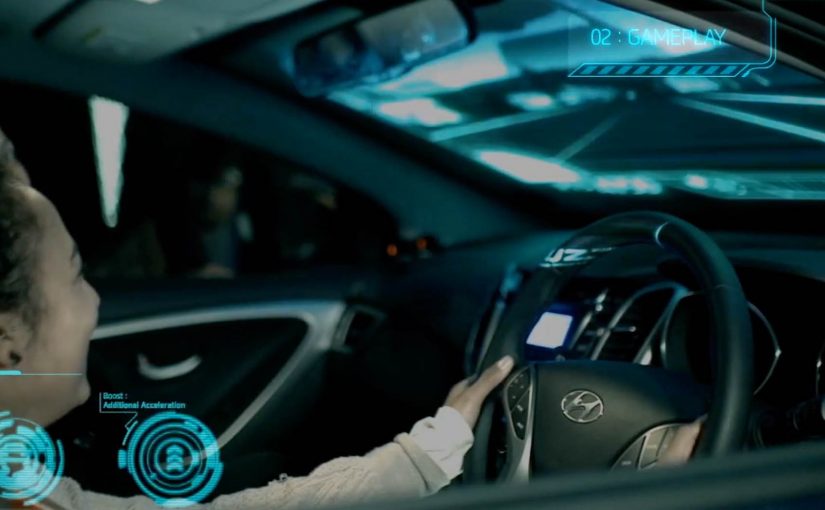
To launch the new generation i30 in South Africa, Hyundai reinvented the test drive with the Hyundai i30 Light Drive. It is a virtual racing game projected onto the i30’s front windscreen, played from inside the car.

Instead of waiting for people to visit a dealership, Hyundai took the experience to South Africa’s hottest nightspots in Johannesburg, Durban and Cape Town. Anyone, at any time, could step in, experience the car’s slick dynamic features, and compete for the top spot on the leader board.

A test drive that behaves like entertainment

The mechanism is smart because the “drive” is no longer a polite sales ritual. It is a game with stakes, progress, and a score. Two-man teams work together on the track to collect icons. Each icon represents an i30 specification, and collecting them powers up the car and boosts the team’s score.

That turns feature education into gameplay. Specs are not listed. They are earned. The i30’s story is embedded in the rules of the experience.

In experiential automotive launches, product education lands best when features are translated into gameplay mechanics that people can learn by doing.

The real question is whether your product education can be designed as a loop people want to repeat in public.

Why it lands in a nightlife setting

Nightspots are where people are already in a social, competitive mood. A leader board gives instant status. A queue becomes part of the atmosphere rather than a frustration, because everyone can watch and anticipate their turn. Hyundai amplified that social energy with HD cameras streaming the live test drive to a large screen outside the car. The crowd can watch the teams compete in real time, which makes the experience feel bigger than the physical footprint of the vehicle.

Extractable takeaway: In social environments, make learning visible. Use a score people can chase and a spectator view people can watch, so the product story spreads while the line forms.

Facebook Connect turns players into publishers

Hyundai linked the i30 Light Drive to Facebook Connect, turning participation into a shareable identity moment. Photos of the teams are posted instantly onto their timelines, extending the experience beyond the venue and turning “I played” into “I was seen playing”.

Even the waiting time is engineered. People queuing to play are educated and entertained with a touch screen brochure on the i30’s rear windscreen. It is product information, but delivered in an interactive format that matches the energy of the activation.

The intent: make the i30 feel modern before anyone compares price

The business intent is clear. Hyundai wants the i30 to feel like the next generation. Not just in features, but in attitude. By turning a test drive into an interactive spectacle, the brand signals innovation, tech confidence, and social relevance. The car becomes an event.

Moves to borrow from Hyundai i30 Light Drive

  • Move the experience to the audience. Take the product out of the showroom and into high-traffic social contexts.
  • Teach through interaction. Turn product features into game mechanics so learning is part of play.
  • Design for spectators. Live screens and streaming make the activation bigger than the footprint.
  • Make sharing native. Identity-based posting works best when it is built into the flow, not bolted on later.
  • Use the queue. If people are waiting, give them interactive content that reinforces the product story.

A few fast answers before you act

What is Hyundai i30 Light Drive?

It is an in-car virtual racing game projected onto the i30’s windscreen, designed to turn a test drive into an interactive competition.

How does it communicate the i30’s features?

Teams collect icons on the track that represent i30 specifications. Those icons act as power-ups, so the specs become part of the game’s reward loop.

Why target nightspots instead of dealerships?

Nightlife venues provide a ready-made social crowd. Competition and spectacle fit the context, and the experience spreads through observation and sharing.

What role does live streaming play in the activation?

HD cameras stream the gameplay to a large screen outside, turning players into performers and the crowd into an audience, which increases participation and energy.

What is the key takeaway for experiential launches?

Design an experience that people want to play and watch. When product education is embedded inside a compelling interaction loop, attention follows naturally.