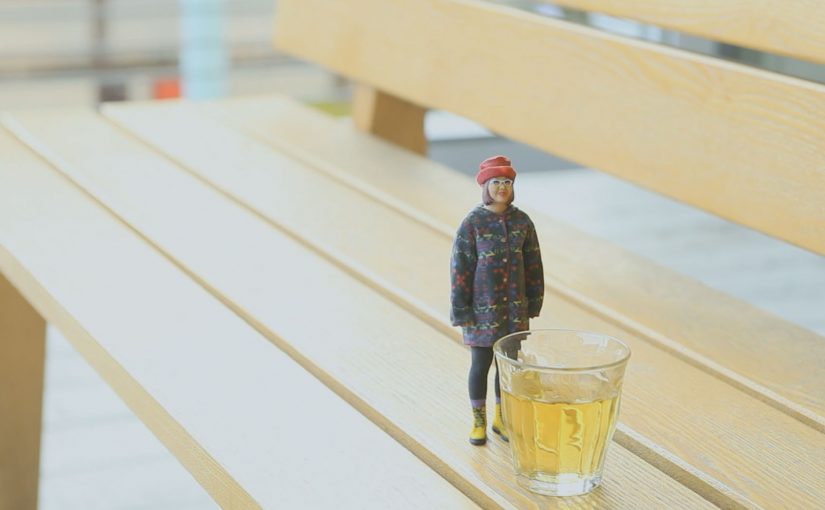
Ever wanted a life-like miniature action figure of yourself. Not a cartoon avatar, but a small, physical replica you can hold in your hand.
Omote 3D makes that possible by setting up what is billed as the world’s first 3D printing photo booth for a limited time at the Eye of Gyre exhibition space in Harajuku, Japan.
From November 24 through January 14, 2013, people with reservations can have their bodies scanned into a computer. Then, instead of a photograph, they receive miniature replicas of themselves.
The miniature replicas are available in three sizes. S (10cm), M (15cm) and L (20cm) for US$264, US$402 and US$528, respectively.
Why this “photo booth” feels like a shift
The mechanism is the message. A booth that normally captures a flat memory instead captures a 3D dataset, then materializes it into a keepsake. The output is not content you scroll past. It is content you place on a shelf.
Extractable takeaway: When you turn personalization into a physical object, it stops being content and starts being a keepsake.
Definition-tightening: this is not 3D “photography” in the traditional sense. It is full-body 3D scanning plus full-color 3D printing, packaged in a familiar photo booth ritual.
In consumer experiences where attention is scarce and products are increasingly interchangeable, turning personalization into a tangible object is a reliable way to earn talk value, meaning people have a reason to talk about it later.
The real question is whether your experience ends as something people display, not something they forget after the moment passes.
What makes it work as an exhibition idea
The booth turns the visitor into the exhibit. It also turns waiting and anticipation into part of the experience, because the “print” is a manufactured object, not an instant print strip. That shift makes the end result feel earned and premium.
Stealable patterns from Omote 3D’s booth
- Use a familiar ritual as the wrapper. “Photo booth” is instantly understood, even when the technology is new.
- Make the output physical. Physical artifacts extend the campaign life long after the pop-up closes.
- Price by meaning, not by material. People pay for identity and memory, not for plastic and ink.
- Gate with reservations when demand is the story. Scarcity plus scheduling can reinforce that this is special.
Additionally click here to see how Polskie Radio in Poland has used 3D printing technology to market their website.
A few fast answers before you act
What is Omote 3D’s 3D printing photo booth?
It is a pop-up booth that scans your body in 3D, then produces a full-color miniature figure of you instead of a standard photo print.
Why call it a “photo booth” if it prints a figure?
Because it borrows the familiar booth ritual. You step in, you get captured, and you leave with a keepsake. The technology changes, but the mental model stays simple.
How is the miniature created?
Your body is scanned into a 3D model, then the final figure is manufactured via 3D printing in full color and finished as a physical object.
What sizes are offered and what do they cost?
Three sizes are offered. 10cm, 15cm, and 20cm. The listed prices are US$264, US$402, and US$528, respectively.
What is the marketing lesson for brands?
Personalization becomes more valuable when it becomes tangible. A physical output turns novelty tech into an object people keep, show, and talk about.