

Improv Everywhere: Too Old to Sit on Santa

Improv Everywhere: Too Old to Sit on Santa

Flash mob specialists Improv Everywhere created this video in a New Jersey mall, where they abruptly transformed the space into a stage for a short musical about Santa.

How the stunt is constructed

The mechanism is classic Improv Everywhere: a normal public setting, a sudden coordinated performance, and a premise that is instantly understandable to bystanders. The “too old to sit on Santa” hook makes the scene both seasonal and slightly awkward, which is exactly what gives it energy. Because the premise is instantly understandable, bystanders decide in seconds whether to watch, film, or share, which is why this format travels.

In public-space entertainment formats, the fastest route to shareability is a concept people can describe in one sentence and recognize in one frame.

The real question is whether a premise people can recognize in one frame can earn genuine reactions fast enough to carry the story.

Prioritize instant legibility and real bystander proof over production polish.

Why it lands

It works because it flips a predictable holiday ritual into musical theatre, so the audience understands the setup immediately and the reactions become the payoff.

Extractable takeaway: Viral public performances work when they remix a familiar ritual and then let real bystander reactions carry the authenticity. The premise must be instantly legible. The payoff must be emotional, not just clever.

It hijacks a familiar ritual. Mall Santas are predictable. Turning that ritual into musical theatre flips the expected script without needing any explanation.

It uses social friction as the joke. The humor comes from watching adults navigate a child-coded tradition, and then watching the crowd get pulled into the performance anyway. Here, “social friction” means the brief discomfort created when adult behavior collides with a kid-coded context.

It turns spectators into proof. The audience reactions are the credibility layer. You believe it because you see people genuinely surprised, laughing, and filming.

Borrowable moves from Too Old to Sit on Santa

  • Choose a setting with built-in footfall and expectation. The more predictable the normal scene, the stronger the contrast when it flips.
  • Write a one-line premise. If the concept cannot be explained in a sentence, it will not travel as a clip.
  • Stage for the camera, but keep it real. The best moments are still the unscripted reactions from people who did not know what was coming.
  • Keep the runtime tight. Short musical beats and quick escalation make the piece rewatchable.

A few fast answers before you act

What is Improv Everywhere known for?

Organized public “missions” that turn everyday spaces into staged moments. The work is designed to surprise bystanders and create shareable video.

Why does a mall work so well for a flash mob musical?

Malls have constant foot traffic, predictable routines, and lots of people already primed to watch. That makes the reveal and crowd reaction stronger.

What is the core hook of this specific piece?

A Santa-themed musical built around whether adults are “too old” to sit on Santa, which creates humor through awkwardness and nostalgia.

What is the difference between a flash mob and a staged commercial?

A flash mob relies on real-time disruption and authentic bystander response. The environment and audience reactions become part of the content.

What is the transferable lesson for brands?

If you want shareability, start from a familiar ritual, flip it with a simple premise, and let genuine reactions provide the proof and warmth.
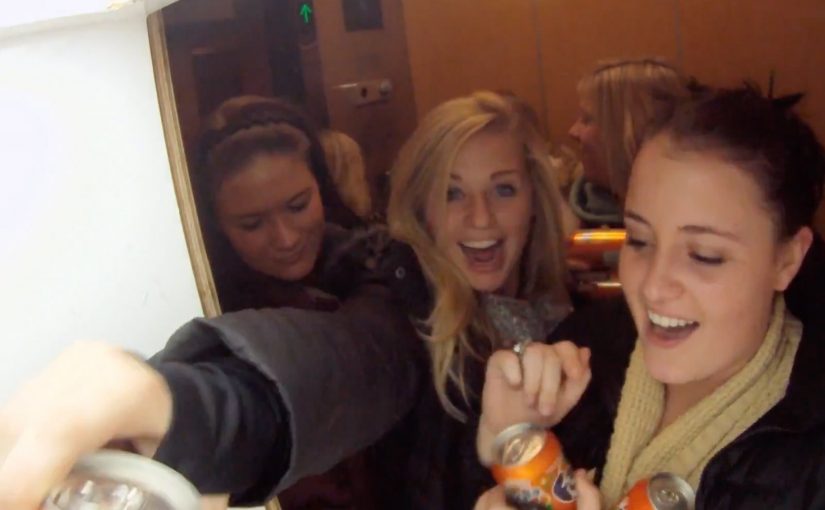
Fanta: Lift & Laugh

Fanta: Lift & Laugh

A school elevator that refuses to stay boring

Ogilvy Brazil sought to reinforce Fanta’s brand image of “joy” in the USA. So they came up with an elevator prank called “Lift & Laugh”.

An elevator in a school in Atlanta was chosen to arouse students curiosity and laughter. In the elevator they installed a device that responded to the movements and comments from the students.

The mechanic: a responsive space that reacts back

This works by turning a routine moment. waiting for an elevator ride. into an interaction loop. The environment listens, then answers in real time, so the people inside start experimenting to see what triggers the next reaction.

An ambient ad is a brand experience placed in an everyday setting, where the setting itself becomes the medium and the message is delivered through participation.

In youth and soft drink marketing, “joy” only sticks when it is felt in-the-moment, not just claimed in a tagline.

The real question is whether your experience design can make play discoverable without instructions.

Why the prank lands with students

It creates instant permission to play. The elevator is a confined stage, the reactions are immediate, and the group dynamic amplifies everything. If one person laughs, everyone joins, and the experience escalates without needing instruction.

Extractable takeaway: When the audience’s own movement or words trigger an immediate response, the fun feels earned and becomes more likely to be retold.

The business intent: make joy a repeatable brand behavior

This is not just a one-off gag. It is a proof point for a positioning idea. Fanta turns dull places into fun places. If the experience is good enough, the brand gets earned attention plus social retell value without needing to push product features.

In the end many students did not want to get off the elevator and asked for a repeat trip.

What to steal if you want an experience people replay

  • Make the interaction discoverable. People should learn the rules by trying, not by reading.
  • Reward experimentation fast. Short feedback loops create momentum.
  • Design for groups, not individuals. Laughter spreads socially. Build for that amplification.
  • Anchor the behavior to your brand. The “why” should map cleanly to what you stand for.

A few fast answers before you act

What is Fanta’s Lift & Laugh?

It is an elevator prank experience where the elevator reacts to students’ movements and comments, turning a normal ride into a playful, responsive brand moment for Fanta.

Where did the activation take place?

It was staged in a school in Atlanta, using a real elevator as the experience space.

How does the elevator prank create engagement?

It uses immediate cause and effect. People try something, the elevator responds, and the group starts experimenting together to trigger more reactions.

Why does this work especially well with students?

The elevator becomes a contained stage and laughter spreads socially. One reaction gives others permission to play, which escalates the experience quickly.

What makes this “ambient advertising” rather than a standard ad?

The everyday environment becomes the medium. The message is delivered through participation in a real situation, not through a screen or a slogan.

What should brands learn from this format?

If you want “fun” as a brand attribute, build it into a situation people already live. Then make participation the delivery mechanism, not a message about participation.

Golf Digest: Desert Disruption

Golf Digest: Desert Disruption

Golf Digest wanted to remind golf enthusiasts that they can improve their game with the magazine. Rather than saying it in a predictable headline, Memac Ogilvy Dubai chose a faster route to attention. A prank designed to disrupt the region’s biggest golf event and get people to pick up the magazine.

The point is not to out-shout the tournament. It’s to create a moment of interruption that only resolves when you engage with the brand asset sitting right there in your hands.

Disruption as distribution

A prank at a live event works when it forces a choice. Ignore it and stay confused. Or reach for the one object that explains what’s happening. In this case, the magazine becomes the “decoder”, meaning the one object that explains what’s happening, which makes pickup feel like participation, not like being sold to.

In sports event marketing, a well-timed interruption can convert spectators into participants, as long as the payoff is immediate and easy to understand.

Why this lands

This works because it ties the brand benefit to a behaviour you can measure. Magazine in hand. Pages opened. Content consumed. The prank is not the product. It is the trigger that makes people re-experience Golf Digest as a practical tool for better play, instead of as background media. The real question is whether the interruption makes the magazine feel more useful, not merely more visible.

Extractable takeaway: If you need to revive a “useful” product people have stopped actively choosing, design an event moment where the product is the simplest way to regain control and understand what’s going on.

What to steal from event disruption

  • Make the brand the resolution. The disruption should only make sense once someone engages with your asset.
  • Use the right arena. Do it where your core audience is already emotionally invested.
  • Keep the explanation short. If the prank needs a long briefing, the moment dies.
  • Turn interest into a physical action. Pickup, flip, keep. Behaviour beats impressions.

A few fast answers before you act

What is Golf Digest’s “Desert Disruption” idea?

It’s a prank-based event activation designed to interrupt attention at a major golf event and prompt spectators to pick up the magazine as the way to understand the moment.

Why use a prank to sell a magazine?

A prank creates immediate curiosity. If the magazine is positioned as the fastest explanation or payoff, pickup becomes a natural reaction.

What does this communicate about Golf Digest?

That it is not only entertainment. It is positioned as a practical resource for improving your game.

What is the key success condition for this pattern?

The disruption must be legible quickly, and the magazine must clearly resolve the confusion with an instant payoff.

What can go wrong with event disruption?

If it feels unsafe, disrespectful to the sport, or unclear, it can trigger annoyance instead of curiosity. The tone and timing matter as much as the idea.