
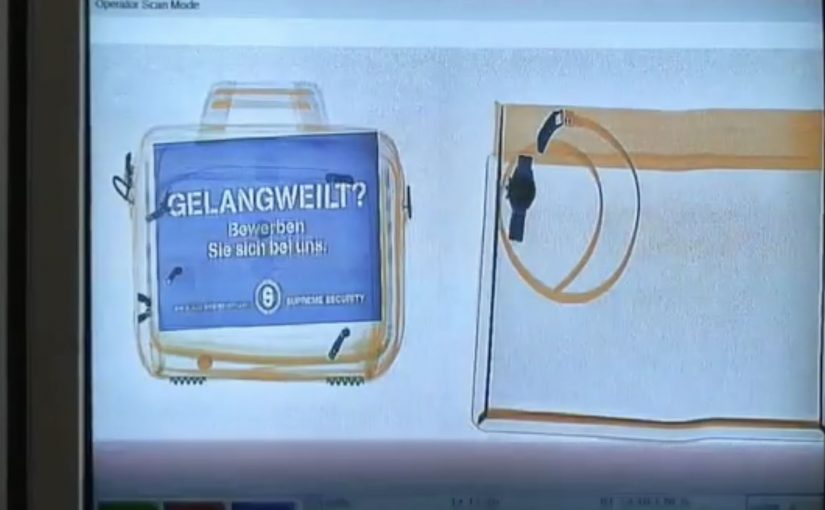
Supreme Security: Job Offer in Luggage Scanner

Supreme Security is an international company offering security services ranging from personal security to dog squad assignments, as well as access and baggage checks. To deliver that, it continually needs specially trained personnel, but only a small pool of specialists fits this narrow job profile in Switzerland, and many of them work in border patrol or airport police.

So the company equips its own employees with machined metal bars and sends them on business trips with those bars packed in their hand luggage. When the bags go through security, the X-ray image reveals a clear recruitment message to the people operating the scanner.

The X-ray reveal: a job ad delivered inside the checkpoint

The execution is almost stubbornly physical. No QR codes. No landing pages in the moment. Just a piece of metal engineered so its silhouette becomes readable text on a baggage scanner screen.

That design choice matters because it matches the audience’s reality. These candidates spend their day looking at X-ray images. The campaign puts the job offer exactly where their attention already lives.

In specialist recruitment markets, placing your job offer inside the candidate’s daily workflow can outperform broad awareness media.

Why it lands: it respects expertise and filters for it

This is not a mass recruitment message pretending to be clever. It is a targeted signal aimed at a professional who will immediately understand what they are seeing, and why it was made for them. The real question is whether your recruitment message shows up inside the exact workflow that signals real fit. This is smart recruitment because the medium itself does part of the qualification work.

Extractable takeaway: The fastest way to reach scarce talent is to design a “high-signal artifact”, meaning a message carrier whose form already screens for relevance, so only the right audience will notice and appreciate it. If the medium itself acts like a competency filter, you get fewer leads, but better ones.

The low-budget constraint is part of the story too. The campaign is described as being produced for under 5,000 Swiss francs and as recruiting eight highly qualified employees in two months. That makes the idea feel replicable, not reserved for brands with giant hiring spends.

What to steal for your next hard-to-hire role

  • Recruit inside the work context: deliver the message where the target audience already concentrates.
  • Make the medium do the targeting: if only the right people “get it”, you reduce noise.
  • Keep the message legible in one glance: no one at work wants to decode your campaign.
  • Design for retellability: the story should travel as “did you see this” even without a link.
  • Use constraints as credibility: low-production realism can read as confidence, not lack of polish.

A few fast answers before you act

What is the core idea here?

A job offer is embedded into a metal object so it becomes readable when scanned by an airport X-ray system, reaching security professionals while they work.

Why is this better than a normal recruitment ad for this audience?

Because it targets scarce specialists in their professional environment and feels like an insider message rather than generic hiring noise.

What makes it “experience-based”?

The candidate does not just see a message. They experience the reveal in a real workflow moment, which makes it memorable and easy to retell.

What’s the biggest risk if you copy this approach?

Operational and reputational risk. If the artifact disrupts operations, causes safety concerns, or feels deceptive, the idea backfires. The execution must be safe, respectful, and clearly non-threatening.

How do you measure success beyond hires?

Track qualified inbound leads, interview-to-offer ratio, time-to-hire for the target profile, and earned mentions within the professional community you are trying to reach.
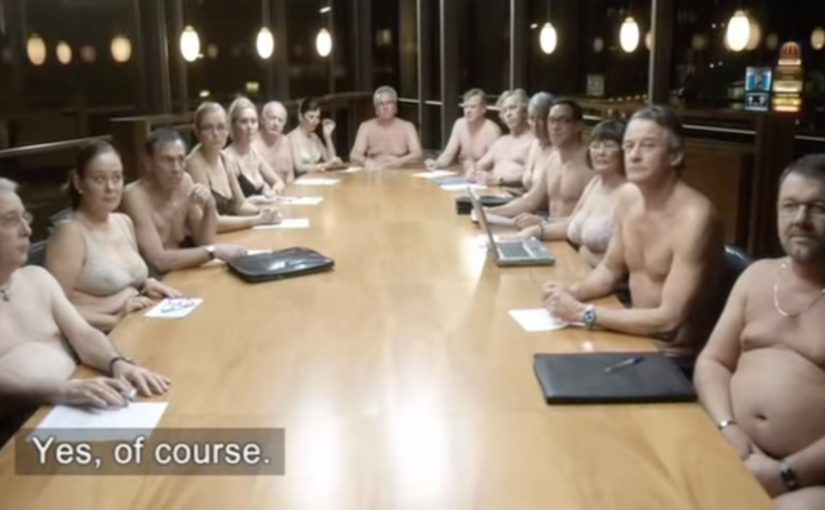

BI Norwegian Business School: Strip

A Norwegian business school ad that wins with humor

Norwegian ad agency Try has created this humorous TV Commercial for BI Norwegian Business School in Norway.

What the “Strip” format is doing

This film is built like a short, punchy scenario where comedy does the explaining. The title “Strip” signals a reveal. Here, “Strip” means a quick reveal structure. Set up one situation, then strip it back to the point. The joke is the hook, and the point lands after you’ve already committed attention.

When recruitment advertising works, it makes the viewer feel the consequence of being unprepared or underestimated. Then it positions education as the fix.

In higher-education recruitment, attention is scarce and differentiation is hard, so a clear comic scenario can compress the message into something people remember.

The real question is whether your recruitment message can earn attention before it asks for belief.

Why a humorous recruitment ad can outperform “informative” messaging

A humorous scenario is often stronger than an information-led message when you need reach beyond paid media. People rarely share program facts. They share moments. A comedic execution creates that moment, and it travels because it is easy to retell.

Extractable takeaway: If you want your recruitment message repeated by people who owe you nothing, build a retellable moment first and attach the proof after.

It also flatters the audience. If the viewer gets the joke quickly, they feel clever. That positive emotion transfers to the brand.

Stealable moves for recruitment marketing

  • Lead with one simple situation. One scene. One tension. One payoff.
  • Make the title do work. A strong title sets expectation and primes the reveal.
  • Earn the brand message late. Let the scenario pull people in, then attach the takeaway.
  • Keep it culturally specific, but universally readable. Local tone helps, but the human moment should translate.

A few fast answers before you act

What is BI Norwegian Business School’s “Strip” ad?

It is a humorous TV commercial created for BI Norwegian Business School, designed as a short scenario that makes a recruitment point memorable through comedy.

Who created the ad?

The film is credited to Try Reklamebyrå for BI Norwegian Business School.

Why use humor for a business school recruitment message?

Humor increases attention and recall. It also makes the message easier to retell, which helps recruitment campaigns travel beyond paid media.

What is the main creative mechanism at work?

A single situation creates tension, then the reveal resolves it. That structure delivers a clear takeaway without feeling like a brochure.

What is the biggest risk with this approach?

If the joke is stronger than the takeaway, viewers remember the gag but not the school. The brand connection has to be unmistakable in the final beat.

Dream Job Brasil: Massage Therapist

A “dream job” ad that sells the fantasy

This film plays like a cheeky career pitch. It takes a role most people file under “practical” and frames it as wildly aspirational, using humor and a little provocation to make the point stick.

The mechanism: flip reality into wish-fulfillment

The creative move is simple. Here, wish-fulfillment means turning an ordinary role into an exaggerated fantasy of status and reward. Instead of listing benefits or talking about training, it dramatizes the emotional payoff of the job by pushing a familiar workplace dynamic to an exaggerated extreme.

This works because it turns a functional job claim into an instantly felt reward.

In mass-market recruitment advertising, a single, culturally legible exaggeration can make a role feel desirable faster than a rational list of pay, stability, or prospects.

Why this lands as a shareable job ad

It compresses the pitch into one punchline. You do not need context, brand knowledge, or even language fluency to get the joke, which is why this format travels well beyond its media buy. The real question is whether the audience can feel the upside of the role before they have time to analyse it. This is the right strategy when a job category needs desire more than explanation.

Extractable takeaway: If you want a recruitment message to spread, lead with an instantly readable scenario that dramatizes the emotional upside. Then let the brand be the quiet enabler, not the lecturer.

What to steal from this recruitment setup

  • Sell the feeling, not the spec. Especially for “everyday” roles, aspiration is often emotional, not informational.
  • Commit to one clear gag. One idea people can retell beats five benefits they will forget.
  • Make it understandable on mute. The best sharable spots still work through visuals and pacing alone.
  • Keep the brand role clean. The ad should feel like a story first, and a message second.

A few fast answers before you act

What is this film trying to achieve?

It makes a job-search brand’s promise tangible by portraying a role as a “dream job” through an exaggerated, comedic scenario.

Why use humor instead of a rational pitch?

Because humor is a memory shortcut. It creates instant comprehension, higher share intent, and faster recall than a feature list.

What is the core creative technique here?

Role and expectation reversal. The ad takes a familiar situation, flips power and desire, then rides that contrast for impact.

When does this approach work best?

It works best when the audience already understands the job category and the brand needs attention and consideration more than explanation.

Why does this format travel beyond its media buy?

Because the joke is readable at a glance. When the emotional upside is obvious without much setup, the idea becomes easy to remember, share, and retell.