
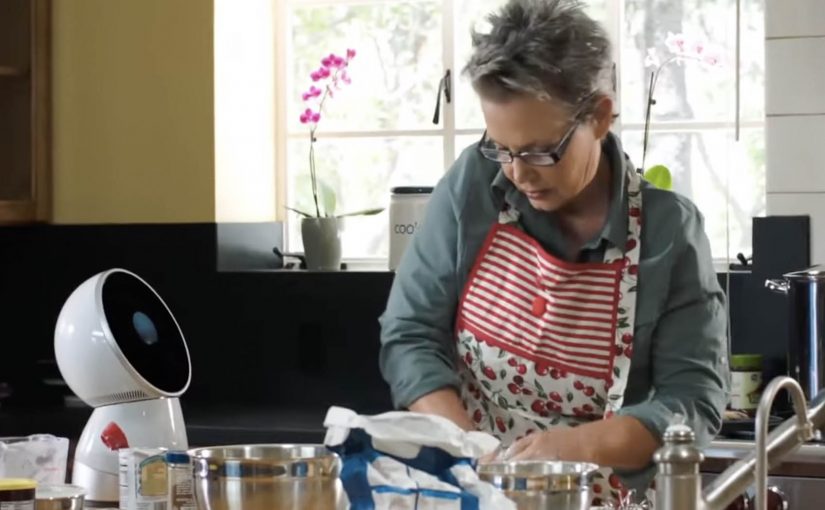
Jibo: The Social Robot for the Family

A robot that provides a personal and meaningful human experience is set to become reality through Jibo, an 11 inch tall, 6 pound, swiveling circular robot. Friendly, helpful and intelligent, Jibo is billed as the world’s first social robot for the family. Here, “social robot” means a robot designed to feel present and interactive in everyday home life, not just to complete tasks.

Here is a short demo video created for its crowdfunding campaign.

The pitch is “relationship”, not “utility”

The mechanism is straightforward. A small tabletop robot with a swiveling body and a screen uses motion, timing, and conversational cues to feel present in the room, rather than behaving like a static gadget. That matters because a sense of presence makes the product easier to imagine in the home than a static device would.

In consumer technology launches, the hard part is not explaining what the product does. It is making people feel why they would want it in their home.

Why it lands

This works because it frames the robot as a character. When a device has personality, the viewer stops evaluating it like a spec sheet and starts imagining it as part of daily routines. That shift is exactly what a crowdfunding-style launch needs, because belief and emotional attachment matter before the product is widely available.

Extractable takeaway: If you are launching something unfamiliar, do not lead with feature lists. Lead with a clear role the audience can picture, then use design and behavior to make that role feel natural and desirable.

What the business intent really is

The demo video is doing more than product explanation. It is creating a category frame. “Social robot for the family” is a positioning stake, and the crowdfunding moment is the fastest way to turn curiosity into momentum, pre-orders, and a community that will advocate for the concept.

The real question is not whether the robot can do enough, but whether people can imagine wanting it around them every day. For a product like this, positioning the relationship comes before explaining the utility.

What product marketers should borrow

  • Make a new category legible. Give the audience a simple label they can repeat to others.
  • Use behavior as proof. How the product moves, reacts, and “shows attention” can persuade faster than technical claims.
  • Sell the role. “What is this in my life” beats “what is this in the lab”.
  • Build community early. Crowdfunding works best when supporters feel like first insiders, not early buyers.

A few fast answers before you act

What is Jibo?

Jibo is a small tabletop robot positioned as a “social robot for the family”, designed to deliver a more personal, human-feeling interaction than a typical gadget.

How big is it?

The project describes Jibo as about 11 inches tall and around 6 pounds.

What does “social robot” mean here?

It refers to a robot designed for human interaction and presence in the home, using behavior and personality cues rather than only task execution.

Why launch via a crowdfunding demo video?

Because new categories need belief before they need scale. A demo video can communicate the role, the feeling, and the promise quickly, then convert interest into early supporters.

What is the main lesson for product marketers?

When the product is unfamiliar, show the “relationship” it creates in context, then let the technology sit behind the experience.
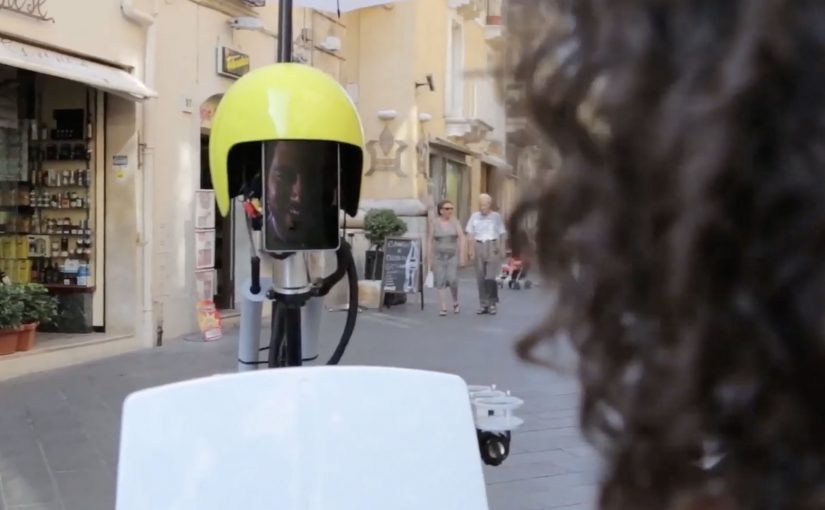
Social Robots: San Pellegrino and Coca-Cola

In 2011, Andes Beer in Argentina used robots in their campaign to enable people to virtually experience a real-life event. Fast forward to 2013 and social robots show up again, this time in campaigns from Italy and Israel. Here, “social robots” means telepresence robots used as remote-controlled avatars at live events.

When “social” becomes physical

The mechanism in both examples is telepresence. A robot with a webcam and microphone acts as a movable avatar in a real location. People at home control where it goes, what it looks at, and who it talks to, turning a distant event into something they can actively explore rather than passively watch.

In experiential marketing, telepresence robots let brands scale a place-bound moment to remote audiences without reducing it to a simple livestream.

Why the robot format lands

This works because it restores a missing ingredient of remote content. Presence. You are not only consuming footage. You are choosing what to look at, moving through the environment, and having real-time interactions that feel personal. Because telepresence combines viewer control with two-way contact, it turns remote viewing into participation. Telepresence is worth the operational hassle only when “being there” is the product. The real question is whether your remote audience needs presence, not just access.

Extractable takeaway: If your brand moment is tied to a physical place, give remote audiences viewer control over a live viewpoint. Even small control makes the experience feel earned, and earned experiences get talked about.

Three minutes in Italy

San Pellegrino invited Facebook fans to discover the Sicilian village of Taormina and explore its cobblestone streets via a webcam and microphone enabled robot controlled from their own computer.

Coca-Cola Summer Love 2013

Coca-Cola Summer Love is the annual summer event for Israeli teenagers. Not everyone can join in person, so Coca-Cola created robots that allowed teens to be part of the camp without leaving their homes. The robots carried webcams and microphones and were controlled by users who could not physically be there.

Users could navigate around the campus, talk with friends, watch shows, participate in competitions, and be part of the experience. The robots were welcomed, danced with, and treated like real attendees, becoming the “stars” and a natural media magnet inside the event.

Practical steals for telepresence events

  • Make control the feature. Remote access becomes meaningful when people can choose what happens next.
  • Keep interactions human-scale. Let remote users talk to real people, not just watch a feed.
  • Time-box the experience. Constraints like “three minutes” create urgency and reduce operational load.
  • Design for friendliness. The robot should invite social acceptance in the space, not disrupt it.

A few fast answers before you act

What is a “social robot” in these campaigns?

A telepresence robot that carries a live camera and microphone, letting a remote person control movement and interact with people on-site in real time.

Why is telepresence more compelling than a normal livestream?

Because it adds viewer control and two-way interaction. Control makes the experience feel personal, and two-way contact makes it feel like participation rather than content consumption.

What is the main operational risk?

Latency, connectivity, and crowd behavior. If the robot is hard to control or gets blocked, the magic disappears quickly.

Where does this pattern fit best?

Events, tourism, launches, and experiences where the value is being “there,” and where remote audiences have strong motivation but limited ability to attend physically.

How do you keep the robot from becoming a distraction?

Set simple on-site rules, give the robot a friendly presence, and design short, guided interactions so crowds do not block or hijack it.