
Radio Tel Aviv 102FM: The City Number Hack

Radio Tel Aviv 102FM: The City Number Hack

Turn the city’s own numbering system into media

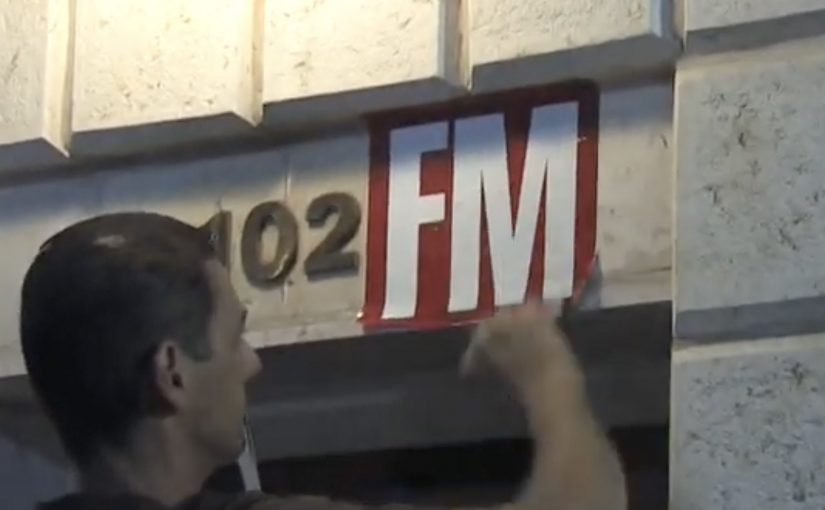
There are many radio stations in Tel Aviv, but only one is called “Radio Tel Aviv”. It broadcasts on 102FM. The task is simple. Make the city associate Tel Aviv with the station.

Saatchi & Saatchi Tel Aviv finds a native hook. Major streets in Tel Aviv have building numbers, and “102” appears all over the city. One night, the agency transforms every building number “102” into an ad. Stickers are affixed so “102” becomes “102FM”, complete with the station’s logo and tagline.

The mechanic: hijack an existing cognitive shortcut

People already scan building numbers without thinking. They are part of navigation, deliveries, meeting points, and everyday orientation. By converting “102” into “102FM”, the campaign piggybacks on a habit the city already has and turns it into repeated brand encoding.

In local media branding, the strongest growth lever is often not “more messages”. It is embedding the frequency into a pattern people naturally repeat. The real question is how to make a station identifier feel like part of the city, not just part of the media plan.

Why it lands

It feels clever because it is discovered, not announced. The brand does not interrupt you. It meets you where your eyes already go. And because it is scattered across real places, the idea creates the impression that the station is everywhere, even if the media spend is tiny.

Extractable takeaway: If you want people to remember a frequency, number, or short identifier, graft it onto an existing urban pattern that people already read dozens of times a day.

What radio marketers can steal from 102FM

  • Use native infrastructure. Wayfinding, numbering, and signage are pre-existing attention systems.
  • Keep the modification minimal. The smallest change that flips meaning is often the most elegant.
  • Optimize for repetition. Memory is built through repeated micro-exposures, not one big shout.
  • Make it feel like a city inside-joke. “Spotted it” is a powerful driver of organic talk.

A few fast answers before you act

What did Radio Tel Aviv do with “102” building numbers?

They added stickers so building numbers reading “102” became “102FM”, turning everyday street numbering into repeated reminders of the station frequency.

What is the core creative mechanic?

It hijacks an existing behavior. People already scan building numbers, so the campaign repurposes that habit into brand recall.

Why does this work better than traditional posters for frequency recall?

Because it appears in places people already look, and it repeats naturally across the city, creating many small memory anchors.

What’s the transferable lesson for other brands?

Find a pattern the environment already supplies, then attach your identifier to it in the smallest possible way.

What is the main risk with this tactic?

If it is perceived as vandalism or causes confusion for residents, backlash can override the cleverness. Location choice and execution quality matter.
Lexus LFA: Scrollbroaaaar

Lexus LFA: Scrollbroaaaar

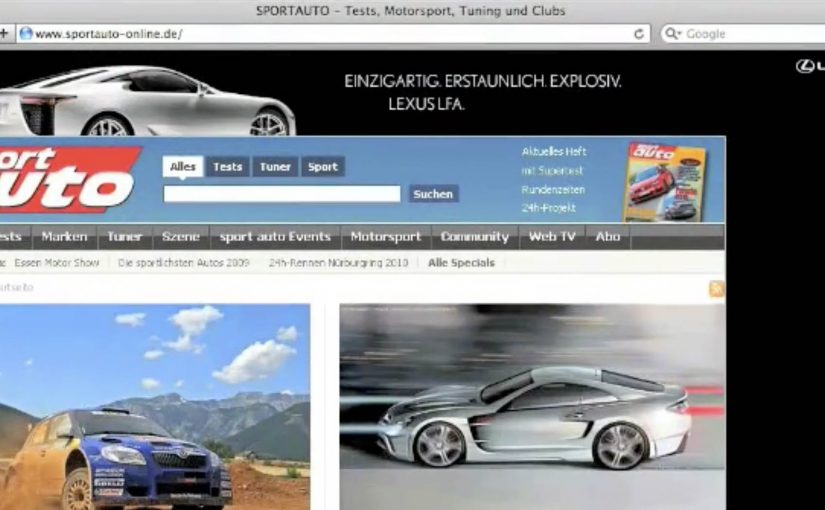
Saatchi & Saatchi Germany has created a clutter-breaking execution for the Lexus LFA on the Sport Auto website by turning a familiar interface element into the ad itself.

When the ad is the interface

The idea is disarmingly simple. Instead of fighting for attention inside a banner slot, the execution is described as a custom scrollbar experience on Sport Auto, shifting the user’s focus to the one thing everyone touches when they move through a long page.

How “Scrollbroaaaar” works

Mechanically, the work hijacks the expected behavior of scrolling and reframes it as a brand moment for a high-performance car. The name “Scrollbroaaaar” signals the point. Here, “Scrollbroaaaar” means the scrollbar itself becomes the branded ad unit. Scrolling becomes a sensory cue for speed and engine attitude, not just a way to navigate content.

In performance automotive marketing, using interface behavior as media can outperform traditional display formats because the user triggers the moment themselves.

The real question is whether you can turn a default UI habit into branded sensation without stealing time from the content.

Why it lands as clutter-breaking

This works because it does not ask for permission. It meets the user inside muscle memory. A scrollbar is invisible until it changes. The second it does, attention spikes. That moment of surprise is the whole value exchange.

Extractable takeaway: If you can attach your product truth to a UI habit the audience already performs, you get attention without demanding a click.

What the brand is really buying here

Beyond impressions, the intent is distinctiveness. Lexus gets a “did you see this” story that is native to the environment where car enthusiasts already browse. The experience also borrows the credibility of a specialist publisher context while keeping the brand in control of the punchline. This is a smarter bet than buying another standard display slot and hoping anyone notices.

What to steal for your own digital creative

  • Make the interaction the media. If a user action triggers the payoff, recall tends to be higher than passive formats.
  • Choose the smallest possible hack. One altered UI element can be more powerful than a page full of widgets.
  • Design for surprise, then exit fast. The novelty works best when it is immediate and does not overstay.
  • Match the mechanic to the product truth. Speed, sound, and control cues belong to a halo performance car.

A few fast answers before you act

What is “Scrollbroaaaar” in one line?

A web takeover that turns the page’s scrollbar into the ad, so scrolling itself becomes the Lexus LFA moment.

Why is it considered clutter-breaking?

Because it bypasses banner blindness by changing a core interface behavior users already rely on, creating instant surprise and attention.

What is the main creative principle behind it?

The principle is viewer control. The user’s action triggers the brand payoff instead of asking them to click away from what they came to do.

When should you use this pattern?

When you have a simple product truth that can be expressed through a single behavior change, and you want memorability more than message density.

What is the biggest risk with interface-as-ad?

If the mechanic slows the page, breaks expected controls, or feels like it traps the user, the surprise turns into frustration and the brand pays for it.

T-Mobile Netherlands: The Rematch

T-Mobile Netherlands: The Rematch

A tiny final that deserved a real crowd

The strongest brand stories make connectivity feel human: it is not about coverage maps, it is about helping people reconnect what mattered.

Martijn, a 39-year-old carpenter, attempted to bring back his football team from 1997 for a rematch of a 13-year-old championship final that was then witnessed by a grand crowd of three people.

This time, he wanted his entire village to be there to see him win. A dream enabled by T-Mobile Netherlands.

How the rematch premise worked

The mechanism was classic. Take an unfinished personal story, add a clear goal, then remove the practical barriers that made it impossible before.

Reuniting a team after 13 years is not just a scheduling challenge. It is a social one. Finding people, persuading them, coordinating them, and turning “we should” into “we did.” T-Mobile positioned itself as the enabler that made that coordination real.

By “coordination”, I mean the practical work of finding the right people, aligning dates, and making commitments stick.

That removal of friction is why the payoff feels earned: a real crowd becomes proof the reconnection happened.

In European consumer telcos, stories like this work when connectivity shows up as real-world coordination, not as a network claim.

Why the story lands emotionally

The psychological pull is simple: redemption.

Extractable takeaway: If you want emotion without melodrama, make recognition visible: reunions, witnesses, and shared moments people can point to.

The original match mattered deeply to the people who lived it, but it happened almost unnoticed. Three spectators is not a crowd. It is practically private. The rematch reframed the same sporting moment as something the whole village could witness, validate, and share.

It also taps into identity. A village team is not just sport. It is belonging. Bringing everyone back together turns an individual need into a community event.

The business intent behind enabling the dream

T-Mobile was not selling minutes or data here.

The real question is how a telco earns emotional ownership of reconnection without making itself the hero.

Here, “reconnection” means turning a desire to meet again into a plan people can actually execute.

This kind of brand film works best when the brand enables and stays out of the spotlight.

The intent was to associate the brand with making real-life reconnection possible. Helping people organize, mobilize, and show up. In a category where offers are easy to copy, emotional ownership is the differentiator.

If your category is copyable, the durable edge is removing friction around moments people already care about.

What to steal for your next brand film

  • Start with a concrete, human objective. A rematch with a real stake beats any abstract message.
  • Make the “before” painfully small. Three spectators sets up a powerful contrast for the payoff.
  • Let the brand enable, not star. The hero is the person. The brand removes friction.
  • Scale the moment socially. A private memory becomes a public event. That is where shareability comes from.

A few fast answers before you act

What is T-Mobile Netherlands’ The Rematch about?

A 39-year-old carpenter reunites his 1997 football team for a rematch of a 13-year-old championship final that only three people watched at the time.

What is the core mechanism of the idea?

Identify an unfinished personal story, then use the brand to remove coordination barriers so the dream can happen at scale.

Why does it resonate with viewers?

It is a redemption story with community payoff. The same moment gets the crowd and recognition it never had.

What business goal does this serve for a telco?

Owning the emotional territory of reconnection and coordination, rather than competing only on interchangeable plans and pricing.

What is the main transferable takeaway?

Make the brand the enabler of a human goal, and build the narrative around contrast: what it was then versus what it becomes now.