
Start with the smile. Then design backwards
Start with the smile of your audience, then work back from there. That is the key to many of the marketing campaigns people actually share. Coca-Cola has done a great job with their various happiness campaigns, followed by WestJet’s Christmas campaign where they surprised passengers with gifts.
When an ATM stops being a machine
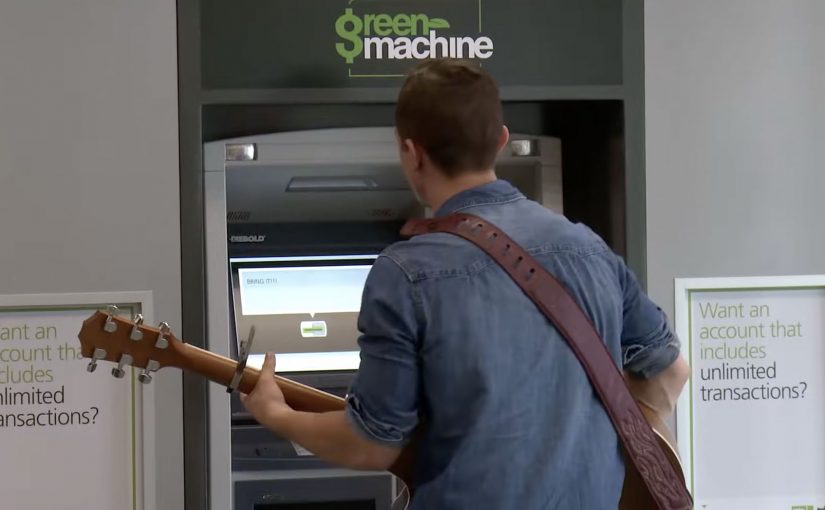
TD Canada Trust, for its “TD Thanks You” campaign, converts select ATM machines in Toronto, Montreal, Calgary and Vancouver into special Automated Thanking Machines. Twenty hand-picked customers are invited to test them.
The twist is that the ATM behaves like a person. It knows their name, talks back, and responds in ways a standard ATM never would. Then it escalates into the payoff: unexpected, genuinely personal gifts that feel tailored to the customer, not to the bank.
In retail banking and other trust-based categories, surprise-and-delight, meaning an unexpected human response inside a standard service moment, works best when it turns a routine transaction into personal recognition that feels operationally real.
The video is the distribution layer
The reactions are the asset. This is less about the ATM technology than about capturing the moment people realize a faceless institution is paying attention. The real question is how a trust-heavy brand makes gratitude feel personal without making it feel fake. As reported, the video has racked up millions of views in days because the story is instantly legible: a familiar interface becomes human, and the customer response does the persuasion.
Why it lands
Banks are trained to look serious, consistent, and slightly distant. This flips that expectation without abandoning credibility, because the setting stays “bank-real” and the interaction starts from a normal ATM flow. The experience also scales conceptually. Any service brand with a repetitive touchpoint can imagine doing a version of this.
Extractable takeaway: If your category is low-emotion or low-trust, pick a familiar moment, introduce one human signal that feels impossible in that context, then let the customer reaction carry the message.
What to steal from an ATM that says “thanks”
- Use a familiar interface as the stage. The more ordinary the starting point, the bigger the perceived magic when it shifts.
- Personalization beats scale. One moment that feels truly “for me” outperforms ten generic giveaways.
- Escalate in steps. Name recognition. Conversation. Then reward. The ramp makes the payoff believable.
- Design the filming around authenticity. A hidden-camera feel is part of the proof, even when the experience is planned.
A few fast answers before you act
What is TD’s “Automated Thanking Machine”?
It is a TD ATM adapted to greet and interact with select customers, then deliver surprise gifts as part of the “TD Thanks You” campaign.
Why does the ATM format work so well?
An ATM is the definition of impersonal service. Making it behave personally creates instant contrast and instant story value.
What’s the real mechanism behind the idea?
Not the screen. The mechanism is staged personalization at a routine touchpoint, captured on video, where real customer reactions become the proof.
What makes this shareable beyond banking customers?
The narrative is universal: a machine becomes human, then gratitude becomes tangible. You do not need product context to feel it.
How can another brand apply this without copying it?
Pick one repetitive customer moment, add one unexpected human signal, then reward the customer in a way that is clearly based on who they are, not who you want them to be.