
SNCF: Take a look at Brussels

France’s national state-owned railway SNCF is back with another live event. This time, with ad agency TBWA\Paris, they set out to promote the launch of their new direct Lyon (FR) to Brussels (BE) train route.

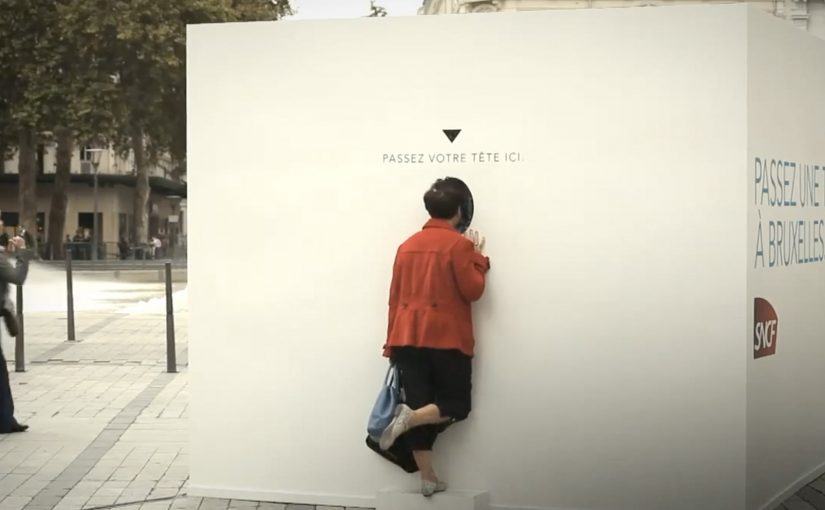
A 3 meter high cube is placed in Place de la République, Lyon with the message “Take a look at Brussels”. Passers-by who peek into the hole are transported to Brussels and greeted live by a Belgian music band.

A cube that makes “direct” feel real

The idea does not try to explain the route. It stages it. The cube behaves like a physical portal that turns “Lyon to Brussels is direct” into something you can experience in a few seconds, without a brochure, timetable, or sales pitch. For route launches, staging the benefit beats explaining it.

How the peephole reveal is engineered

The public-facing mechanic is simple. Here, “mechanic” means the visible action a passer-by is asked to take. Look inside, see Brussels. Underneath, it is a live link that creates the feeling of distance collapsing, with the band providing a human welcome that reads as hospitality rather than tech demo. Because the link is live and the welcome is human, the portal feels credible, which is why the message sticks.

In European transport marketing, live street experiences work best when they compress a service promise into one instantly understood moment.

Why this feels like travel, not advertising

Most transport marketing shows trains and destinations. This one gives you a destination moment first, then lets your brain do the rest. Curiosity pulls people in. The live greeting rewards them immediately. And the “I just saw Brussels from Lyon” story is easy to retell.

Extractable takeaway: If your promise is immediacy, make it visible as a live reveal, so people feel it before you explain it.

The real question is whether your launch makes the benefit felt before it is explained.

What SNCF is really buying with the activation

  • Instant comprehension. “Direct link” becomes experiential, not informational.
  • Earned attention. The cube is a public object that draws a crowd and creates spectators.
  • Shareable proof. The experience is built to be filmed, reported, and repeated as a simple narrative.

Steal this for your next route or service launch

  • Turn the benefit into a moment. Do not describe “direct”. Demonstrate it.
  • Make the invitation frictionless. A peephole beats an app download when you need street volume.
  • Add a human layer. A live welcome lands faster than a purely technical reveal.
  • Design for bystanders. If the crowd understands it instantly, the activation markets itself.

A few fast answers before you act

What is “Take a look at Brussels” by SNCF?

It is a street activation in Lyon where a large cube invites people to look into a peephole and see a live scene from Brussels, promoting a new direct train route.

Why use a cube and a peephole instead of posters?

Because the action is self-explanatory and physical. People understand what to do in seconds, and the reveal delivers the message more memorably than a static claim.

What is the key idea being communicated?

Directness. The campaign makes the Lyon to Brussels link feel immediate by turning it into a live “window” experience.

What makes this effective as live communication?

Curiosity drives participation, the live greeting rewards it, and the outcome becomes a simple story people share: “I saw Brussels from Lyon.”

What should a transport brand measure for activations like this?

Footfall, participation rate, dwell time, earned media pickup, and any measurable lift in route awareness or intent in the regions reached.
The Escape Service: Press the red button

DDB Paris creates a new service for the French rail booking site Voyages-sncf.com. “The Escape Service” lets people escape to any destination they want by simply pushing a magical red button.

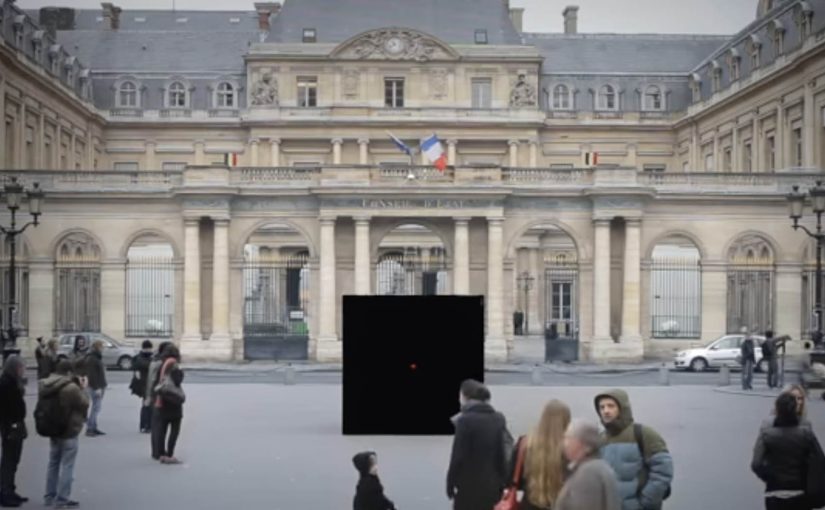
Together with the French collective Pleix, they design three celebrations that emerge from a 3×3 meter black box that unfolds like a giant jack-in-the-box. In Paris, the cube lures passers-by in, asks where they want to go, then bursts into a destination-themed surprise and hands out a mock ticket for the chosen trip.

The film also ends by inviting viewers to press the button themselves and experience a first-person view version of the Escape Service. That first-person view version is a POV cut where the camera takes your place at the button.

A black box that behaves like a travel shortcut

The mechanism is deliberately minimal. There is one obvious choice, press the red button. The payoff is oversized, because the box transforms into a celebration that makes “go anywhere” feel real without explaining routes, prices, or schedules.

In European rail and travel marketing, turning an abstract promise like “escape” into a public, physical moment helps people imagine the journey instantly.

Why the red button is the real interface

The button turns travel intent into an action you can perform in one second. That matters because it removes hesitation. You do not need to “plan” to participate. You only need curiosity, and the street does the rest.

Extractable takeaway: When your promise is intangible, make the first step a one-second action that people can try without planning, then let the payoff do the explaining.

What the campaign is really proving for Voyages-sncf.com

This is not about a single destination. It is about choice and immediacy. The idea says: if you can decide on the spot, you can book on the spot. The mock ticket detail pushes the story from spectacle into something you can take away and show.

The real question is whether your service promise can be compressed into one action people will try without needing more information.

This kind of one-action interface is worth copying when you need to turn curiosity into intent fast.

Moves to borrow from the red-button mechanic

  • Reduce the interaction to one decision. One button is better than a menu when you need street participation.
  • Make the reward visible to bystanders. If spectators can understand the payoff, the crowd recruits the next person.
  • Personalize the outcome fast. A destination choice and a ticket-like takeaway make the moment feel “mine”.
  • Bridge offline to online without forcing it. A first-person online version extends reach without changing the story.

A few fast answers before you act

What is “The Escape Service” for Voyages-sncf.com?

It is a public pop-up experience where a black box invites people to press a red button, choose a destination, and trigger a surprise celebration that dramatizes the idea of escaping by train.

Why use a red button and a box?

Because it is self-explanatory. A single button removes friction and creates a clear before-and-after moment that people remember and film.

What makes this more than a stunt?

The mechanic maps cleanly to the service promise: pick a destination and go. The mock ticket detail turns the experience into a personal travel intent, not only entertainment.

How does this support online booking?

It makes “decide and book” feel effortless. The film’s first-person online extension reinforces that the same impulse can continue digitally.

What is the transferable lesson for service marketing?

When your product is intangible, build a physical interface that compresses the benefit into one action and one memorable payoff.