Ikea Social Catalogue

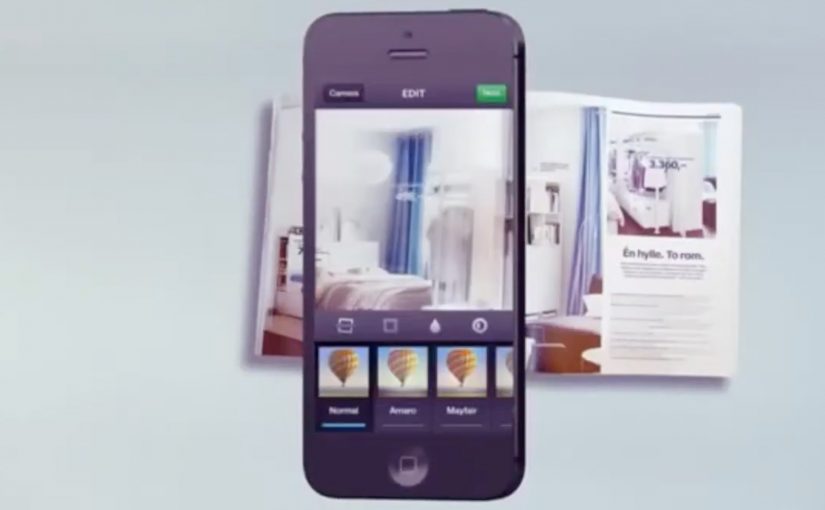
IKEA has been innovating every year with their classic paper catalog. In Norway they decide to take this classic paper catalog and make a social media version of it. With zero budget, they ask their 130,000 Facebook and Instagram fans to post the page of their favourite product on Instagram and add the hashtag #ikeakatalogen, for the chance of winning that product.

How the Social Catalogue works

The mechanic is intentionally lightweight. IKEA asks fans to pick their favourite item from the catalogue, photograph the page, and post it publicly so the product becomes discoverable through personal networks. Over time, more and more items get documented and shared by real people, effectively recreating the catalogue as a social feed.

Why print is the trigger, not the limitation

Most brands treat print as a one-way broadcast. Here, print is the starting gun. The physical catalogue becomes the prompt that drives people online, and the content that fuels sharing is already in consumers’ hands.

The growth loop is built into social behaviour

The “social” part is not a slogan. It is distribution mechanics. When someone posts their chosen page, their network sees it. That drives curiosity, repeats the behaviour, and compounds reach without buying equivalent media.

What to steal

  • Use an owned asset as the trigger. The catalogue is already shipped. The campaign rides that distribution.
  • Make participation effortless. One photo and one hashtag, then you are in.
  • Let the audience do the indexing. Fans effectively organise and surface products through what they choose to share.
  • Reward desire, not trivia. The prize is the exact thing the person already wants.

A few fast answers before you act

What is the IKEA Social Catalogue?

A campaign that turns the printed IKEA catalogue into a social feed by asking people to photograph and share their favourite pages with #ikeakatalogen for a chance to win the featured product.

What is the core behaviour it uses?

People naturally share things they want. The campaign turns that impulse into distribution and product discovery.

Why is this effective for retail?

Because it turns product browsing into social proof, and social proof into incremental reach, without asking people to learn a new behaviour.

What is the simplest version to replicate?

Pick one existing owned channel, define one shareable action, and reward the exact item the person publicly chooses.

TBWA Lisbon: Windows become Twitter billboard

TBWA was the last agency to move to Lisbon’s advertising district. With their top competitors already there, they decided to showcase their creativity by turning 19 windows of their office into a 36m long Twitter billboard.

The stunt is simple in concept and bold in execution. The office becomes the medium. Instead of hiding behind a reception desk and a logo, the agency uses its own facade as a live publishing surface for the public street.

Turning an address into a live channel

The mechanism is real-time social content made physical. Tweets appear across the windows, transforming an office building into a public conversation layer. It is not “social amplification” in the usual sense. It is a direct translation from a digital feed into a street-level display.

In dense urban environments, public-facing digital surfaces work best when they make participation visible, immediate, and shared by everyone on the street.

The video does not explain exactly how people were encouraged to send in their tweets, but it does show the breadth of what people shared. Tweets touch politics, taxes, Europe, Merkel’s visit, and more. That range matters because it signals that the billboard is not a branded script. It behaves like a live civic wall.

Why it lands in an ad district full of competitors

In a cluster of agencies, sameness is the enemy. This activation works because it creates a visible signature at the point of competition. People do not have to be invited inside to experience TBWA. The building itself is performing in public, and the audience can participate without crossing a threshold.

It also carries a little risk. Real-time public messages can be messy. That tension is part of the attention engine. It feels alive because it is not perfectly controlled.

The intent: differentiate through public participation

The business intent is positioning. TBWA is signalling modernity, openness, and confidence in real-time ideas. The agency is also using the street as a distribution channel to generate talk, foot traffic, and press interest.

And it worked. In the end, all the window tweeting created quite a stir in the local media.

What to steal from this window-billboard idea

  • Use your own real estate. If you have a facade, treat it as media, not architecture.
  • Make digital physical. The jump from screen to street creates instant novelty.
  • Design for participation. People engage more when they can see themselves appear in public space.
  • Accept a little mess. Real-time content feels credible because it is not overly polished.
  • Build for earned media. A visible public installation gives journalists something to film, not just to quote.

A few fast answers before you act

What is the TBWA Lisbon Twitter billboard?

It is a facade activation that turned 19 office windows into a 36m long display showing tweets in public, effectively making the building a live billboard.

Why does turning tweets into a window display work?

Because it makes online conversation visible in a shared physical space, which creates surprise, participation, and social proof.

How did it create attention beyond the street?

The visibility and real-time nature made it easy for people and local media to capture and share, turning a building into a story.

Is this more about branding or engagement?

Both. The engagement mechanic is participation, but the branding outcome is differentiation and positioning in a competitive district.

What is the key takeaway for agencies and brands?

If you want to stand out locally, build a public interface that lets people contribute and be seen. It creates talk faster than self-promotion.

Air China “Facebook Check Ins”

You visit a popular Asian restaurant in Sweden, check in with Air China on Facebook, and instantly become part of a live leaderboard. The more you check in, the higher you climb. Each week, the top check-in users earn two complimentary tickets to Asia.

Air China flies not only to China but also throughout Asia. The challenge is how Air China raises Swedish consumers’ awareness about this fact. In response, their ad agency Rodolfo creates a Facebook check-ins campaign.

How the campaign works in the real world

A select number of popular Asian restaurants in Sweden are transformed into ambassadors for Air China. At the restaurants, guests are encouraged to check in with Air China on Facebook.

What makes it competitive and shareable

The check-ins are aggregated on the Air China Facebook page, and a complete leader board of the highest number of check-ins and the most popular restaurants is displayed. Each week, the users with the highest number of check-ins are awarded two complimentary tickets to Asia.

Why this format fits airline awareness

The activation connects everyday behaviour to a clear brand message. It makes “Asia access” feel immediate, social, and measurable, without needing a hard sell in the moment.


A few fast answers before you act

What is the core idea of this campaign?

Turn physical venues into social triggers. Restaurants prompt people to check in with Air China, and the accumulated check-ins become the campaign scoreboard.

Why use restaurants as campaign ambassadors?

They are culturally relevant touchpoints for “Asia” in Sweden, with built-in footfall and a natural reason for people to share where they are.

What role does the leaderboard play?

It creates a simple competition loop. People see progress, compare against others, and repeat the behaviour to climb. That repetition drives reach and recall.

What is the incentive design lesson here?

Make the reward perfectly aligned with the promise. Tickets to Asia are a direct reinforcement of Air China’s broader Asian network, not a generic prize.